Guide

A60 Container Guide: Rating, Specs & Certified Builds

A manufacturer's guide to the A60 fire rating: what it certifies, how an A60 boundary is built, which standards govern it, and which SCS offshore modules carry it. Written for procurement and engineering teams specifying fire-rated offshore equipment.

Summary

An A60 container is a container or offshore module whose walls, ceiling and floor are built as SOLAS A-class fire divisions: steel boundaries lined with approved non-combustible insulation, certified to hold back a standard fire for 60 minutes. A60 is a rating applied to a build, not a container type, and SCS Global builds it across living quarters, hazardous area cabins, workshops and control modules, manufactured factory-direct in Yixing, Jiangsu, and certified by the classification society your project nominates. This guide sits alongside our dnv offshore & marine equipment pages at SCS Global, covering the product specifications and compliance documentation that support the same procurement audience.

01

Definition

What Is an A60 Fire Rating?

An A60 fire rating certifies that a bulkhead or deck survives the standard fire test on three criteria at once, each held for a full 60 minutes: flames and smoke stay out, heat transfer stays within set limits, and the structure stays intact. It is the top A-class division defined by SOLAS Chapter II-2, the fire-protection chapter of the Safety of Life at Sea convention. The a60 fire rating definition rests on the standard cellulosic fire curve, which reaches 500°C within five minutes of ignition, with test methods set by the IMO Fire Test Procedures Code, resolution MSC.307(88).

Procurement documents often shorthand the whole package as the a60 container rating. Formally, the rating attaches to each boundary division, wall, ceiling or floor, rather than to the box as a unit. A division that passes integrity but misses the insulation limit earns A-0, not A-60, and that distinction drives the whole A-class ladder.

The three A60 test criteria

  1. Integrity: no flame or smoke penetration through the division for 60 minutes.
  2. Insulation: the unexposed face averages no more than a 140°C temperature rise, and no single point, joints included, exceeds a 180°C rise.
  3. Structural stability: the division carries its load for the full 60 minutes.
02

Ratings

A-Class Divisions Compared: A0 to A60, Plus H-Class

Every A-class division holds fire integrity for 60 minutes. The number after the A states how many of those minutes the insulation criterion is also held: A-0 carries no insulation period, while A-60 carries the full hour. The difference between an a0 and a60 fire rating is heat transfer, not fire penetration. Both keep flames out for an hour. Only A-60 also keeps the unexposed face cool enough to protect the people and equipment behind it.

The cellulosic curve per ISO 834 models a fire fed by ordinary combustibles and reaches roughly 840°C at 30 minutes. The hydrocarbon curve models a pool or jet fire and climbs past 1,100°C within about five minutes, which is why process areas specify H-class rather than A-class divisions. A-class protection is accepted for accommodation, control rooms and other non-process areas. B-class divisions such as B-30 are lighter, non-loadbearing partitions used inside accommodation blocks. SCS builds across the full range, from A-0 through H-120, on the same certified platform.

The marine fire rating ladder, and where each division is specified
DivisionFire curveIntegrityInsulation heldWhere it is typically specified
A-0Cellulosic (ISO 834)60 minNoneBulkheads outside fire-risk zones
A-15Cellulosic60 min15 minIntermediate divisions
A-30Cellulosic60 min30 minIntermediate divisions
A-60Cellulosic60 min60 minAccommodation, control rooms, temporary refuge (NORSOK S-001 / UK PFEER), boundaries facing fire-risk areas
H-0 / H-60 / H-120HydrocarbonPer class rulesNumber states the minutesProcess areas, platform decks, FPSO topsides where pool or jet fires are credible
03

Construction

How Is an A60 Rated Container Built?

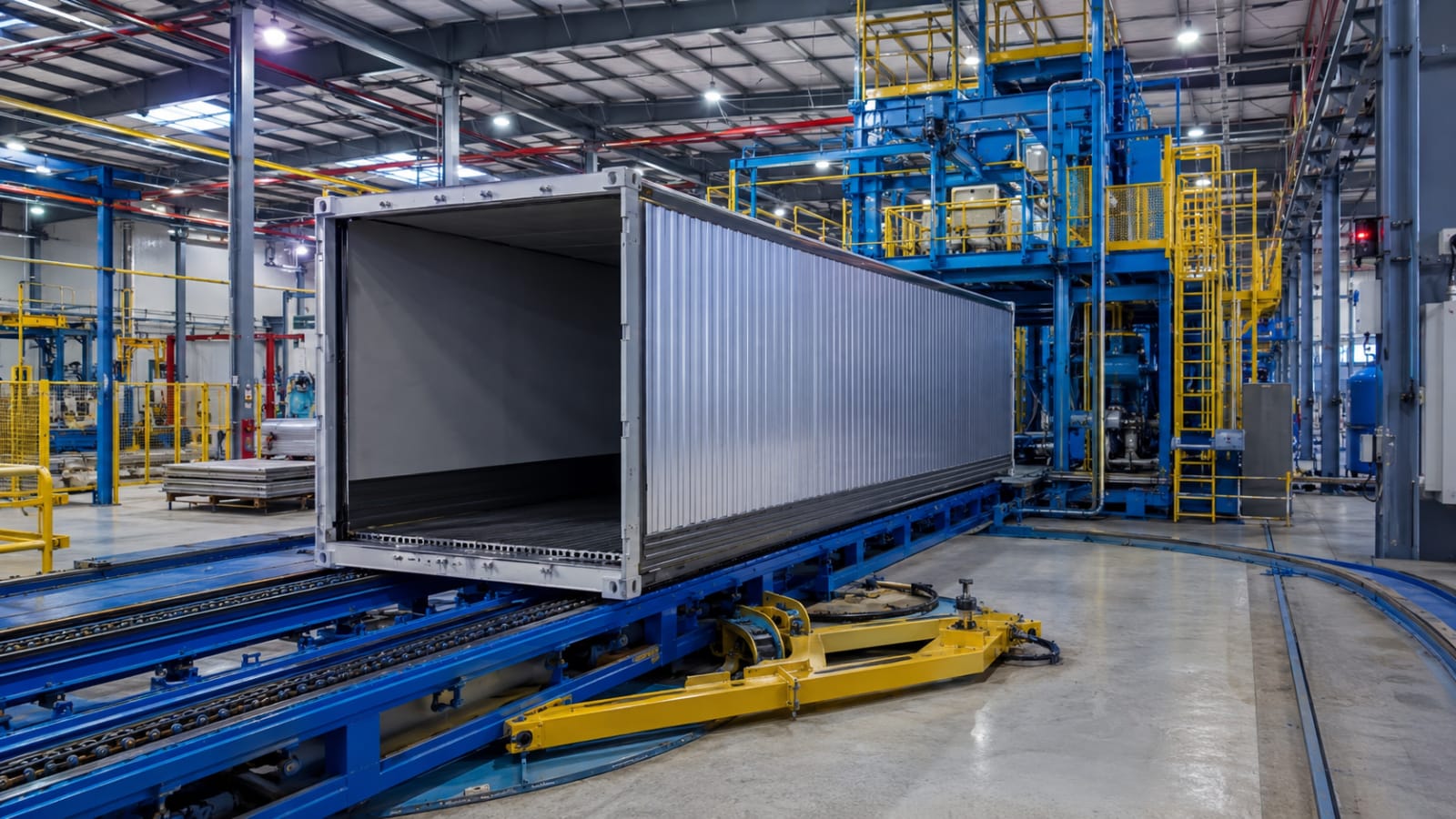
An A60 rated container starts as a structural steel shell, Q345 or S355 grade, with plate no thinner than 4.5 mm, lined with approved non-combustible insulation: mineral wool, ceramic fibre or intumescent board. The rating then lives or dies in the detailing. Every cable, pipe and duct penetration must carry an approved transit system that maintains the division, and every opening must match the rating of the wall around it. A complete a60 container specification covers five systems: structure, insulation, penetrations, openings and fire safety equipment.

The insulation package is what separates an A60 build from a standard container, and certified builds inspect it as its own hold point: design review, steel construction, insulation inspection, outfitting, then the final certifying-authority check, with the surveyor engaged through the build and a full data book at handover. Coverage matters because the insulation criterion is measured at every point on the unexposed face, joints included. Critical welds carry NDT: magnetic particle, dye penetrant, ultrasonic or radiographic inspection depending on the joint. Read about our factory-direct manufacturing process and the hold points that go with it.

Doors, windows and escape provisions

Openings match the division. A60 doors are self-closing marine fire doors with intumescent seals, and windows, where fitted, carry the same rating as the wall. Accommodation modules add A60 escape hatches so a blocked corridor never traps crew behind a rated boundary. The same discipline applies to HVAC: fire dampers close the duct path so the penetration can't defeat the division. SCS prepares each shell by abrasive blast to SA 2.5 and applies a three-coat marine system at 250 microns dry film thickness to ISO 12944 C5-M, the corrosivity class for offshore and coastal exposure.

A60 boundary construction specification
ElementSpecification
Steel plateMinimum 4.5 mm
Structural steelQ345 / S355
InsulationMineral wool, ceramic fibre, or intumescent board (approved non-combustible)
PenetrationsApproved cable, pipe and duct transit systems maintaining the A60 division
DoorsA60 rated self-closing marine fire doors with intumescent seals
WindowsA60 rated marine windows where fitted
Escape provisionsA60 escape hatches on accommodation modules
Surface preparationAbrasive blast to SA 2.5
CoatingThree-coat marine system, 250 µm DFT to ISO 12944 C5-M
Fire safety systemsFire and gas detection, fire dampers, sprinklers, manual and general alarm, PA/GA, emergency lighting
Pressurisation (hazardous area builds)Ex p to IEC 60079-2 / IEC 60079-13
04

Certification

Certification and Standards for A60 Offshore Containers

A60 certification and structural certification are two separate approvals. The fire rating is certified against SOLAS and the IMO FTP Code through classification-society fire-test approval. DNV 2.7-1, current identity DNV-ST-E271 (2023-03 edition, amended December 2024), certifies the container's structure, lifting points and sling sets. Neither approval confers the other, so an a60 offshore container typically carries both: DNV 2.7-1 for the structure and crane path, A60 for the boundaries. SCS works with DNV, Lloyd's Register, Bureau Veritas and ABS for certification, plus SGS and Intertek for inspection, and a60 offshore containers are surveyed through the build rather than stamped at the end.

A60 and DNV 2.7-1: two separate certifications

The distinction matters at specification time. Ordering a DNV 2.7-1 cargo container doesn't buy any fire rating, and ordering an A60 module without 2.7-1 leaves it uncertified for offshore crane transfer. Our DNV 2.7-1 certification guide covers the structural side in full, and the offshore container standards guide maps how the frameworks connect. Fitted modules, meaning workshops, laboratories and accommodation, add DNV 2.7-2 for the installed state.

A60 is not optional in several offshore contexts. NORSOK S-001 and the UK PFEER regulations set temporary refuge criteria at A-60 minimum across all six boundary faces with at least one hour of endurance, and platform fire risk assessments routinely mandate A60 boundaries for accommodation and for any module facing a fire-risk area.

Neither approval confers the other: DNV 2.7-1 certifies the structure and crane path, A60 certifies the boundaries.

05

SCS Range

SCS Modules Built A60 Fire Rated

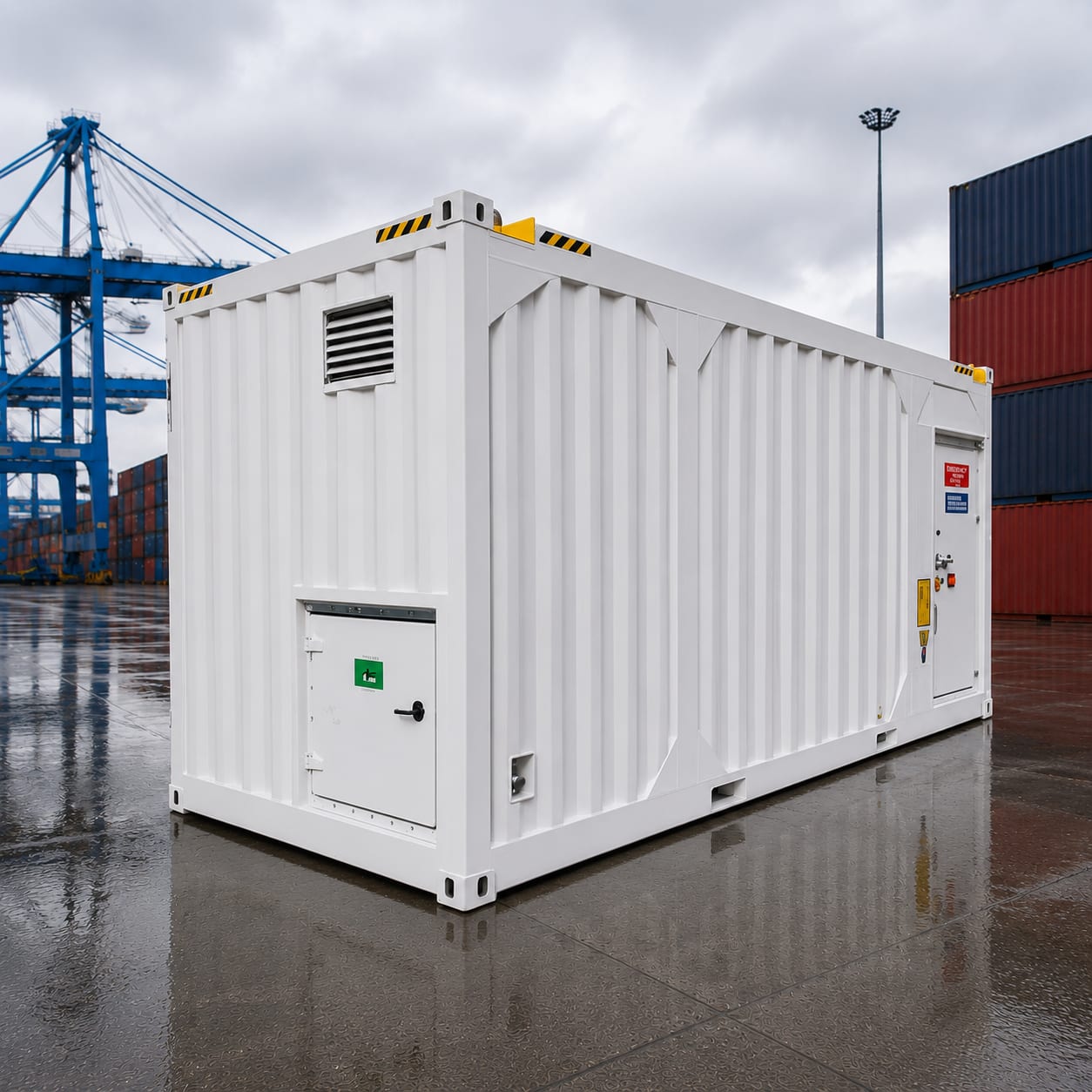
SCS builds a60 fire rated containers in four module families at the Yixing factory: living quarters, hazardous area cabins, workshops and laboratories, and control or temporary refuge modules. Each starts from a 10ft to 40ft base shell, takes the boundary construction described above, and ships with its certification data book. Across the wider category the same platform covers ROV control cabins, mud logging units, MWD/LWD cabins, galleys, laundries and locker modules. Specifying an a60 fire rated container starts with the boundary schedule: which faces need A60, which need less, and which need H-class instead.

Offshore living quarters

A60 bulkheads and escape hatches on 20ft high-cube, 32ft and 33ft overwidth shells, sleeping one to eight personnel and stackable to four floors with linking kits. See offshore living quarters for cabin layouts and accommodation specs.

Hazardous area and ATEX modules

A60 boundaries with Ex p positive-pressure systems for Zone 1 and Zone 2 service, on 10ft to 40ft shells. The explosion proof container page covers pressurisation, blast resistance and temporary refuge configurations.

Offshore workshops and labs

An A60 envelope with ATEX-rated fit-out for hot work, instrument service and testing offshore. SCS delivered an A60 workshop and laboratory module for North Sea service with factory acceptance testing under lifting load, surveyor engagement through the build and a full handover data book. The North Sea module case study documents that build, and offshore workshop containers covers configurations.

Control rooms and refuge modules

Control rooms, MCC rooms and refuge modules built A60 where the platform fire risk assessment demands it, with positive-pressure HVAC on refuge builds. These are engineered per project across the full offshore range.

06

FAQ

Frequently Asked Questions: A60 Ratings and Builds

What is an A60 rated container?

An A60 rated container is a container shell rebuilt as a certified fire division: minimum 4.5 mm steel plate, approved non-combustible insulation, rated doors and sealed penetrations, fire-test certified to hold integrity, insulation and structural stability against a cellulosic fire for 60 minutes under SOLAS Chapter II-2 and the IMO FTP Code.

What is the difference between A0 and A60 fire ratings?

Insulation time. Every A-class division keeps flames and smoke out for 60 minutes. A-0 carries no insulation criterion, while A-60 also limits the unexposed face to a 140°C average temperature rise for the full hour. A-15 and A-30 sit between, holding the insulation criterion for 15 and 30 minutes respectively.

Does DNV 2.7-1 include the A60 fire rating?

No. DNV 2.7-1 (DNV-ST-E271) certifies the container's structure, lifting points and sling sets for offshore crane transfer. The A60 rating is certified separately against SOLAS and the IMO FTP Code through classification-society fire-test approval. Offshore modules that need both must carry both, and most fitted A60 units also add DNV 2.7-2.

Where is an A60 rating mandatory offshore?

Temporary refuge modules must meet A-60 on all six boundary faces with at least one hour of endurance under NORSOK S-001 and the UK PFEER regulations. Beyond refuge, platform fire risk assessments commonly mandate A60 for accommodation, control rooms and any module boundary facing a fire-risk area. Class rules confirm the boundary schedule at design review.

What sizes can be built A60 rated?

The rating is size-independent. Category builds run from 10ft to 40ft plus custom lengths, and SCS builds A60 on 10ft, 20ft, 20ft high-cube and 40ft shells, with 20ft high-cube, 32ft and 33ft overwidth living quarters. The insulation and penetration detailing scale with the shell, and each size is fire-test certified on the same basis.

Standards & references

Standards that govern A60 containers

Every requirement discussed on this page traces to one of the source authorities below. Follow any link through to the issuing body for the current revision.

SOLAS Chapter II-2 Defines A-class divisions and fire-protection construction. The governing convention for the A60 rating. IMO
IMO FTP Code (MSC.307(88)) Fire test procedures a division must pass to be certified A60. IMO
ISO 834 Standard cellulosic time-temperature curve used in A-class fire testing. ISO
DNVGL-ST-E271 (DNV 2.7-1) Structure, lifting and certification of the offshore container carrying the A60 boundaries. DNV
DNVGL-ST-E272 (DNV 2.7-2) Fitted service modules: electrical, fire protection, ventilation and egress in the installed state. DNV
EN ISO 10855 Offshore containers and associated lifting sets, harmonised with DNV 2.7-1. Supersedes EN 12079. ISO
IMO MSC/Circ.860 Approval guidelines for offshore containers handled in open seas. IMO
CSC 1972 Applies where the A60 unit also runs in international container freight. IMO
ATEX 2014/34/EU / IECEx Zone 1 and Zone 2 hazardous-area builds of A60 cabins with Ex p pressurisation (IEC 60079-2 / -13). EU / IECEx
NORSOK S-001 / UK PFEER Temporary refuge criteria: A-60 minimum on all six boundary faces, one-hour minimum endurance. Standards Norway / UK HSE

Expert perspective

A manufacturer's note on specifying A60 correctly

“The most common specification error we see on fire-rated enquiries is treating DNV 2.7-1 and A60 as one approval. They are two separate certifications on the same unit, and pricing, engineering and survey scope all hinge on both being named. Start with the boundary schedule: which faces need A60, which can run A-0, and whether any face needs H-class because a hydrocarbon fire is credible. Confirm the certifying society with the platform operator before the RFQ goes out, name the standard document identities rather than shorthand, and the certification path follows cleanly from there.”

Director of Engineering Adam Baker

Next step

Specifying an A60 module? Get a factory-direct quote.

Send the module type, size and boundary schedule, and SCS returns a factory-direct quotation with certification scope and lead time confirmed at quote stage.