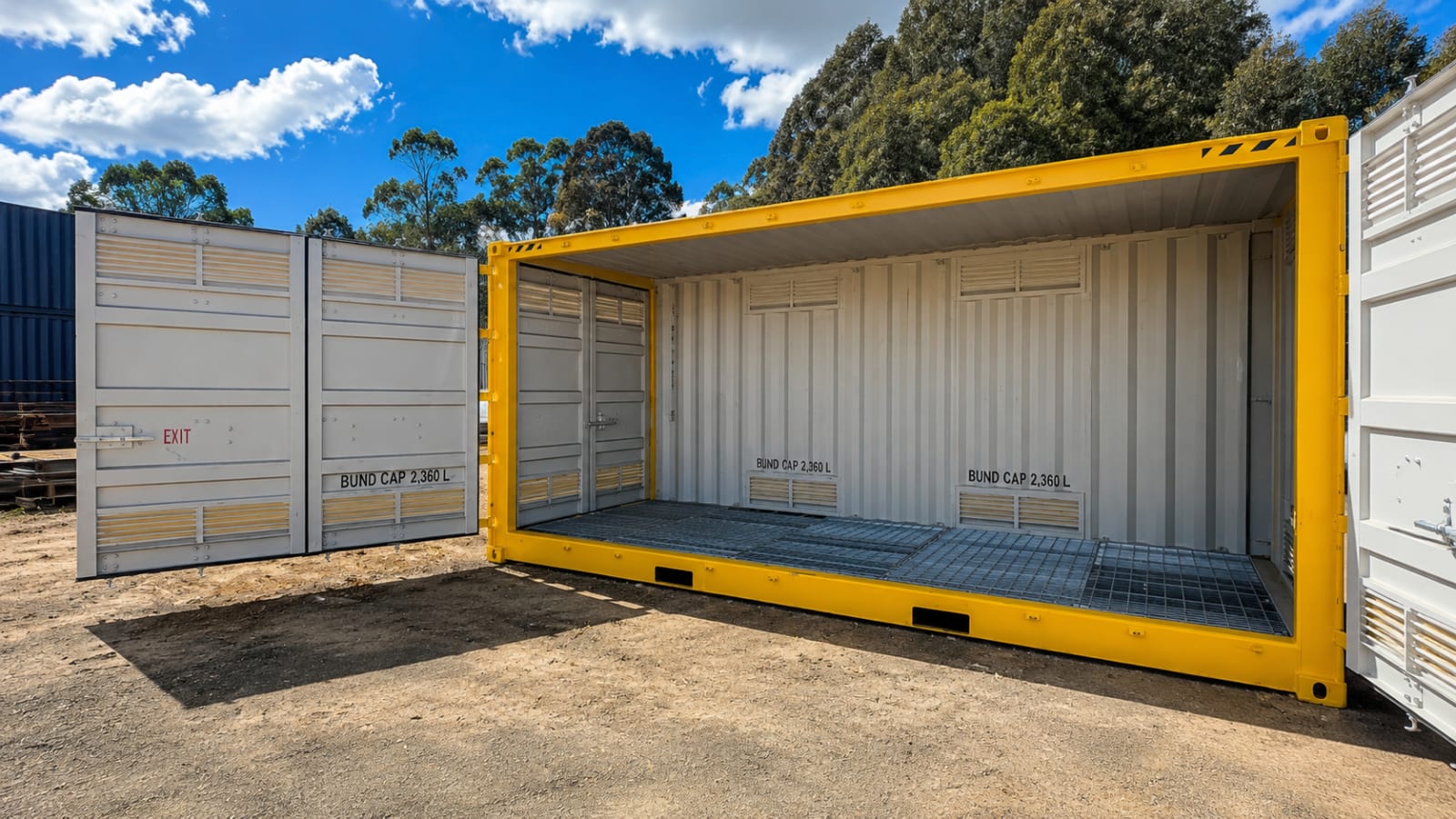
Dangerous Goods Storage
Dangerous Goods Containers: Factory-Direct Bunded DG
A dangerous goods container is a bunded steel store for keeping flammable, corrosive and other hazardous goods outdoors, ordered from a single unit and shipped DDP to your nearest port. SCS Global manufactures bunded dangerous goods containers factory-direct in 10ft and 20ft, built to AS 1940, AS 3780, and AS 3833:2024. Every unit ships with a welded steel bund, a 316L stainless drain valve, ventilation, and DG-class placarding, plus a Certificate of Compliance. These are sale-built units, not hire stock.
Specifications
DG Container Specifications
Both DG storage containers ship high-cube and fully bunded. Maximum gross weight, exterior coating and lead times are set per build at quote stage.
| Specification | 10ft DG | 20ft DG |
|---|---|---|
| External dimensions (L × W × H) | 2,991 × 2,438 × 2,896 mm (high-cube) | 6,058 × 2,438 × 2,896 mm (high-cube) |
| Internal cubic capacity | 17.4 m³ | 33.2 m³ (up to 39.8 m³ high-cube side-opening) |
| Bund (spill-containment) capacity | 800 L | 1,200 L |
| Maximum liquid storage | 11 × 205 L drums (Class 3), 3,200 L (Class 8) | 19 × 205 L drums (Class 3), 4,800 L (Class 8) |
| Tare weight | 1,750 kg | ~2,600 kg |
| Doors | Single side-opening double-leaf (double side-opening available) | Double-leaf end door, with single, double, and full-length side-opening variants |
| Ventilation | Passive high/low weatherproof grilles (mechanical extraction fan optional) | |
| Floor and bund | Welded steel, RHS floor frame, non-spark mesh, front steel bund wall in the floor frame | |
| Drain valve | 316L stainless lockable safety drain valve | |
| Compliance | AS 1940:2017, AS 3780:2023, AS 3833:2024 | |
| DG class coverage | Class 3, 4.1, 4.3, 5.1, 6.1, 8 (subject to SDS compatibility) | |
Complete Range
The Complete Range: Dangerous Goods Storage Containers
Every unit is engineered and certified at our Yixing factory before it ships.

10ft Dangerous Goods Container
Compact bunded store for tight worksites, depots and laboratories.
10ft dangerous goods container
20ft Dangerous Goods Container
Full-size bunded store for bulk drum and IBC inventories.
20ft dangerous goods container
Bunded Chemical Storage Containers
Single-class and mixed-class chemical stores with custom lining.
bunded chemical storage containers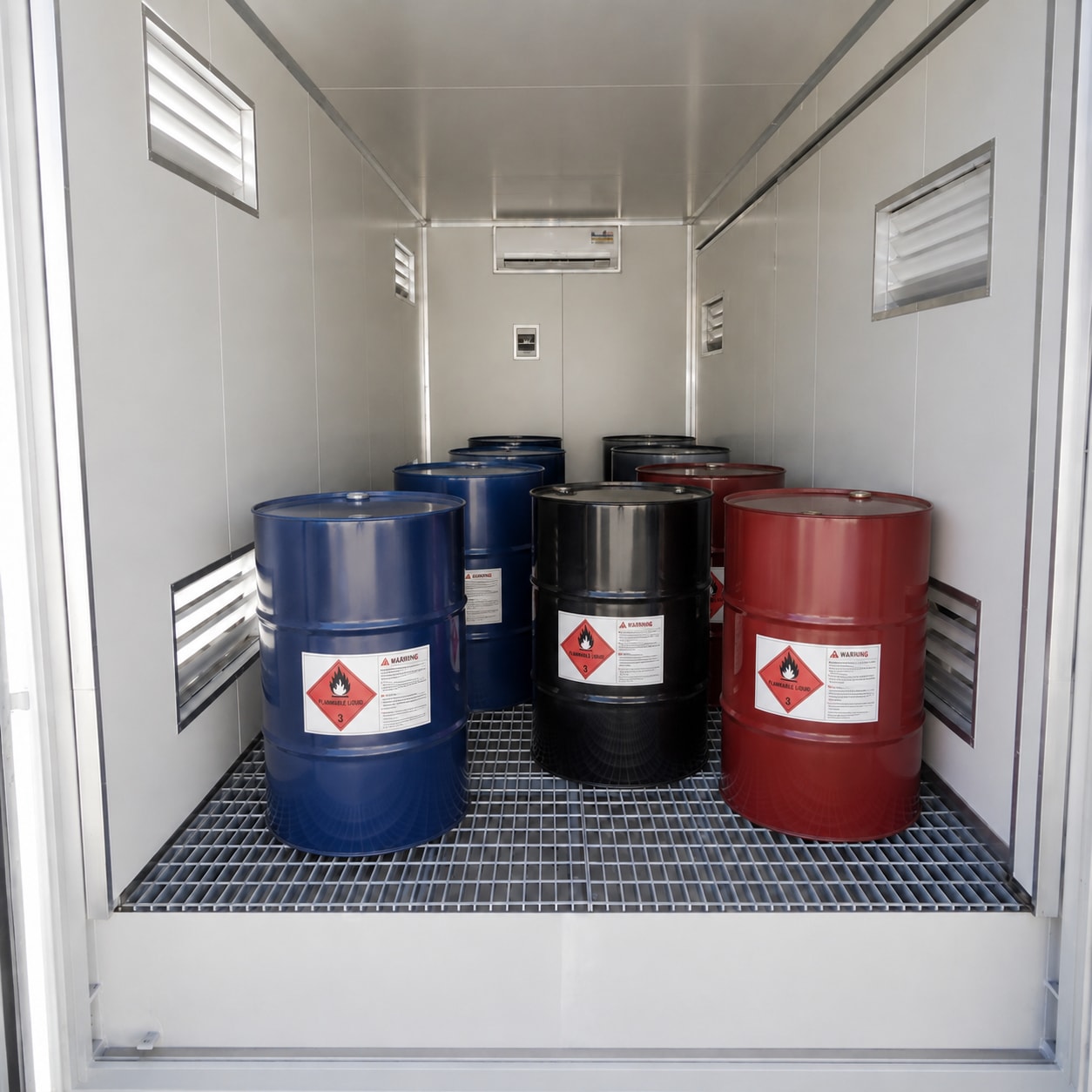
Flammable Liquid Storage Containers
Class 3 flammable and combustible liquids to AS 1940.
flammable liquid storage containers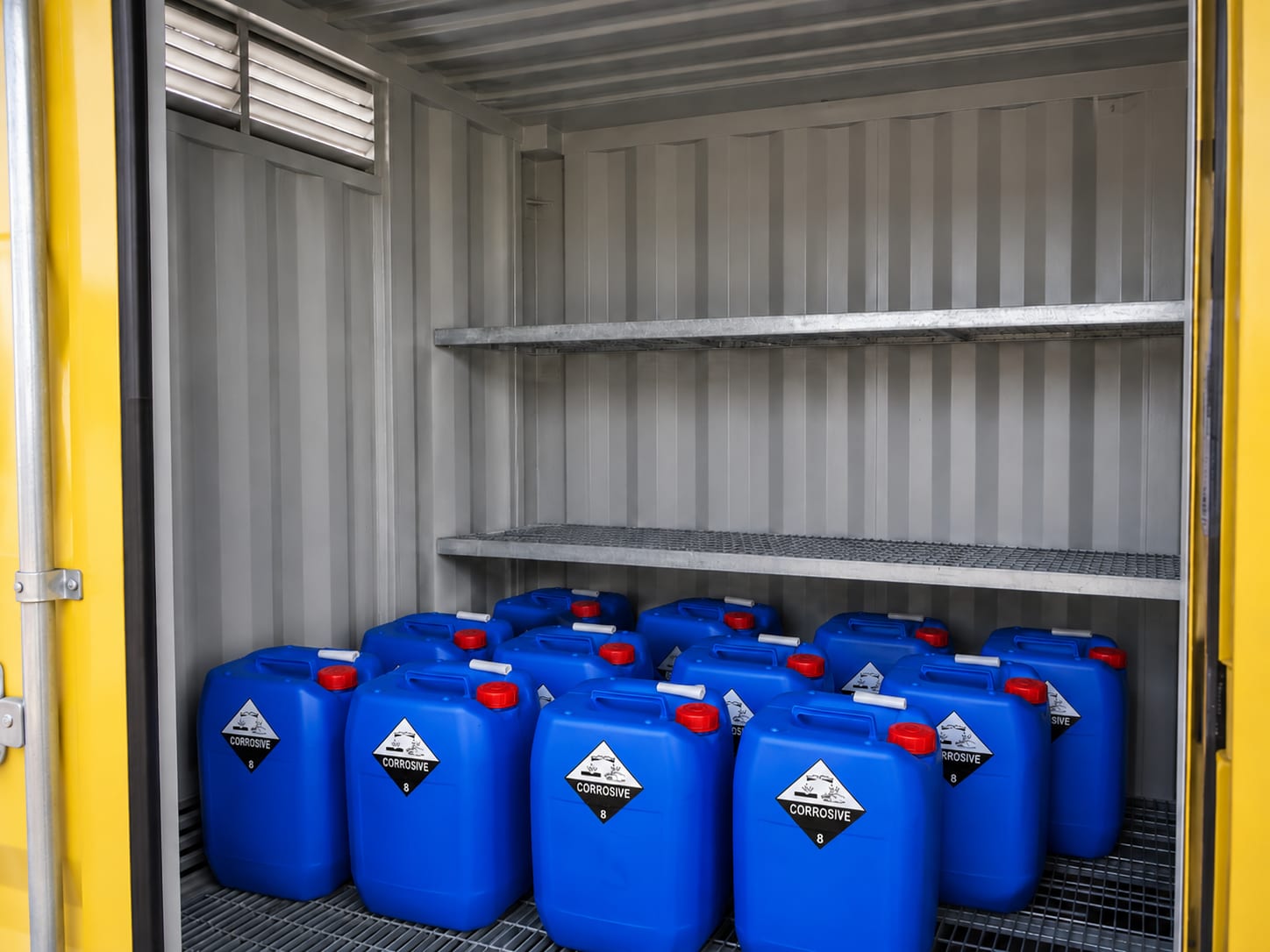
Corrosive Storage Containers
Class 8 acids and alkalis to AS 3780, lined with a deep sump.
Class 8 corrosive storage containers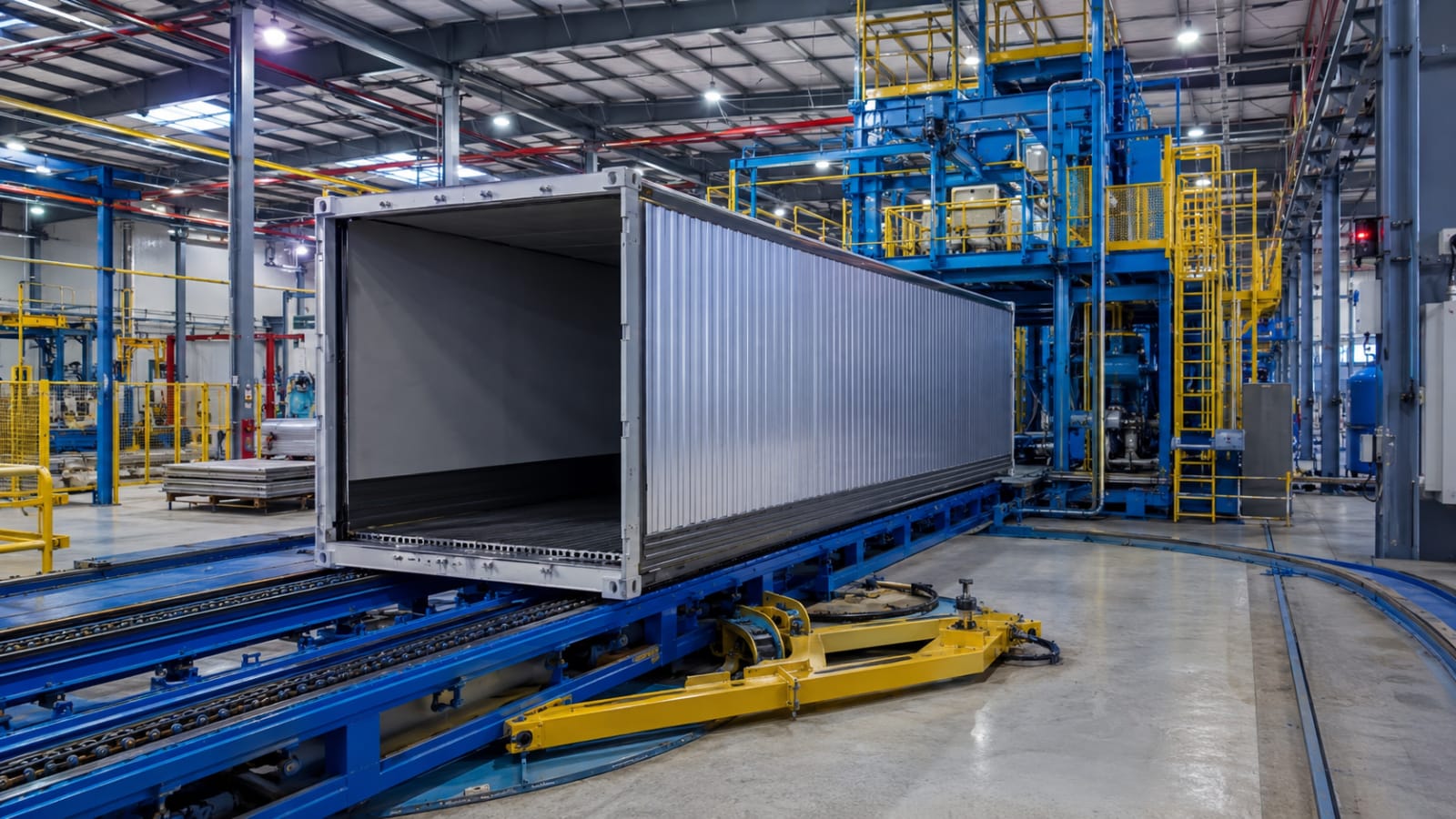
DG Classification & Compliance Guide
Class-by-class storage rules and the AU/NZ standards behind them.
dg classification and compliance guide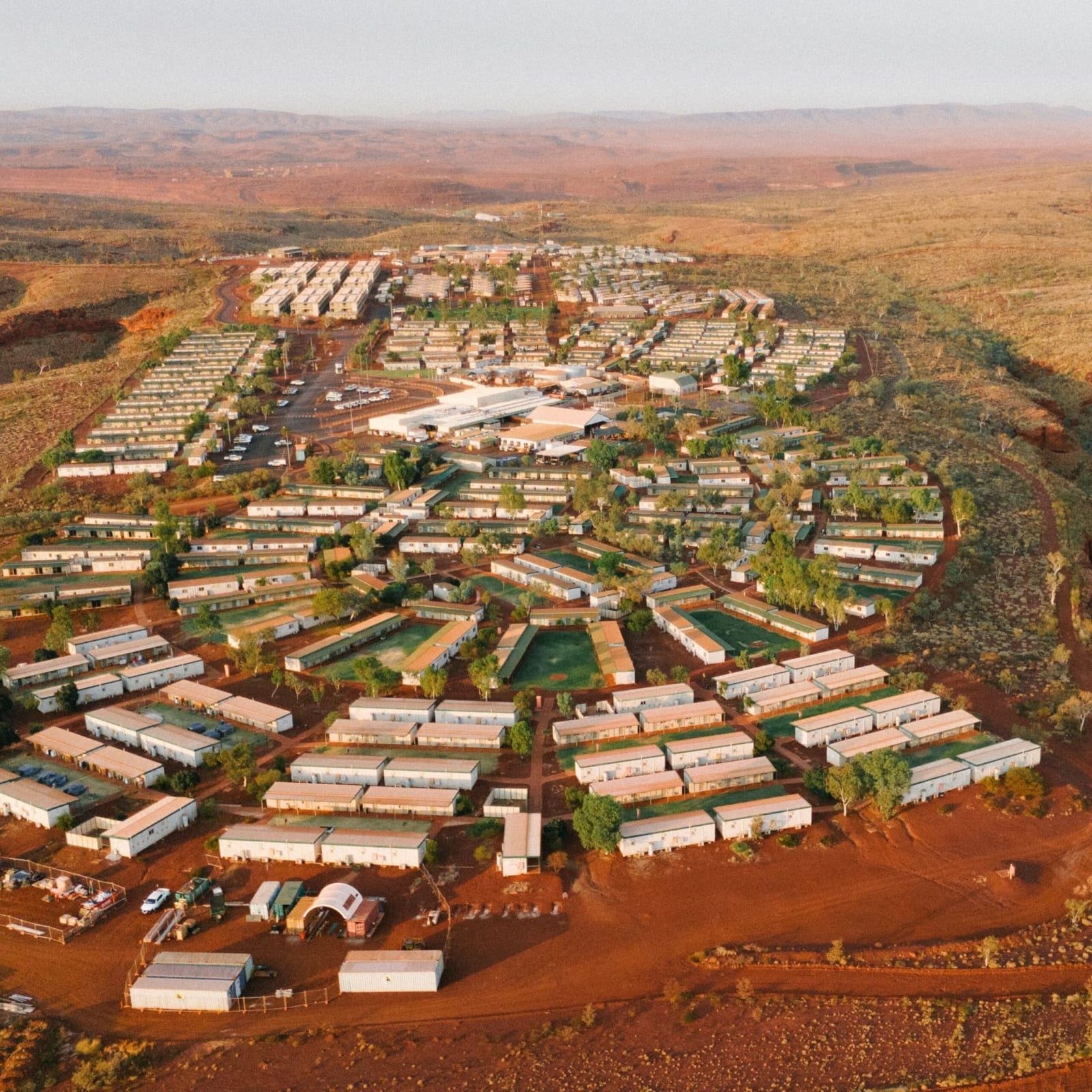
Bunded vs Unbunded DG Storage
When bunding is required and how containment is sized.
bunded vs unbunded dg storage
Bunded Containment
Integrated Bunding, Built Into Every Unit
Bunding is the defining feature of a DG container: a steel bund welded into the floor frame, sized under AS 1940 to the largest package plus 25% of storage. A spill drops below the working floor, and a 316L stainless drain valve resists the chlorides and acids that pit a 304: the containerised alternative to an indoor cabinet.
Class 3 & Class 8
Flammable and Corrosive Storage Solutions
Flammable and corrosive goods are the two highest-demand applications, and each follows its own standard. Class 3 flammable liquids are stored to AS 1940, with secondary containment, ventilation and ignition-source control. Class 8 corrosives are stored to AS 3780, which adds a chemical-resistant lining and a sump at least 150 mm deep holding 25% of aggregate.
In the Field
Where DG containers deploy
Representative deployments, wherever a compliant outdoor store has to sit close to where the goods are used.

WA Goldfields Fuel Farm
Six 20ft AS 1940 bunded diesel stores for a Goldfields mine as a relocatable fuel farm, placarded from the factory.
View project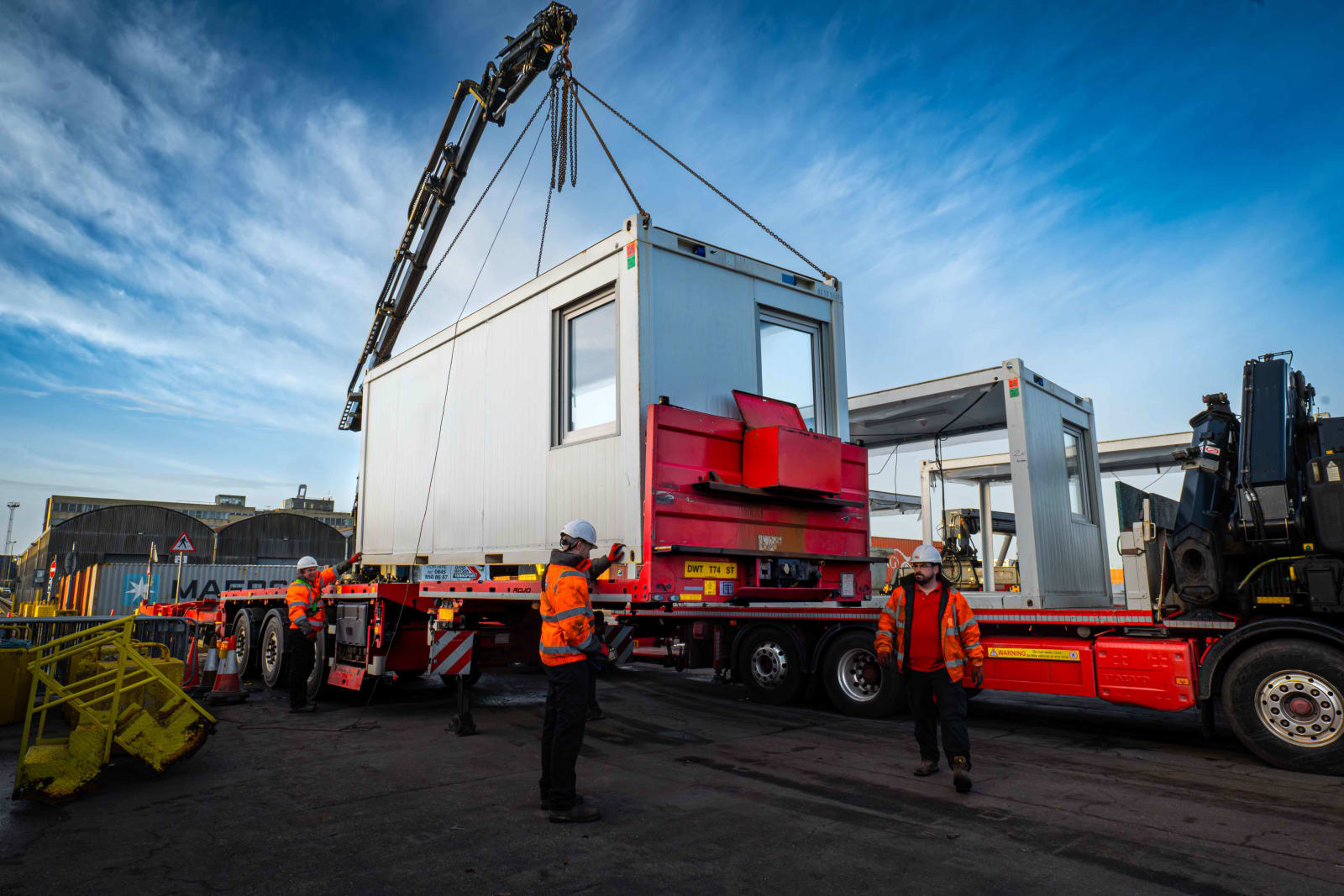
Construction Laydown DG Store
The unit holds solvents and fuels through the build, then lifts to the next stage on its forklift pockets and ISO corners.
View project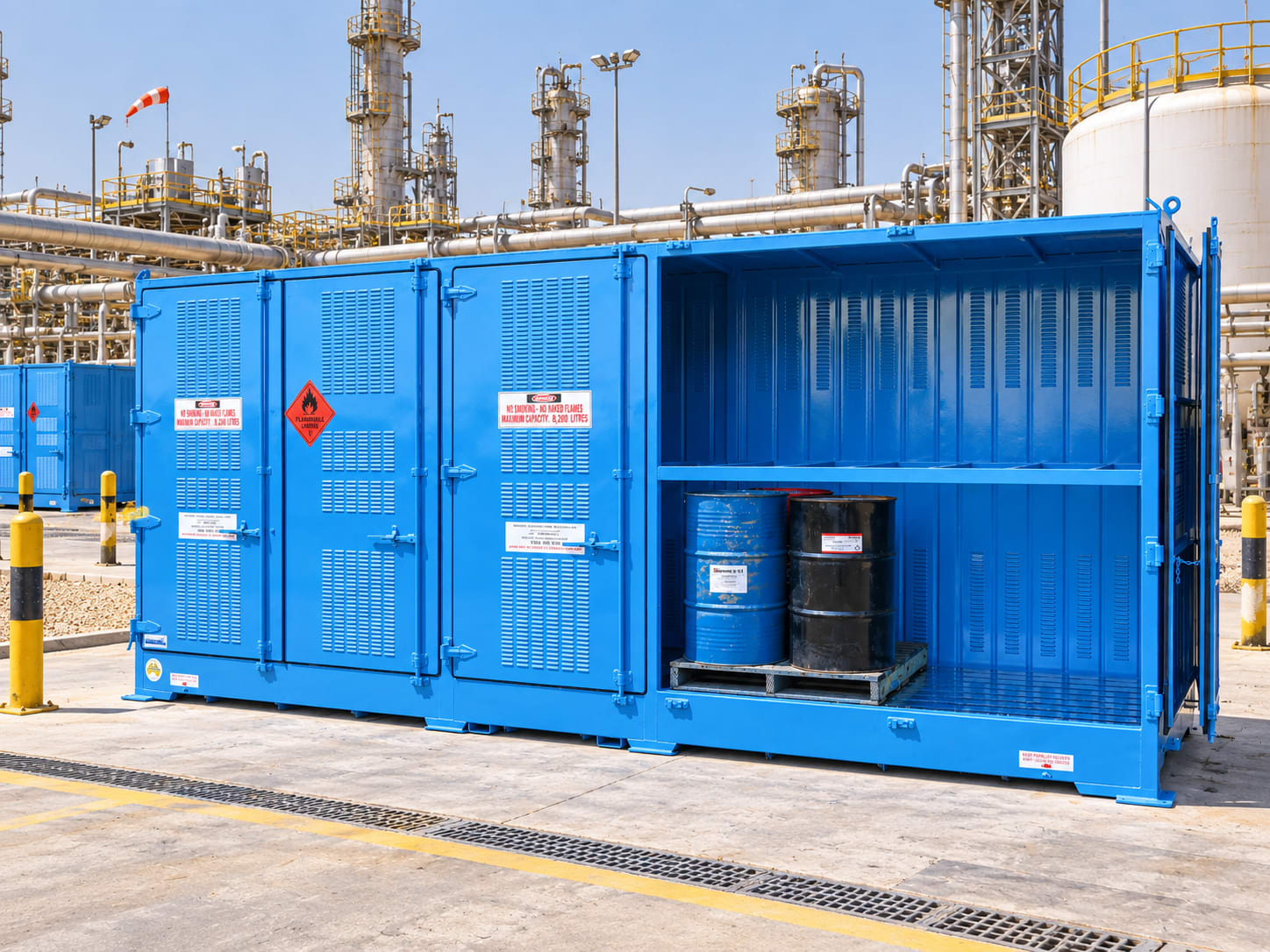
Saudi Gas Plant Chemical Store
NFPA-compliant corrosive and chemical storage for a Saudi gas plant, with class segregation and a Gulf corrosion rating.
View projectFactory-Direct
Why Choose SCS Global for DG Storage
SCS is the only factory-direct manufacturer in this market: every other seller in the segment is a hire company, reseller or cabinet retailer. For outdoor dangerous goods storage at scale, the engineering and Certificate of Compliance come from the line that built the unit, at factory pricing, with a sweet spot of 20 to 50 units per order.
Compliance built in
Each bund is sized to the secondary-containment rule, doors and ventilation are built to the class standard, and the Certificate of Compliance documents it.
One line, the full class register
Class 3, Class 8, chemical and mixed-class hazardous storage containers come off one line against one engineering baseline. We sell these units rather than offering DG container hire.
Global Delivery
Worldwide Shipping from the Factory
Indicative transit times
Sea freight, port-to-port from China, in weeks. Add 1 to 2 weeks for handling and customs. Industry-typical, not SCS guarantees.
| Destination | Factory → Site |
|---|---|
| Oceania (AU / NZ) | ~3–4.5 weeks |
| South-East Asia | ~1–2 weeks |
| Middle East | ~3–4 weeks |
| Africa | ~4.5–6 weeks |
SCS ships dangerous goods containers worldwide from our Yixing factory, managed from Hong Kong. Each dangerous goods shipping container loads ISO-cornered and forkliftable into standard slots and arrives ready to relocate between work fronts.
Factory-to-port logistics
SCS coordinates schedules, customs documentation and port clearance, so the store arrives ready to commission.
Lead times
Lead time depends on size, doors, fit-out and DG class, confirmed at quote stage.
Industries
DG storage for every sector we serve
Mining & Resources
Bunded fuel, lube, reagent and oxidiser stores that relocate with the work front.
Oil, Gas & Energy
Chemical and flammable liquid stores with side-opening IBC access and mechanical ventilation.
Construction & Infrastructure
Outdoor relocatable DG stores for solvents and fuels, moving with each stage of the build.
Military & Defence
Placarded, relocatable DG storage for defence and government sites.
Compliant hazardous material storage containers for every sector above, shipped worldwide.
Compliance
Compliance and Certification
SCS DG containers comply with AS 1940:2017, AS 3780:2023 and AS 3833:2024, and ship with an independent Certificate of Compliance per unit. AS 1940 governs flammable and combustible liquids, AS 3780 governs Class 8 corrosives, and AS 3833 governs mixed-class storage where one unit holds incompatible classes. Workplace hazardous goods storage duties sit under Safe Work Australia guidance and state regulations.
 ISO
ISO  Bureau Veritas
  DNV
DNV  Lloyd's Register
  BIC
BIC  ABS
ABS FAQ
Frequently Asked Questions
The questions procurement, operations and HSE teams ask most often.
What is a DG container?
A dangerous goods container is a bunded steel store for outdoor storage of flammable, corrosive and other hazardous goods, built to AS 1940, AS 3780 and AS 3833:2024, with a welded steel bund, a 316L stainless lockable drain valve, passive ventilation and DG-class placarding. SCS builds it in 10ft and 20ft.
What size DG containers are available?
SCS builds DG containers in 10ft and 20ft. The 10ft holds 17.4 m³ with an 800 L bund for light to moderate inventory. The 20ft holds 33.2 m³ with a 1,200 L bund, up to 39.8 m³ in the side-opening build for bulk drums and IBCs.
What DG classes can be stored in a bunded container?
A bunded container stores Class 3 flammable liquids, 4.1 flammable solids, 4.3 dangerous-when-wet substances, 5.1 oxidising agents, 6.1 toxic substances, and 8 corrosives, subject to SDS compatibility for goods stored together. Mixed incompatible classes need AS 3833:2024 segregation, laid out in the build at order.
What is bunded storage?
Bunded storage is secondary containment built into the store. In a bunded shipping container, a welded steel bund under the floor holds the largest package plus 25% of storage under AS 1940, or the greater of 25% of aggregate or the largest container for corrosives. Unbunded units rely on external bunding.
What does a spill kit contain?
A general-purpose spill kit contains absorbent booms and pads, granular absorbent, a waste bag with ties, gloves and eye protection, and a response instruction sheet, sized to the bund volume and the largest single container stored. Our bunded vs unbunded DG storage explainer covers how bunding and spill response work together.
What does a chemical spill kit contain?
A chemical, or hazmat, spill kit adds neutralising absorbent for acids and alkalis, chemical-resistant gloves and a chemically-resistant disposal bag to the general-purpose contents. Match the kit to the SDS for the goods stored, and keep it beside the store where a spill would start.
Can I store dangerous goods in a standard shipping container?
Not compliantly. A standard shipping container has no bund, vents or DG signage. A Class 3 DG store is bunded, ventilated with high and low vents, fitted with a non-spark floor and signed for its class, which is how SCS builds them in 10ft, 20ft and 20ft side-opening sizes.
What is the difference between a DG cabinet and a DG container?
A cabinet is an indoor, small-volume unit for litres of chemistry inside a building. A DG container is an outdoor, bulk, relocatable steel store for drums and IBCs, with an integrated bund and compliant ventilation. Choose a container for outdoor bulk storage and a cabinet for small indoor quantities.
Do you hire DG containers?
No. SCS builds and sells dangerous goods containers factory-direct, from a single unit, shipped DDP to your nearest port with a Certificate of Compliance. Because each unit lifts on forklift pockets and ISO corners, it relocates between work fronts as projects move, rather than going back to a hire yard.