Guide

Mining Camp Accommodation Standards & Regional Compliance Guide

A walkthrough of the standards and regulations that apply to mining camp accommodation across SCS Global's target markets. Written for procurement, operations, project, and quality leads scoping a camp deployment against the host country's regulatory stack.

Summary

Mining camp accommodation standards stack across three layered legal regimes in every jurisdiction SCS Global supplies into: the host country's building code, its labour or worker-accommodation regulation, and its mining safety law. Australia, New Zealand, Singapore, and five Middle East jurisdictions carry the most-developed worker-accommodation regulations. SCS units ship from our Yixing factory with a destination-specific compliance pack: engineering certificate, AS/NZS electrical and plumbing statements, fire-resistance documentation, and CSC plating on every shell. This guide sits alongside our mining camp accommodation pages at SCS Global, covering the product specifications and compliance documentation that support the same procurement audience.

01

Australia

Australian Standards

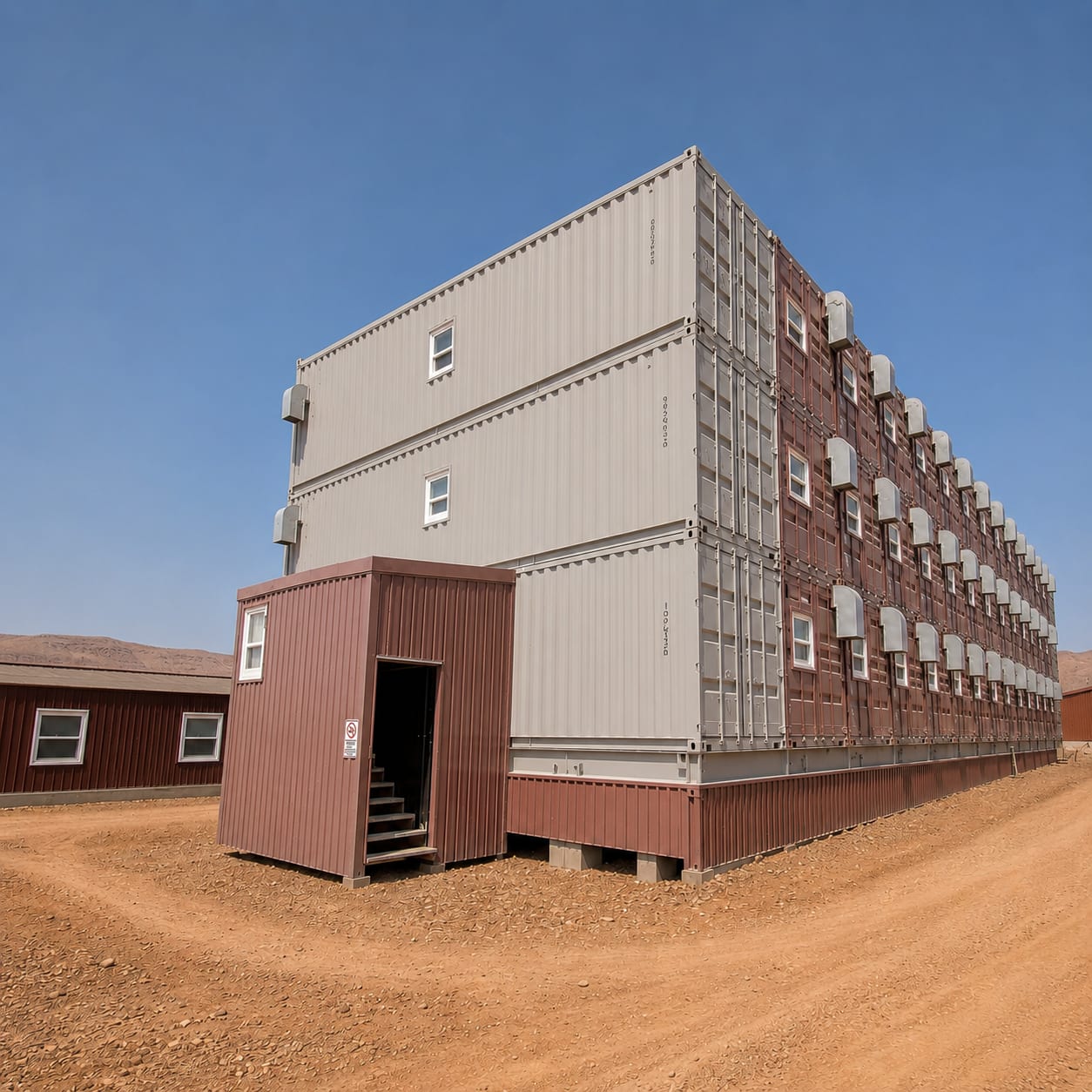
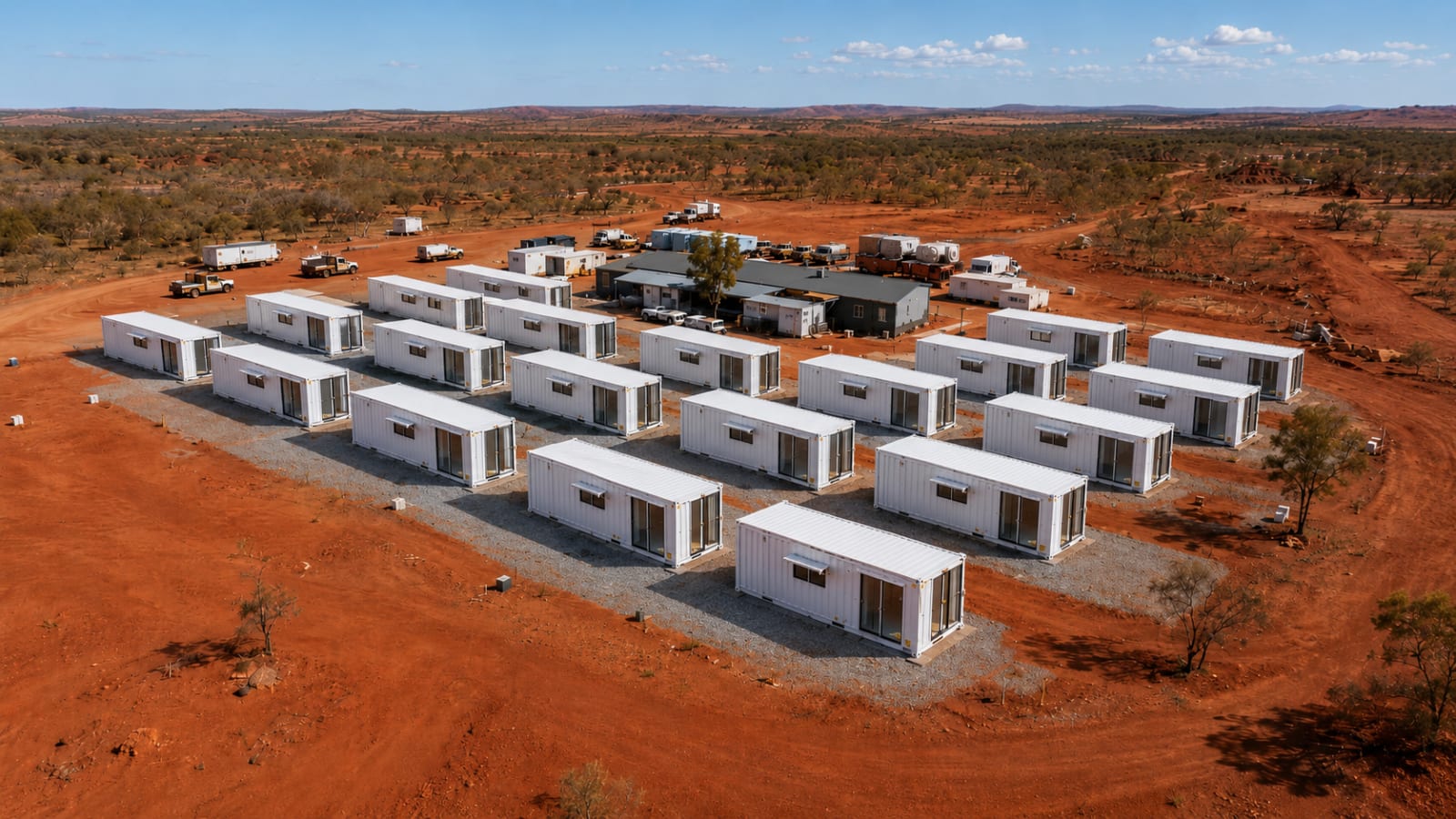
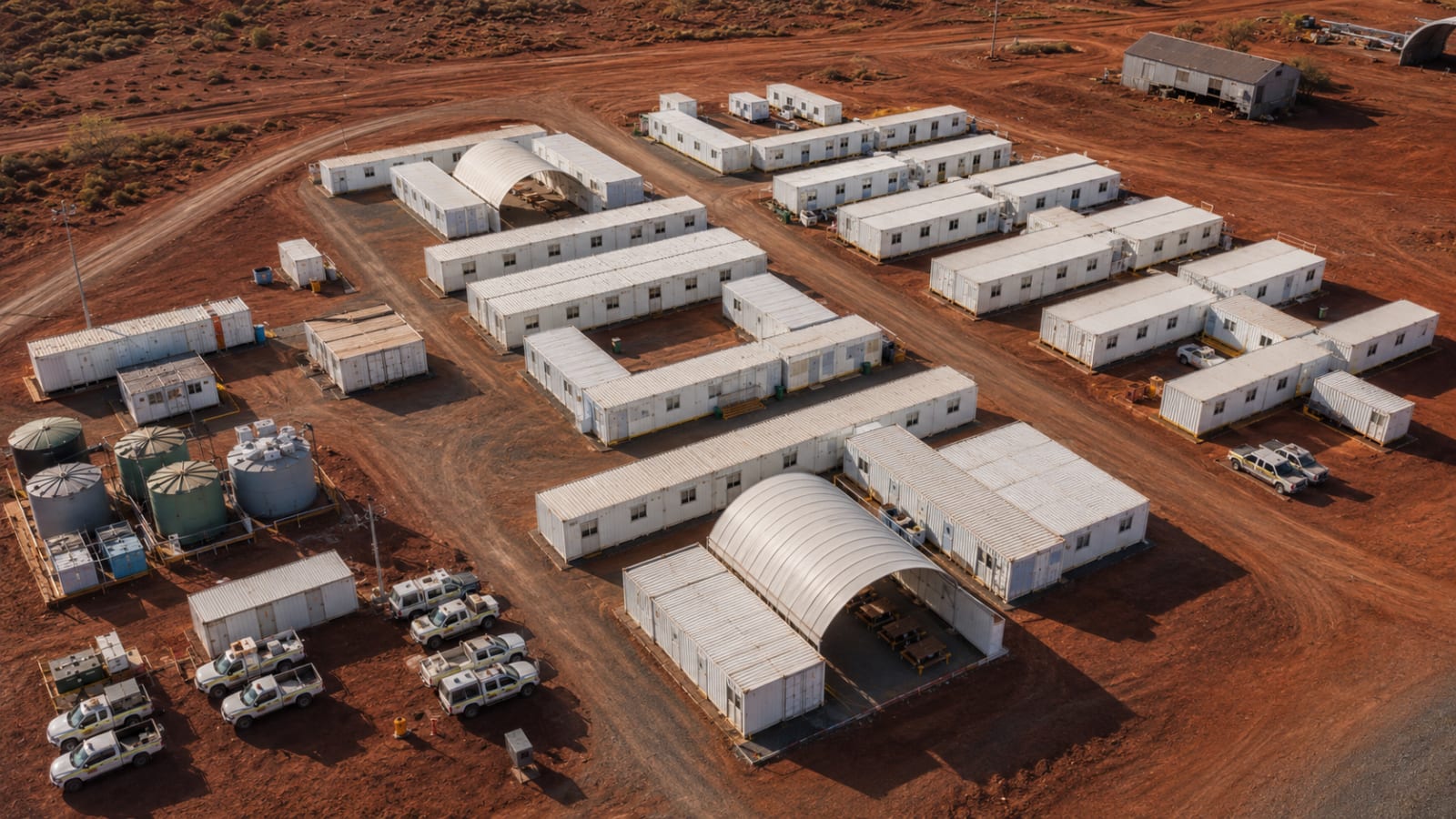
Australian mining camp accommodation standards sit in three layered regimes: the National Construction Code 2022 (Class 3 workforce accommodation), AS/NZS standards covering wind, electrical, plumbing, and fire, and state Work Health and Safety (Mines) regulations. A Pilbara camp meets all three: NCC Class 3, AS/NZS 1170.2 Region D loading, AS/NZS 3000 wiring, AS/NZS 3500 plumbing, AS 1530.4 fire resistance, and the WA WHS (Mines) Regulations 2022. Every SCS module ships built to that stack with certificates in the pre-shipment pack.

The NCC 2022 classes mining camp dormitories as Class 3 (workers' quarters / dormitory). Volume One, Amendment 2 (adopted 29 July 2025) is the current edition. The ABCB Prefabricated, Modular and Offsite Construction Handbook is the documented modular-supplier pathway under the NCC 2022 edition.

Cyclone rated accommodation in Region D is engineered to an ultimate design wind speed around 317 km/h per AS/NZS 1170.2. AS/NZS 3000 covers in-unit wiring. AS/NZS 3012 covers temporary site supply. AS/NZS 3500 covers hot and cold water, drainage, and vent stack design. AS 1530.4 sets FRL test methods; AS 3959 sets bushfire BAL ratings.

WA's WHS (Mines) Regulations 2022 Part 3.2 covers workplace facilities and amenities. Queensland runs the Mining and Quarrying Safety and Health Regulation 2017. NSW, NT, and SA operate equivalent WHS frameworks.
02

Singapore

Singapore MOM Workers Dormitory Requirements

Singapore regulates worker dormitories under the Foreign Employee Dormitories Act (FEDA), administered by the Ministry of Manpower. The New Dormitory Standards (NDS) set quantitative requirements: 4.5 m2 minimum per resident, 1 toilet per 15, 1 shower per 15, 1 basin per 10, 1 washing machine per 30, and 1 cooking point per 20. Any accommodation housing 7 or more foreign employees requires a FEDA licence.

The Dormitory Transition Scheme (DTS) sets an interim standard of 3.6 sqm per resident for legacy dormitories that pre-date the 2021 NDS. SCS units shipped for new builds default to the full NDS specification.

A Building and Construction Authority (BCA) Qualified Person leads the structural submission through CORENET X. Modular Integrated Construction (MiC) and Precast Prefinished Volumetric Construction (PPVC) are the recognised factory-built pathways, and SCS units ship under that route with a QP-led submission.

New Dormitory Standards (NDS) quantitative requirements
FieldNDS requirementSource
Floor space per resident4.2 sqm minimumMOM Annex A (2021)
Max residents per room12MOM Annex A
Bed spacing1 m between bedsMOM Annex A
Sanitary facilities1 set per 6 residentsMOM Annex A
Air-conditioningMERV14 minimumMOM Annex A
Isolation beds10 per 1,000 (peace) + 15 per 1,000 (surge)MOM Annex A
Floor section limit240 residents per floor sectionMOM Annex A
03

Middle East

Middle East Labour Camp Regulations

Saudi Arabia, the UAE, Qatar, Oman, and Bahrain each publish quantitative worker-accommodation regulations, with floor space between 3 and 6 sqm per worker as the legal minimum. Employer registration with the labour authority (MOMRAH in KSA, MoHRE in the UAE, MoL in Qatar, LMRA in Bahrain) is mandatory before workers move in.

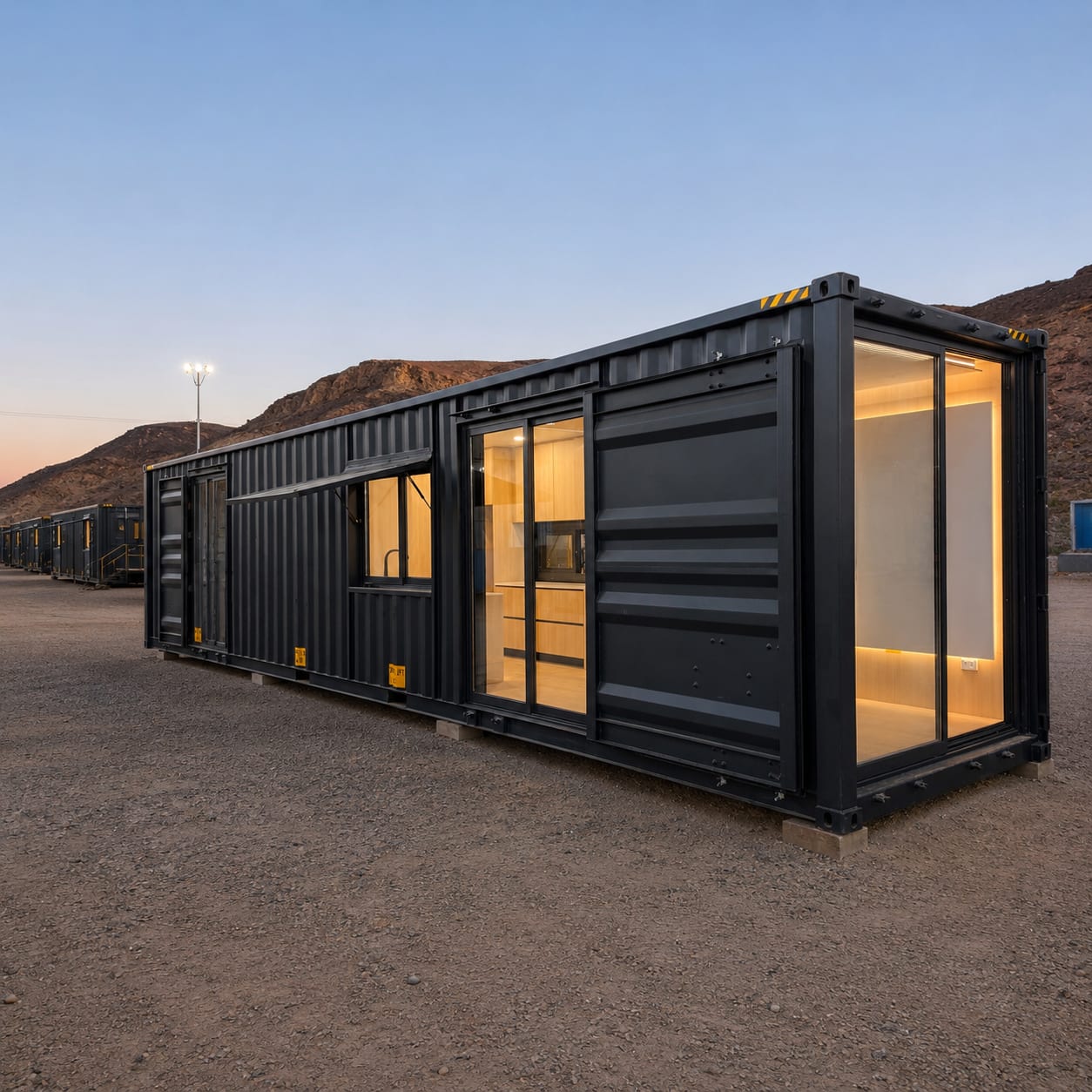
Saudi Arabia: MOMRAH workers accommodation regulations set 4 sqm per worker, 10 or fewer workers per room, 1 bathroom per 8 workers. Worker accommodation falls into Type A (large permanent), Type B (medium), and Type C (temporary, transportable). SCS units ship into Type C by default. Balady platform registration is mandatory for employers with 20-plus workers.

UAE: Federal Decree-Law 33/2021 sets the labour relations framework. Ministerial Resolution 44 of 2022 sets the floor at 3 sqm per person, mandates central air-conditioning, and requires mechanical ventilation. Dubai Municipality's LAM2 V2 (2024) exceeds the federal floor.

Qatar: Ministerial Decision No. 18 of 2014 sets 6 sqm per bed (the highest floor in the Gulf), prescribed bathroom and kitchen ratios, and medical staffing that scales with population.

Oman's Ministerial Decision 286/2008 covers bathroom, sleeping, dining, ventilation, and changing rooms. Bahrain's LMRA Resolution No. 76 of 2020 sets 4 sqm vacant floor per worker.

04

New Zealand

New Zealand Standards

New Zealand mining camps run on three frameworks: the New Zealand Building Code, the Health and Safety at Work Act 2015, and the Mining Operations and Quarrying Operations (MOQO) Regulations 2016. The NZBC adopts the dual-listed AS/NZS standards SCS units already certify against: AS/NZS 1170.2 wind, AS/NZS 3000 electrical, AS/NZS 3500 plumbing, and AS 1530.4 fire resistance.

The Health and Safety at Work Act 2015 places a PCBU duty on every employer who provides worker accommodation. The WorkSafe NZ worker accommodation guidance sets practical expectations on buildings, facilities, and amenities. AS/NZS 1170.2 covers both countries, but the regional wind designations use the NZ map, not Australia's Region A through D scheme.

05

International

International Building Codes

Beyond Australia, New Zealand, Singapore, and the Gulf, SCS supplies into India, South Africa, Indonesia, and the Philippines. International maritime container standards apply on shell-based units across all markets.

India: the Building and Other Construction Workers (BOCW) Act 1996, sections 34 and 35, requires the employer to provide temporary living accommodation. The framework is duty-based rather than quantitative. IS 1641 and IS 1642 set fire safety standards. Source: Chief Labour Commissioner of India.

South Africa: the SANS 10400 series covers building regulations. A 40ft donga at approximately 29 sqm sits inside Category 1 (80 sqm or less floor area), the simplest approval category under SANS 10400 Part A.

Every donga built on a converted ISO shell carries international maritime container standards: Container Safety Convention (CSC) plating, ISO 668:2020 dimensions, ISO 1496 structural, and ISO 6346 coding.

06

Manufacturing

How SCS Builds to Standard

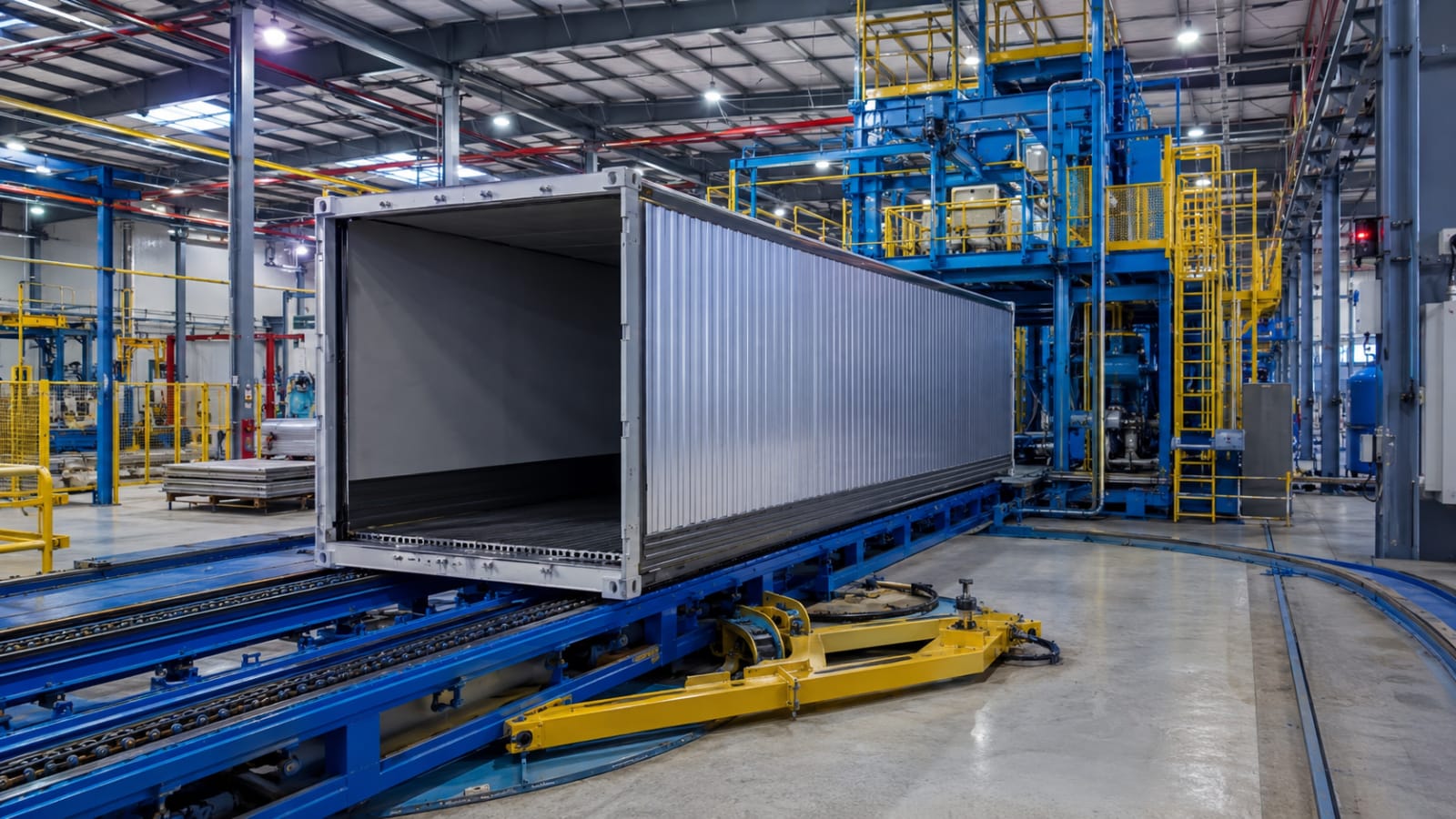
SCS Global certifies its output against mining camp accommodation standards in three layers: an ISO-certified manufacturing system, container-level conformance on shell-based units, and a pre-shipment compliance package tailored to the destination.

SCS publishes against ISO 9001 (quality), ISO 14001 (environmental), and ISO 45001 (occupational health and safety) at our Yixing manufacturing facility in Jiangsu. Every donga on a converted ISO shell ships with a current CSC plate, dimensional conformance to ISO 668, structural conformance to ISO 1496, and corner-fitting conformance to ISO 1161.

The pre-shipment compliance package ships with every module: engineering certificate (region-rated), AS/NZS 3000 electrical compliance statement, AS/NZS 3500 plumbing compliance statement, AS 1530.4 FRL certificate where fire-rated, CSC plate (where shell-based), packing list, and mill certificates for primary structural steel. What ships with a Pilbara-bound donga is not the same as what ships with a KSA-bound Type C module. The pack is rebuilt per destination, with factory-to-site logistics running against the same compliance bill.

Standards & references

Regulations and operator standards

Every figure and ratio on this page traces to one of the standards below.

NCC 2022 National Construction Code (Class 3 workforce accommodation, Amendment 2, 29 July 2025). ABCB
AS/NZS 1170.2 Structural design actions, wind actions (Region A through D). Standards Australia
AS/NZS 3000 Electrical installations (Wiring Rules). Standards Australia
AS/NZS 3500 Plumbing and drainage. Standards Australia
MOM Singapore NDS New Dormitory Standards under FEDA. MOM Singapore
MOMRAH Workers' Accommodation Regulations (Saudi Arabia). MOMRAH
MoHRE 44/2022 UAE Ministerial Resolution No. 44 of 2022. MoHRE
CSC 1972 Container Safety Convention. IMO

Expert perspective

What the destination determines

“Every regulation on this page changes the build, the certification trail, or both. A 200-bed Pilbara camp running on AS/NZS 1170.2 Region D, NCC 2022 Class 3, and the WA WHS (Mines) framework ships with a different stack of paperwork from a 200-bed KSA Type C camp running on MOMRAH, Saudi Labour Law 2024, and Balady registration. We engineer to the destination and the operator standard from the order, not at the port.”

Managing Director, SCS Global Adam Baker

Next step

Scoping a camp deployment? Talk to an engineer.

Bring a destination, a headcount, and an operator standard. Our engineering team will return a compliance matrix against the regulatory floor for the destination, the operator overlay where one applies, and the pre-shipment pack that ships with each unit.