
Ex px Control Rooms
Zone 1 exterior to non-hazardous interior. Control rooms and MCC rooms with automatic de-energisation on pressure loss.
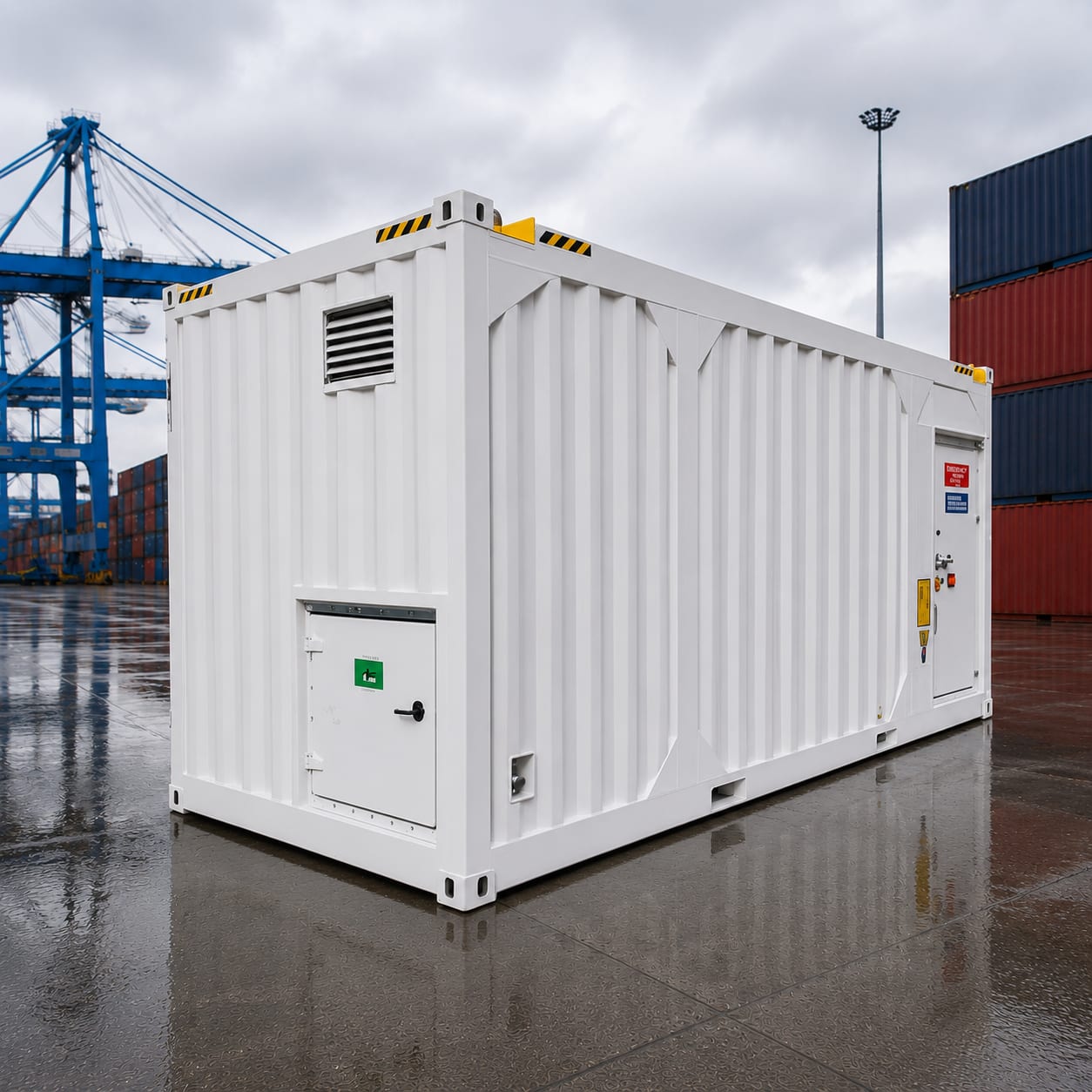
Base shells in 10ft, 20ft, 20ft HC, and 40ft. S355/Q345 structural steel, SA 2.5 blast preparation, epoxy primer, marine topcoat, MPI/NDT on critical welds. Ex p pressurisation, A60 fire-rated boundaries, and blast-resistant structure to project requirements.
ATEX Directive 2014/34/EU and IECEx (IEC 60079 series) for Zone 1 and Zone 2, A-class and H-class fire ratings to the IMO FTP Code, and blast resistance per API RP 752/753 and NORSOK S-001. DNV 2.7-1 certified base shell.
Wellhead platforms, FPSOs, gas processing plants, petrochemical refineries, and onshore chemical facilities, as workshops, control rooms, switchrooms, MCC rooms, accommodation, and temporary refuge modules.
Overview
SCS Global manufactures explosion-proof containers and hazardous area modules for offshore platforms, refineries, and process plants. These ATEX and IECEx certified enclosures start as base containers from our DNV offshore marine equipment range and receive zone-specific engineering: pressurisation, fire-rated boundaries, blast-resistant structure, and Ex-rated electrical installation. The base unit can be a workshop, control room, switchroom, MCC room, or accommodation module. What classifies it as a hazardous area module is the combination of ATEX/IECEx zone compliance, Ex p pressurisation, and certified electrical fit-out for deployment in explosive atmospheres.

Specifications
SCS manufactures containerised modules for deployment in classified hazardous zones where explosive gas or dust atmospheres exist, with Ex p pressurisation maintaining safe or reduced-zone interiors per IEC 60079-2. Each unit is constructed from S355/Q345 structural steel with SA 2.5 blast preparation, epoxy primer, and marine topcoat, with all critical welds tested by MPI/NDT.
| Specification | Value |
|---|---|
| Base container sizes | 10ft, 20ft, 20ft HC, 40ft |
| ATEX zone classification | Zone 1, Zone 2, Zone 21, Zone 22 |
| Fire rating (A-class) | A-0, A-15, A-30, A-60 |
| Fire rating (H-class) | H-0, H-60, H-120 |
| Blast resistance | 3 psi (20.7 kPa), 5 psi (34.5 kPa), 8 psi (55.2 kPa) |
| Pressurisation type | Ex px, Ex py, Ex pz |
| Gas groups | IIA (propane/methane), IIB (ethylene), IIC (acetylene/hydrogen) |
| Temperature classes | T1 (≤450°C) to T6 (≤85°C) |
| Steel grade | S355 / Q345 structural steel |
| Surface preparation | SA 2.5 blast + epoxy primer + marine topcoat |
| Module types | Workshop, control room, MCC room, switchroom, accommodation, temporary refuge |
| Certification | ATEX 2014/34/EU, IECEx (IEC 60079), DNV 2.7-1, IMO FTP Code, EN 12079 |

Pressurisation
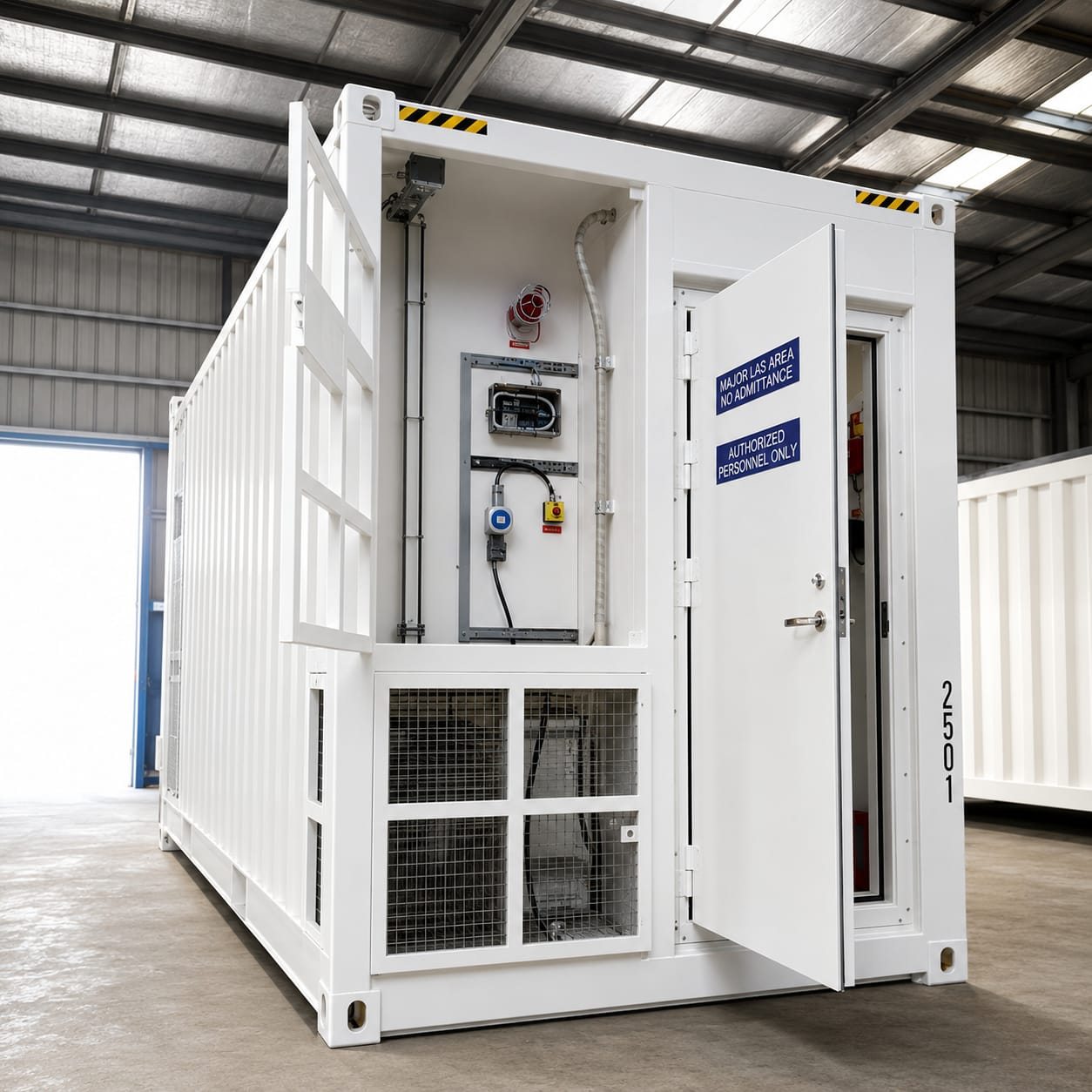
An explosion proof container is a containerised enclosure rated for Zone 1 or Zone 2 deployment under the ATEX Directive 2014/34/EU or the IECEx scheme. Pressurisation holds a positive overpressure above ambient to keep explosive gas out per IEC 60079-13. Ex px converts a Zone 1 exterior to a non-hazardous interior for control and MCC rooms, Ex py to a Zone 2 interior for workshops, and Ex pz a Zone 2 exterior to non-hazardous for accommodation.
Fire Rating
An A60 fire rating limits heat transfer through walls, ceiling, and floor for 60 minutes under the cellulosic fire curve per the IMO FTP Code (MSC.307(88)). It is the highest A-class division under SOLAS Chapter II-2, holding the unexposed face to a 140°C average temperature rise. SCS builds them with mineral wool, ceramic fibre, or intumescent board and minimum 4.5 mm steel plate. Where hydrocarbon jet or pool fires are credible, H-class divisions (H-0, H-60, H-120) apply.
Blast Resistance
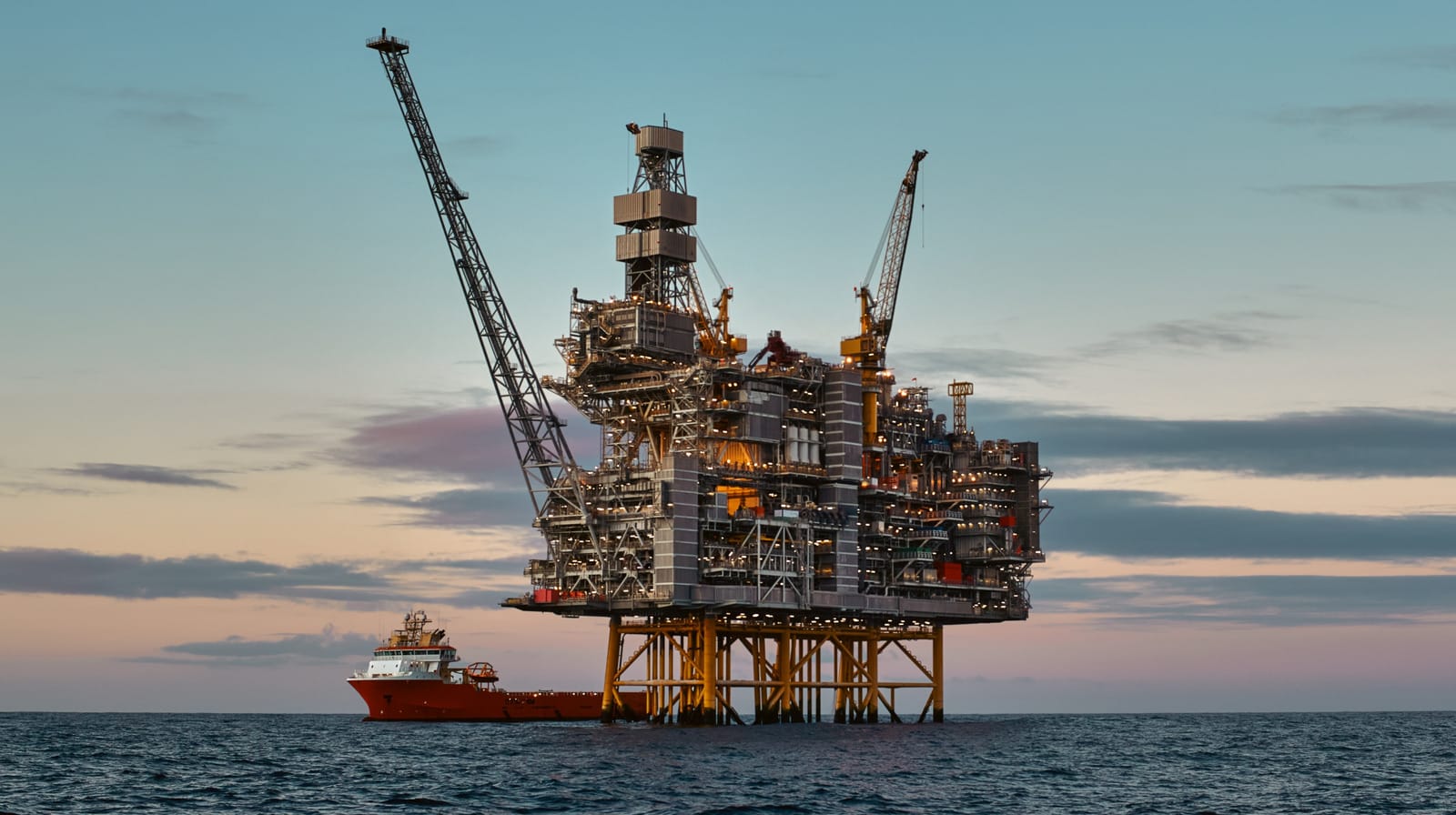
Blast proof containers protect personnel and equipment from overpressure events in process plants, engineered to a site-specific blast study per API RP 752 and API RP 753. The required rating comes from the facility's consequence analysis: 3 psi (20.7 kPa) for moderate-risk occupied buildings, 5 psi (34.5 kPa) closer to process equipment, and 8 psi (55.2 kPa) for high-risk areas. Construction uses reinforced panels, blast-resistant doors, and energy-absorbing connections to NORSOK S-001.
Temporary Refuge
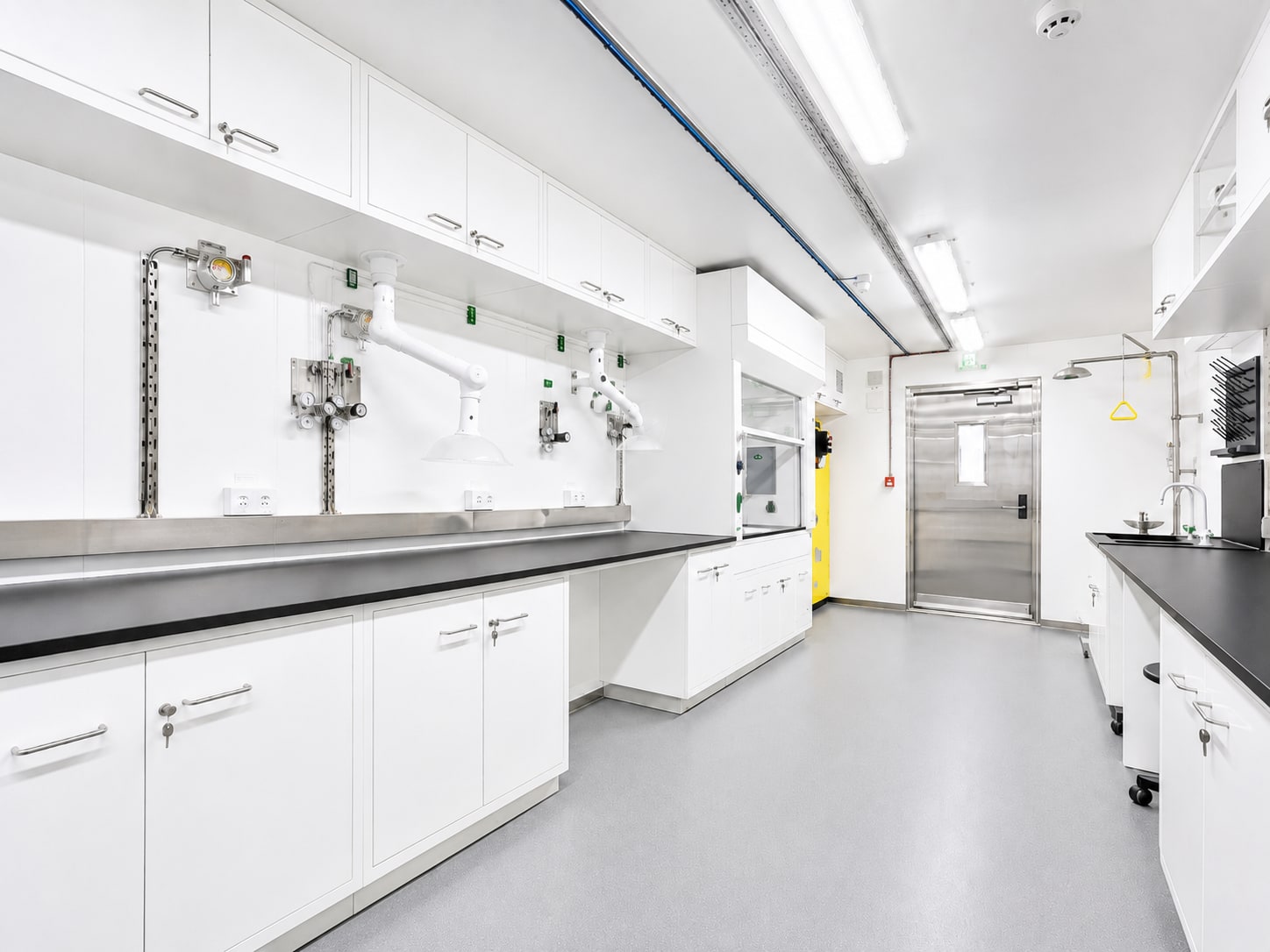
A temporary refuge module is a designated safe area where personnel muster during an offshore emergency, holding structural integrity, a breathable atmosphere, and communications for a defined endurance per NORSOK S-001. It requires A-60 fire-rated boundaries on all six faces, positive-pressure HVAC against gas ingress, emergency power, PA/GA communications, and smoke and gas detection. Minimum endurance is 1 hour, extendable through the operator's TR performance standard per PFEER, with life-safety systems independent of platform utilities.
Compliance
ATEX is the EU explosive atmosphere directive (2014/34/EU), mandatory within EU/EEA states. IECEx is the international scheme accepted in Australia, New Zealand, Singapore, the UAE, Saudi Arabia, India, and South Africa. The difference between ATEX and IECEx is jurisdictional: ATEX is enforced by EU law, while IECEx is a voluntary scheme that serves as the standard across most SCS markets. Both reference the IEC 60079 series for testing, zone classification, and installation. SCS builds ATEX- and IECEx-certified modules from the same facility, with third-party inspection from Bureau Veritas, DNV, ABS, Lloyd's Register, SGS, or Intertek.
 ISO
ISO  Bureau Veritas
  DNV
DNV  Lloyd's Register
  BIC
BIC  ABS
ABS Standards & References
Every hazardous area module we manufacture is engineered against the standards below. Click through to the source authority for the full text and current revision.
Configuration Options
SCS manufactures pressurised cabin modules classified for Zone 1 and Zone 2 deployment per IEC 60079-10-1. Each module is configured to the site's specific zone classification, gas group, and temperature class. Electrical installations follow IEC 60079-14 for selection and installation in hazardous areas.
Zone 1 exterior to non-hazardous interior. Control rooms and MCC rooms with automatic de-energisation on pressure loss.
Zone 1 exterior to Zone 2 interior for workshops and storage.
Zone 2 exterior to non-hazardous interior for offices and accommodation.
Increased-safety electrical fit-out for Zone 2 without pressurisation.
Flameproof electrical components for hazardous-area equipment enclosures.
Intrinsically safe circuits for instrumentation and monitoring.
Applications
SCS builds Zone-classified containers for operators across oil and gas, mining, construction, and defence facilities with classified hazardous areas. Applications include ATEX/IECEx certified workshops, control rooms and MCC rooms with Ex-rated instrumentation, A60 fire-rated accommodation for fire-risk areas, blast-resistant modules for process plant environments, and temporary refuge units for muster stations.
ATEX/IECEx workshops, control rooms, MCC rooms, and temporary refuge units for wellhead platforms, FPSO topsides, gas processing plants, and petrochemical facilities.
Ex-rated control rooms, switchrooms, and refuge units for mine sites and processing plants with explosive dust or gas atmospheres.
ATEX-classified site cabins and control rooms for tunnelling, energy construction, and major infrastructure projects with classified-zone requirements.
Blast-resistant and pressurised modules for defence fuel facilities, munitions handling, and government installations in classified hazardous zones.
Tell us the zone classification, gas group, and fire/blast rating. We engineer the module to your site's risk assessment.
Engineering Resources
Capability statement and zone-classification guidance for engineering review. Every engineering document published here has a crawlable HTML equivalent elsewhere on the page.
Related Products
Sister products in the SCS DNV offshore range. Every unit is built on the same Jiangsu line, against the same DNV testing regime.
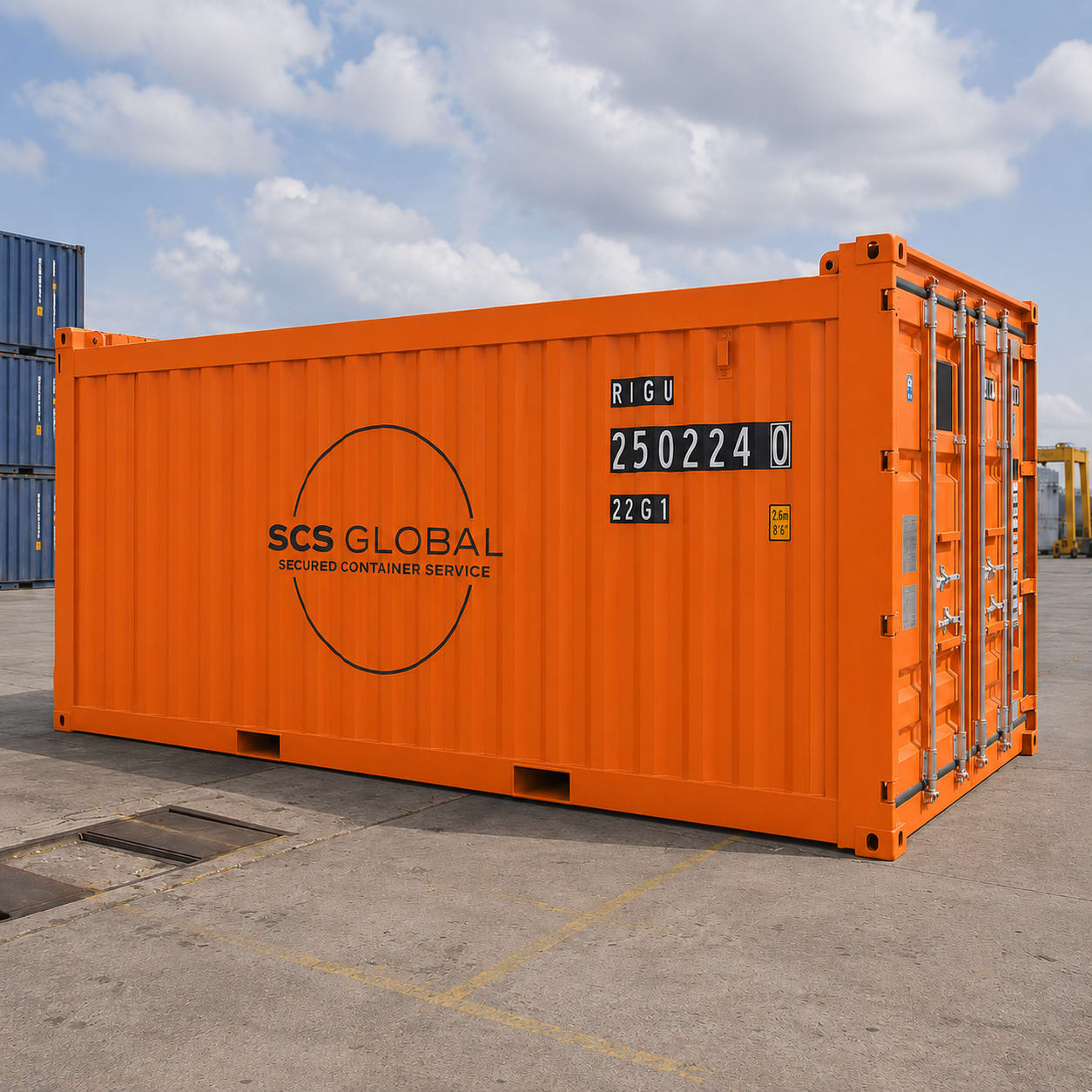
DNV 2.7-1 certified offshore cargo carrying units that serve as the structural base for hazardous area conversion.
dnv cargo container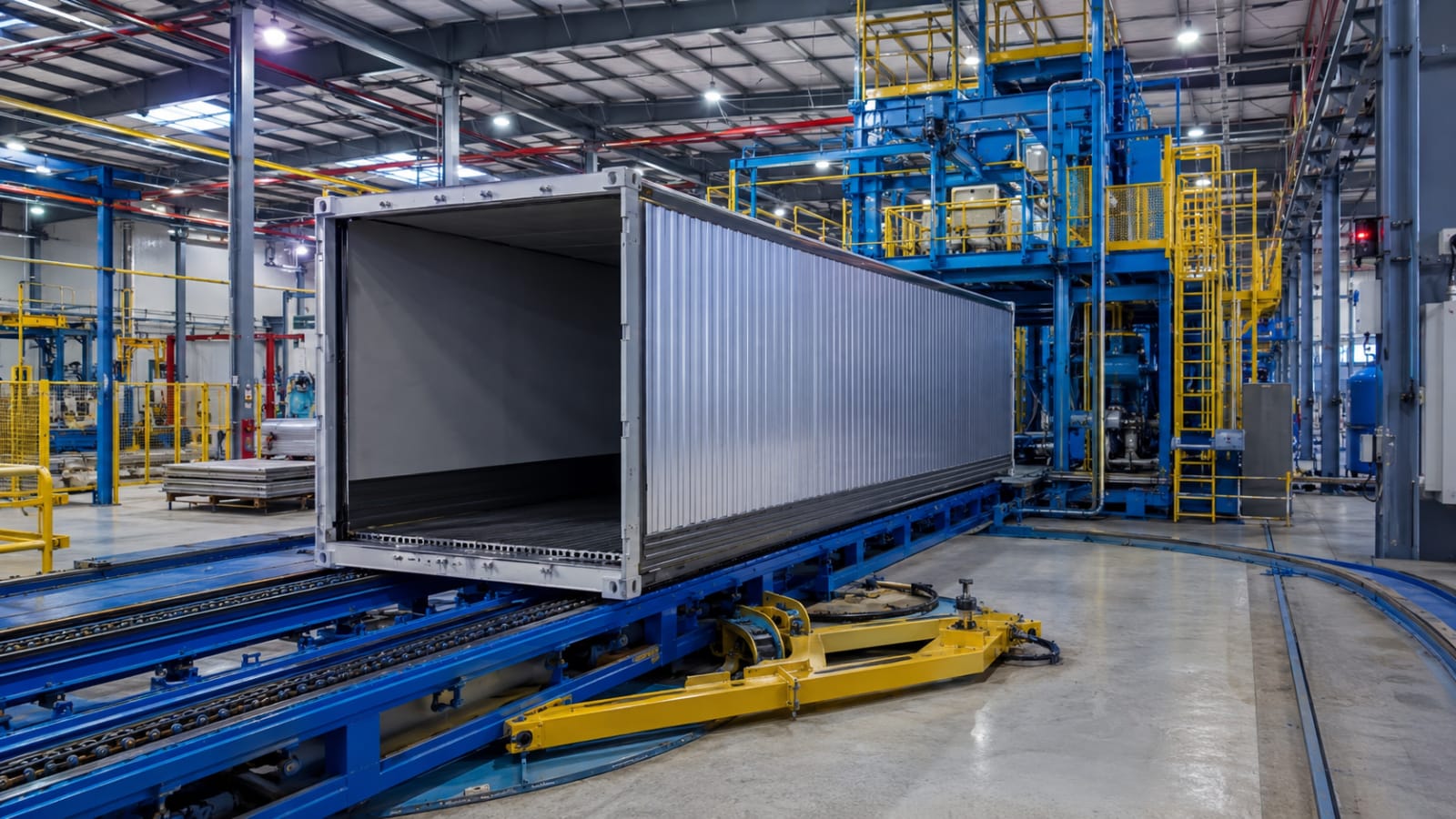
Guide to DNV 2.7-1, DNV 2.7-2, EN 12079, ISO 10855, and NORSOK certification requirements for offshore containers.
offshore container standards guide
Containerised offshore accommodation modules for platform and vessel crew housing during operational campaigns.
offshore living quartersFAQ
Five questions procurement and engineering ask most often about hazardous area modules.
ATEX certification under Directive 2014/34/EU confirms that equipment is designed and manufactured for safe use in explosive atmospheres within EU/EEA member states. Equipment is classified by category (Category 2 for Zone 1, Category 3 for Zone 2), gas group (IIA/IIB/IIC), and temperature class (T1 through T6). SCS holds ATEX compliance for pressurised enclosures, fire-rated modules, and Ex-rated electrical installations across the DNV offshore range.
Hazardous area classification defines zones based on the frequency and duration of explosive gas or dust atmospheres per IEC 60079-10-1. Zone 0 is continuous, Zone 1 is occasional during normal operations, and Zone 2 occurs only under abnormal conditions. SCS manufactures Zone 1 and Zone 2 rated pressurised hazardous zone modules for offshore and industrial deployment.
ATEX certification requires design review against IEC 60079 series standards, prototype testing for the relevant protection type (Ex d, Ex p, Ex e, or Ex i), and assessment by an EU Notified Body. The process applies to each equipment configuration. SCS works with third-party inspection bodies including Bureau Veritas, DNV, and SGS for hazardous area module certification.
ATEX is a mandatory EU directive covering equipment placed on the market within EU/EEA countries. IECEx is a voluntary international certification scheme with mutual recognition across Australia, New Zealand, Singapore, UAE, Saudi Arabia, and other non-EU jurisdictions. Both frameworks reference the same IEC 60079 technical standards for equipment design and testing.
Hazardous area classification starts with identifying sources of flammable gas or combustible dust release, then mapping zone boundaries (Zone 0, 1, or 2) per IEC 60079-10-1 or the Australian adoption AS/NZS 60079.10. Classification determines which equipment protection types are permitted in each zone. Assessment by a qualified engineer establishes zone extent and ventilation factors.