Military & defence
Military Shipping Containers
Defence procurement needs infrastructure that is secure, rapidly deployable, durable and built to strict compliance, with every unit identical across regions and missions. SCS Global builds the military shipping container range factory-direct, from new steel with full engineering documentation and QA records, and no reseller margin between the factory and the contract.
Where SCS Global deploys
Containerised military infrastructure, built factory-direct
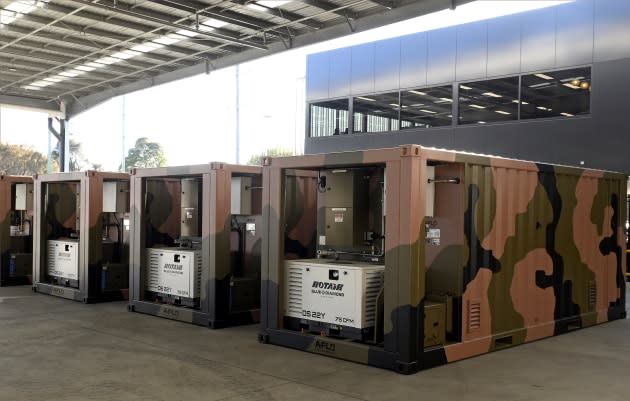
SCS Global manufactures containerised military infrastructure factory-direct: command and operations containers, communications and surveillance containers, military workshop and armoury containers, and tricon and quadcon logistics containers, all built from new steel. The four lines cover what a deployed force stands up first: secure command space, signals and surveillance housing, equipment sustainment and cargo movement. Buyers are armed-services procurement teams, prime contractors and defence integrators specifying containerised sub-systems, military logistics and sustainment buyers, and engineering and works branches procuring deployable basing. Every unit ships from the SCS factory with engineering drawings, QA and QC reporting and certification packs, the same documentation set defence contracts audit.

Sector context
Why defence infrastructure is built in containers
Defence infrastructure is built in containers because a container ships in a standard freight envelope by road, sea and air, cranes into position on arrival, and is operational within hours instead of waiting on construction. In the field that covers secure command, communications and maintenance space, ordnance and fuel storage, and accommodation. A containerised facility also redeploys: when the operation moves, the infrastructure moves with it, and the same unit serves the next tasking. The shipping container military logistics runs on is the ISO box, so the military-specification sizes subdivide it: tricons and quadcons couple back into a standard 20ft footprint for sea freight, then break out for air and land movement as deployable container systems. For semi-permanent base infrastructure the schedule maths matches what McKinsey & Company reports for modular construction: 20 to 50% compression, because fabrication runs in parallel with ground preparation.
The demand sits in SCS Global's markets. Asia-Pacific accounts for roughly half of global demand for military deployable infrastructure, and the global market is projected to reach about US$839 million by 2032 at a compound annual growth rate near 6.7%, according to the 24 Market Reports military deployable infrastructure forecast. The Middle East is in a defence-modernisation cycle over the same window. The established military container manufacturers serve the United States. The demand centres are Australia, India, Singapore and the Gulf, the markets SCS Global ships factory-direct.
The military container lines
Containerised infrastructure for defence operations
Four military container lines SCS Global engineers and builds factory-direct, each opening onto its own product page as the range publishes. Command and operations containers for tactical headquarters. Communications and surveillance containers, EMI-shielded for signals and radar housing. Military workshop containers for field maintenance and armoury fit-outs. And tricon and quadcon containers, the military-specification logistics sizes that subdivide a 20ft ISO footprint. The product pages carry the dimensions, fit-outs and configurations behind each line.
-
Command & Operations Containers
-
Communications & Surveillance Containers
-
Military Workshop Containers
-
Tricon & Quadcon Containers


Compliance and standards
Regulatory landscape for military and defence containers
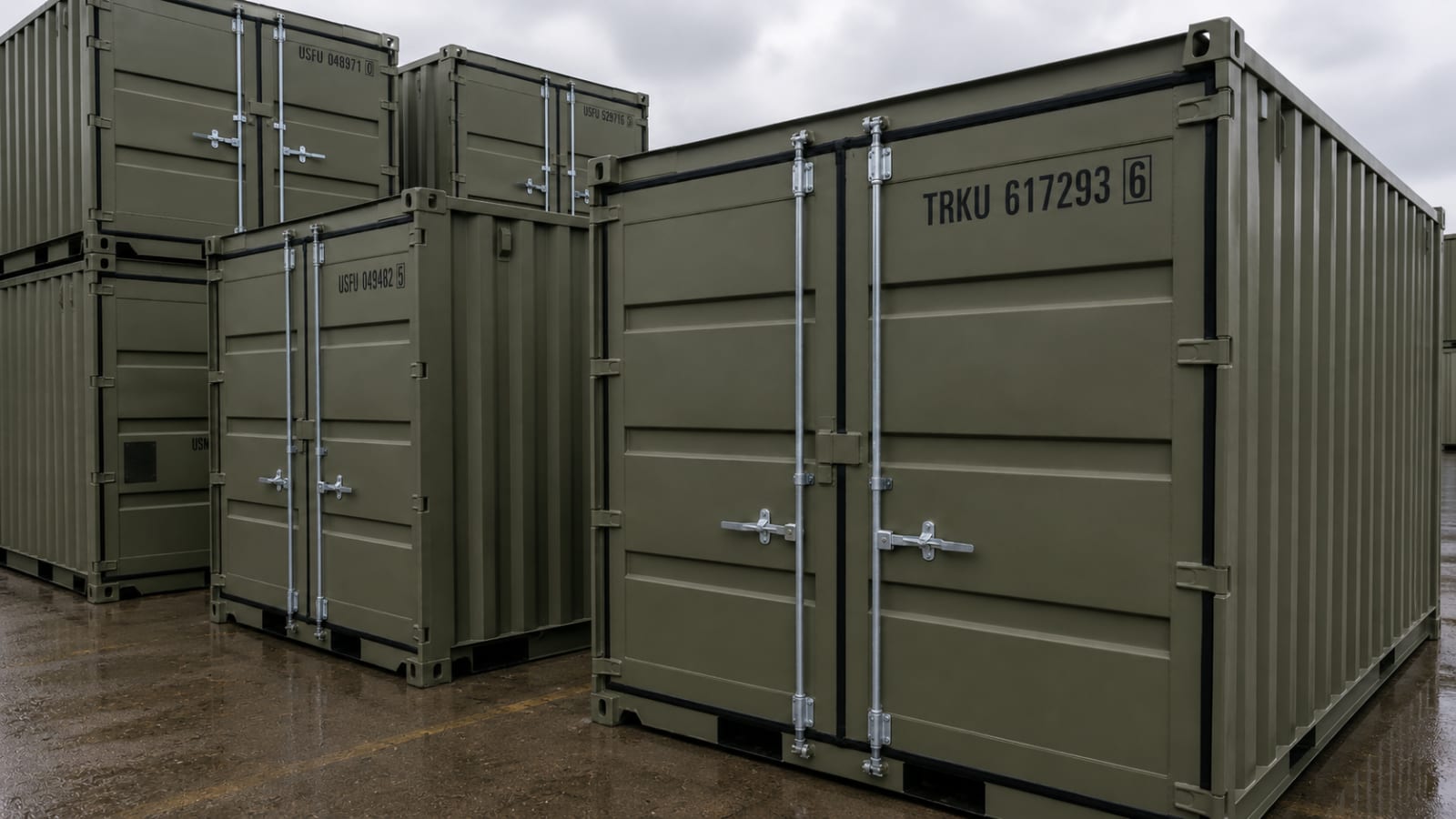
Military containers are audited against structural, environmental, handling and fire standards before an installation accepts them: ISO 668, MIL-STD-810 test methods, STANAG packaging levels and CSC safety approval. The table names the category envelope, not a certification claim. SCS Global engineers to the structural, CSC and ISO envelope its factory QA substantiates, and names the defence test-method standards for scoping context. Follow any link to the issuing authority for the current revision.
Defence-specific pain points
Defence deployment challenges, mapped to SCS Global containerised solutions
The pain points that drive military container procurement: secure command space, field communications, equipment sustainment, expeditionary cargo movement, blast exposure and base infrastructure. Each maps to a container line SCS Global builds, or to a standard range it manufactures alongside them. Use the table as a scoping reference. Where a deployment moves between theatres, global delivery runs from factory dispatch to the staging port.
Military-specification sizes
Military-specification container sizes: tricon, quadcon and ISU
A tricon is a military-specification container roughly one third the length of a 20ft ISO container, at full ISO width and height. Three tricons coupled end-to-end occupy one 20ft footprint, which is what makes the size work: cargo configures as small units in the field and ships as one standard container at sea. The cards below cover the military ISO containers defence logistics runs on, with category-standard figures.
Standard ranges
Standard infrastructure for military bases and forward operations
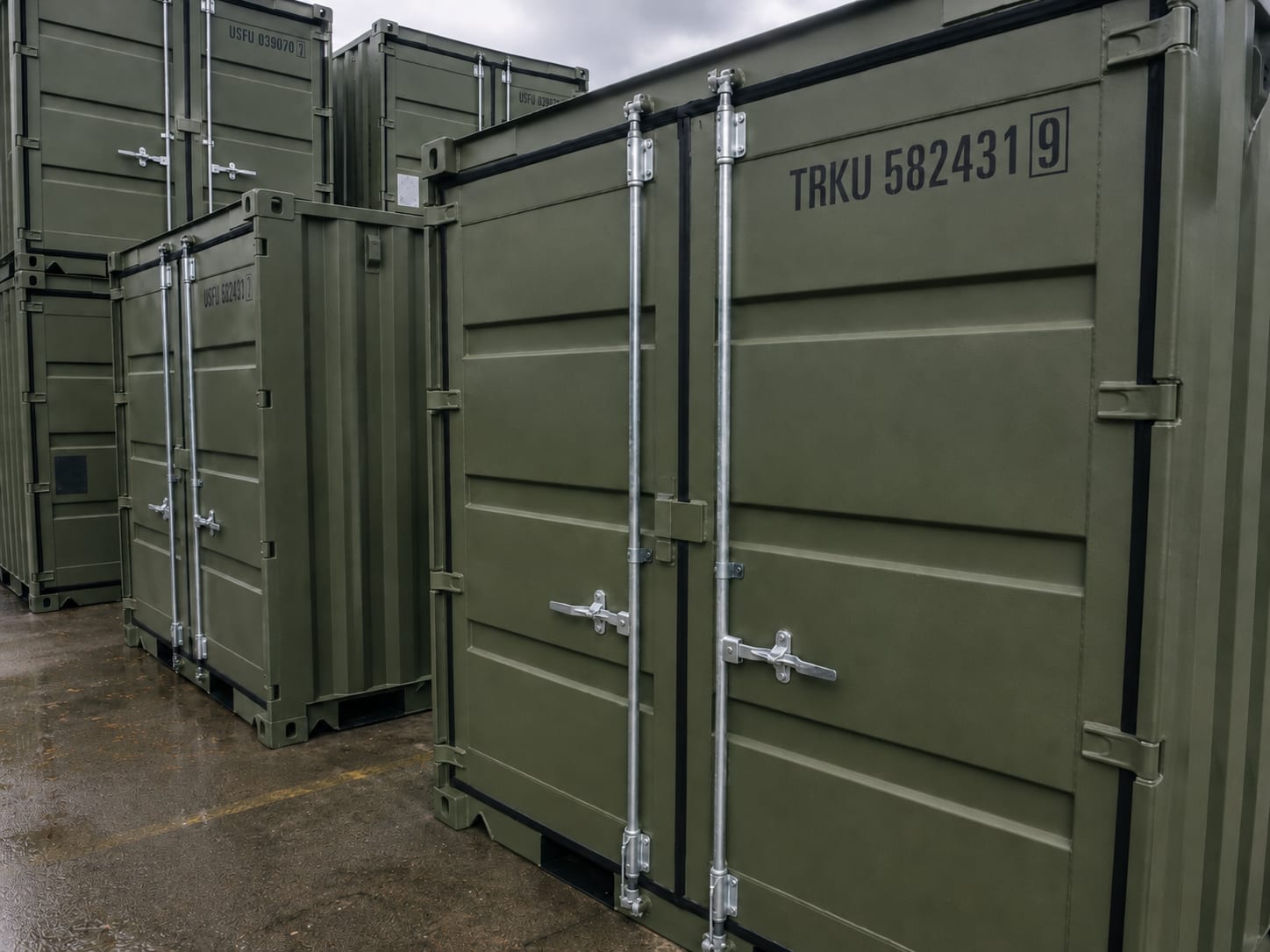
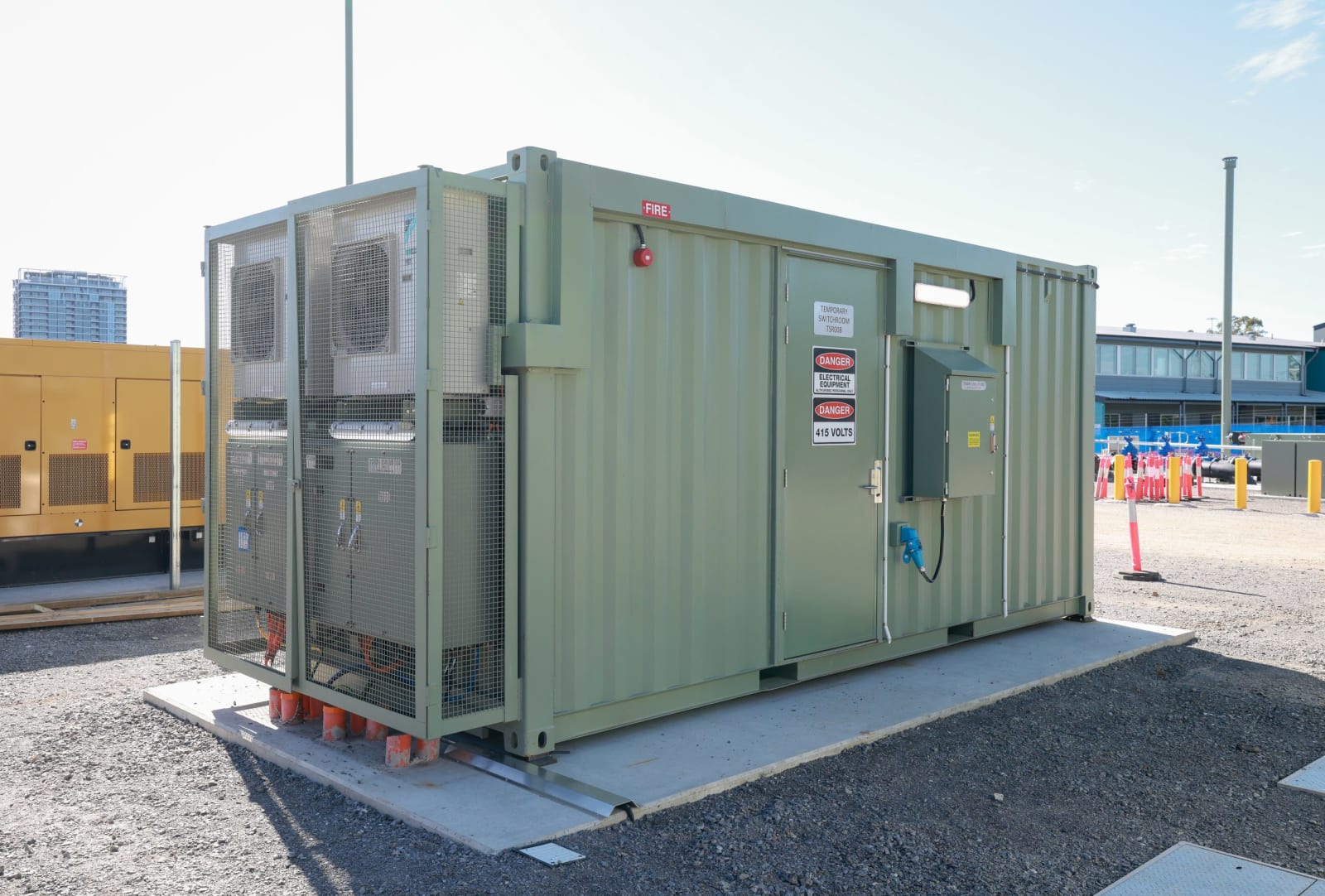
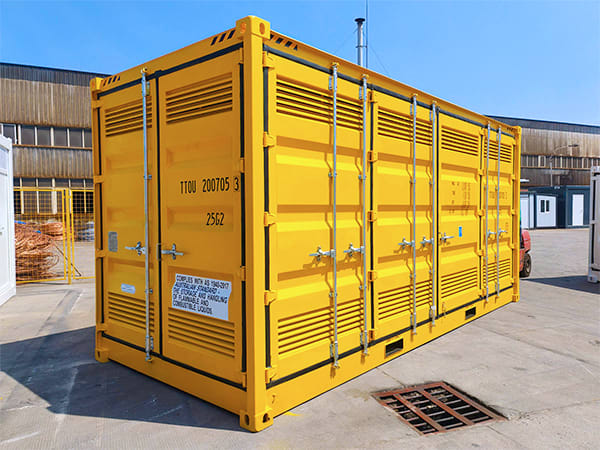
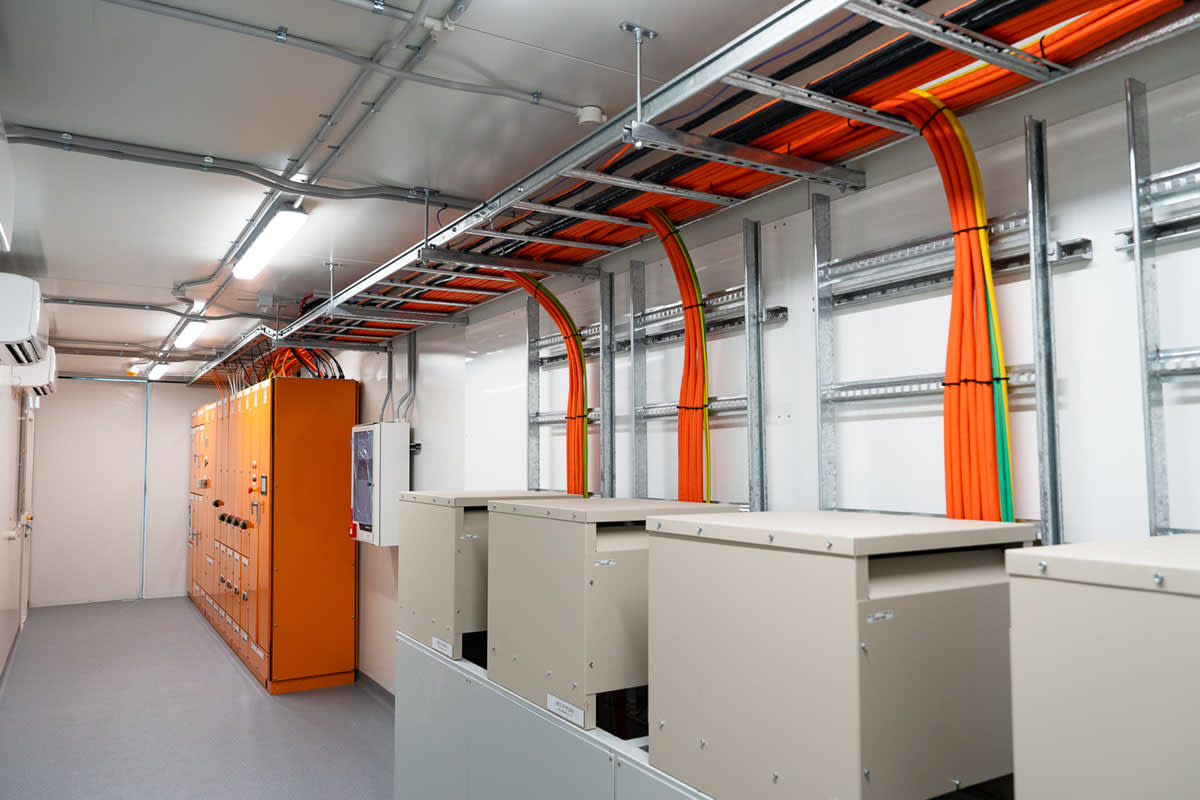
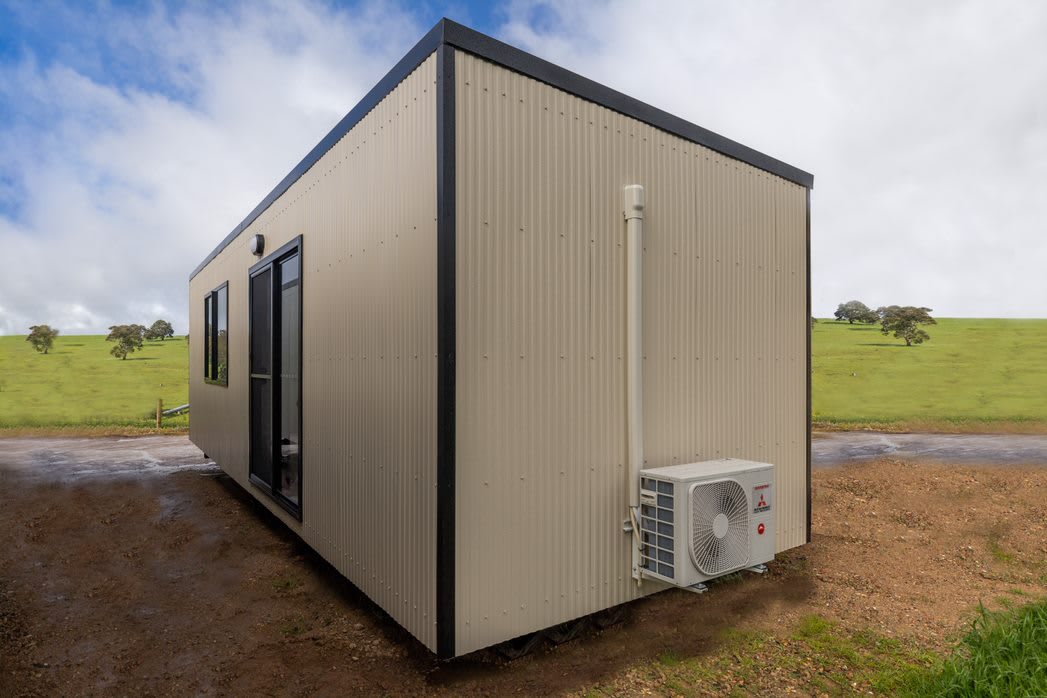
Military buyers also procure the standard products that live in SCS Global's core ranges: accommodation, dangerous goods storage, switchrooms and site offices, shipped from the same factory under the same QA system. Tender language varies: army container on one schedule, army containers or army shipping containers on another, military cargo container on a third, and US documents call the standard box a military conex. The platform behind all of them is the same ISO-footprint steel module, drawn from the standard shipping containers range in 10ft, 20ft and 40ft sizes. For bulk equipment holdings, large military storage containers come from the same range with racking and shelving fit-outs, and units paint to the army or navy container colour standard the contract specifies.

How SCS Global earns the claims
Manufacturing and certification behind every military build
The two trust signals defence procurement audits before shortlisting: factory-direct origin and a certified shell. Fleet consistency is the practical reason both matter. A multi-year program needs unit fifty to match unit one, and you can request a quote for military containers against the same documented build standard every unit ships under.