Switchrooms & Electrical Infrastructure
Switchrooms: Containerised Electrical Infrastructure
A switchroom is a dedicated building that houses electrical switchgear, distribution boards and protection equipment, keeping them secure, ventilated and serviceable. SCS Global manufactures switchrooms factory-direct: containerised electrical buildings fitted out, tested under power and shipped worldwide from our factory in Yixing, Jiangsu. The range runs LV, MV and HV rooms through data centres, BESS, substations, MCC buildings and control rooms. Send your voltage class and destination for a quote.
Room Types
Switchroom Types, Equipment and Standards
What each room type houses and the standards that govern it. Ratings, layouts and dimensions are confirmed per project at quote.
| Room type | Houses | Governing standards | Formats |
|---|---|---|---|
| LV Switchrooms | Switchboards, distribution boards and MCCs to 1,000 V AC | AS/NZS 3000, AS/NZS 61439 | 20ft, 40ft, joined multi-container rooms |
| MV & HV Switchrooms | Switchgear above 1 kV, protection relays and controls | AS 2067, IEC 62271 | 20ft, 40ft, joined multi-container rooms |
| Hazardous-Area Rooms | Electrical equipment in Zone 1 and Zone 2 areas, in a pressurised room | IEC 60079-13, ATEX for EU builds | 20ft, 40ft |
| Container Substations & E-Houses | HV switchgear, transformer and LV distribution in three walk-in bays | IEC 62271-202, AS 2067 | 20ft, 40ft, custom lengths |
| MCC Buildings | MCC line-ups, variable speed drives, soft starters and PLCs | IEC 61439-2, AS/NZS 3000 | 10ft, 20ft, 40ft |
| Control Rooms | Operators, consoles, servers and comms racks | ISO 11064 (design reference), AS/NZS 3000 | 10ft, 20ft, 40ft |
| BESS Containers | Battery racks with thermal and fire systems, batteries by your integrator | NFPA 855, UL 9540 | 20ft, 10ft compact |
| Data Centre Containers | 42U IT racks with in-row cooling and rack-mounted UPS | TIA-942-C, ISO/IEC 22237 | 20ft High Cube, 40ft |
Complete Range
The Containerised Switchroom Range
Every build below is a containerised switchroom configured for its duty: compute, batteries, transformation, motor control, or operators. The range spans data centres, BESS, substations and e-houses, MCC buildings and control rooms, plus two specification guides, all on one platform. For a standard LV, MV or HV distribution room, request a quote directly from this page.

Data Centre Containers
Four 42U racks in 20ft High Cube builds, eight to ten in 40ft, with in-row cooling and N+1 rack-mounted UPS.
data centre containers
BESS Containers
IP55-sealed enclosures for grid-scale batteries: deflagration venting, suppression-ready, air- or liquid-cooled thermal management.
bess containers
Container Substation & E-House Units
Walk-in three-bay layouts: HV switchgear, transformer and LV distribution in one building, 400 V to 33 kV.
containerised substations and e-houses
MCC Buildings
Dust-sealed enclosures for motor control centre assemblies: double-gasket doors, pressurisation fans, mining and process duty.
mcc buildings
Containerised Control Rooms
Operator rooms designed with reference to ISO 11064 principles, in two engineering tiers.
containerised control rooms
The Platform
The Standard Product: LV, MV & HV Rooms
A containerised switchroom is a purpose-built electrical room on an ISO base: shell, fit-out and factory testing on one line. Formats run 20ft and 40ft, multi-container rooms and custom lengths to 12,000 mm. Builds run from LV distribution to HV switchroom classes at 6.6 to 33 kV, plus hazardous-area variants pressurised to IEC 60079-13 and ATEX, and cyclone-rated Region D. Tenders write switchrooms containers or switchrooms shipping containers: every unit leaves the line as prefabricated switchrooms, tested before dispatch.
Specification Guides
Guides for Specifying Teams
Two specification guides support the range: which standard governs each layer of a containerised electrical building, and the build-route decision in both directions, including where a site-built room is still the right call.

Switchroom & Electrical Compliance Guide
Which standard governs what, mapped to the layer of the build each one covers.
electrical compliance guide
Containerised vs Traditional
The build-route decision in both directions, including where a site-built room is still the right call.
containerised vs traditional
Why Factory-Built
Why a Containerised Switchroom?
A factory-built electrical room swaps months of site trades for one delivery: wired and tested before it reaches your gate. Fabrication runs in parallel with your civils, and the fitted room passes factory acceptance testing under power before dispatch. Electrical switchroom design resolves arc flash, load and discrimination studies early, with assemblies built to IEC 61439-1, and the same case holds across prefabricated electrical buildings. Fit-outs run 440 V to 33 kV and 630 A to 6,300 A, in IP55 or IP56 enclosures per IEC 60529, at 4 to 20 tonnes: category envelopes, confirmed per project.
Proof of Work
Delivered Electrical Infrastructure Projects
Two delivered electrical infrastructure deployments: an NT gold mine substation and a solar farm BESS installation in the Atacama Desert. Both factory acceptance tested before dispatch.
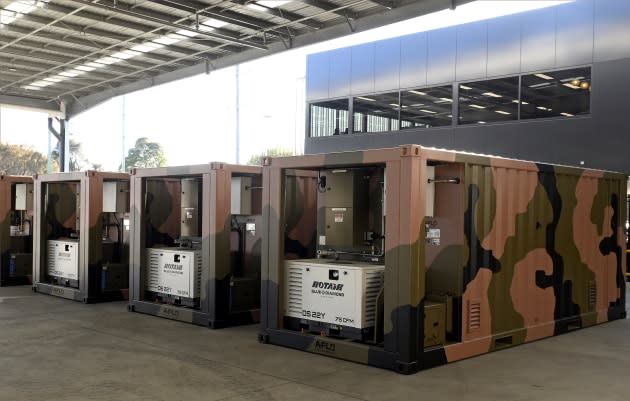
NT Gold Mine Switchroom: 2 x 40ft HV and MCC
The NT gold mine substation project paired an HV room and an MCC room: AS/NZS 3000 wiring, IEC 61439 assemblies, IP54 sealing, and a first-cycle factory acceptance test. The rooms energised weeks ahead of a comparable field-built program.
View project
Solar Farm BESS Containers, Atacama Desert
The solar farm BESS deployment in Chile delivered IP55 enclosures and a connection room to the Atacama: altitude-derated to IEC 60364, fire safety engineered to NFPA 855, ready on the grid-connect date.
View projectFactory-Direct
Our Manufacturing Advantage
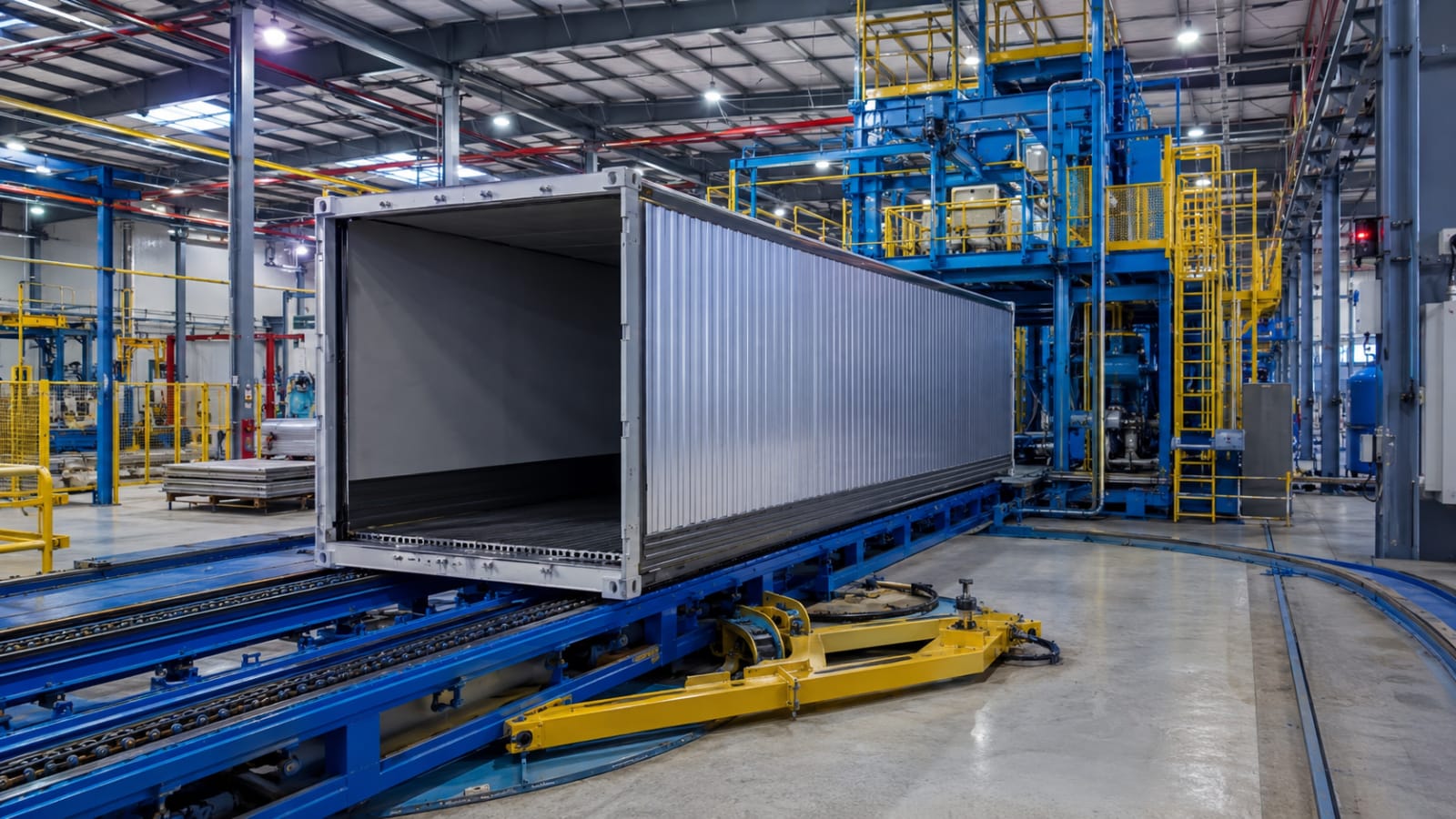
Every unit is built at the SCS factory in Yixing, Jiangsu on one line, welded shell to fitted room, factory acceptance tested under power, and shipped as standard containerised freight. Our Yixing factory capability covers the plant.
Ships as a container
A finished room keeping its corner castings and CSC plating books as an ordinary container under the International Convention for Safe Containers, not as project cargo.
One line, one quality system
Shell fabrication, electrical fit-out and factory acceptance testing run on one production sequence, so the room that leaves the yard is the room that was tested under power, with the QA record issued by the factory that built it.
Global Delivery
Delivered Worldwide as Standard Freight
Indicative transit times
Sea freight, port-to-port from China, in weeks. Add 1 to 2 weeks for handling and customs. Industry-typical, not SCS guarantees.
| Destination | Factory → Site |
|---|---|
| Oceania (AU / NZ) | ~3–4.5 weeks |
| South-East Asia | ~1–2 weeks |
| Middle East | ~3–4 weeks |
| Africa | ~4.5–6 weeks |
Routes and freight management sit under global delivery to your site. A finished room ships as standard containerised freight, so delivery means booking container slots, not arranging project cargo.
Australia-wide and beyond
We deliver transportable switchrooms Australia-wide, including the switchrooms Perth project teams stage through Fremantle for Pilbara sites, and ship the same output across a 17-country footprint.
Industries
Industries We Serve
Mining and Resources
Positive-pressure dust exclusion at 0.2 kPa, Region D cyclone engineering, remote-pad delivery: the duty our NT gold mine rooms were built for.
Oil, Gas and Energy
Hazardous-area variants for Zone 1 and Zone 2 plant, and battery energy storage enclosures for solar and wind projects, as delivered in the Atacama.
Construction and Infrastructure
Relocatable distribution rooms that move with staged works, one lift per move.
Utilities
The same platform for augmentation and connection scopes, factory test records on file.
Mining, oil and gas, renewables and construction projects run containerised electrical buildings where dust, cyclones and remote logistics rule out site-built rooms.
Compliance
Switchroom Standards & Compliance
Compliance attaches by layer: AS/NZS 3000 governs the wired installation, AS/NZS 61439 the housed assemblies up to 1,000 V AC, and IEC 60529 the enclosure's IP rating. No single certificate covers a fitted electrical building. Hazardous-area variants add IEC 60079-13 and the ATEX directive, cyclone-region builds carry Region D certification, and the National Construction Code applies to a modular building as to a site-built one. The shell carries ISO 668, ISO 1496 and CSC transport approval.
 ISO
ISO  Bureau Veritas
  DNV
DNV  Lloyd's Register
  BIC
BIC  ABS
ABS FAQ
Frequently Asked Questions
Five questions procurement, operations and engineering teams ask most often about containerised switchrooms.
What is a switchroom?
Written as switchroom or switch room, the term describes a dedicated building housing electrical switchgear, distribution boards and protection equipment, keeping them secure, ventilated and serviceable. Containerised versions build the complete room inside an ISO container shell, so it ships, lifts and relocates as standard freight.
What is the difference between a switchroom and a substation?
The transformer. A substation transforms voltage between networks, so it includes transformer bays alongside its switchgear. A room with no transformation stage only distributes and protects power at the voltage it receives. Our prefabricated substations combine both in a walk-in three-bay layout: HV switchgear, transformer, LV distribution.
How is a switchroom rated?
Primarily by ingress protection under IEC 60529. IP55, the standard tier, is dust-protected and sheds 12.5 litres a minute of jetted water. IP56, the severe-duty tier, withstands 100 litres a minute. Delivered SCS projects have run IP54 and IP55. The compliance guide covers how enclosure ratings are selected.
Is fire rating required for a switchroom?
Not as a blanket rule. Fire protection is specified to the project's risk assessment and the governing installation standards: VESDA aspirating detection, typically four zones, CO2 suppression where the risk case calls for it, and fire-rated insulation options. The compliance guide sets out which requirements apply where.
How long does it take to build a containerised switchroom?
The build sequence is fixed: shell fabrication, electrical fit-out, then factory acceptance testing under power, with the finished room travelling as standard container freight. Overall duration depends on voltage class, fit-out depth and switchgear lead times, so we confirm the program when we quote.