Guide

Bunded Container vs Unbunded DG Storage

A comparison of bunded and unbunded dangerous goods storage for the procurement, compliance, and engineering teams deciding how to store DG on site, and a plain read on when bunding is required under Australian law.

Summary

A bunded container has secondary containment built into the floor, a liquid-tight bund wall and sealed sump that hold a leak so it cannot reach the ground, the stormwater drains, or a waterway. An unbunded store has no built-in containment and depends on a separate compound, spill pallets, or kits. Bunding becomes mandatory once the stored quantity exceeds the relevant state's placard quantity under the WHS Regulations; below that threshold it is best-practice spill prevention. The controlling standard then sets the containment size: AS 1940 for flammable liquids, AS 3780 for corrosives. This guide sits alongside our dangerous goods containers pages at SCS Global, covering the product specifications and compliance documentation that support the same procurement audience.

01

Definition

What Is Bunded Storage?

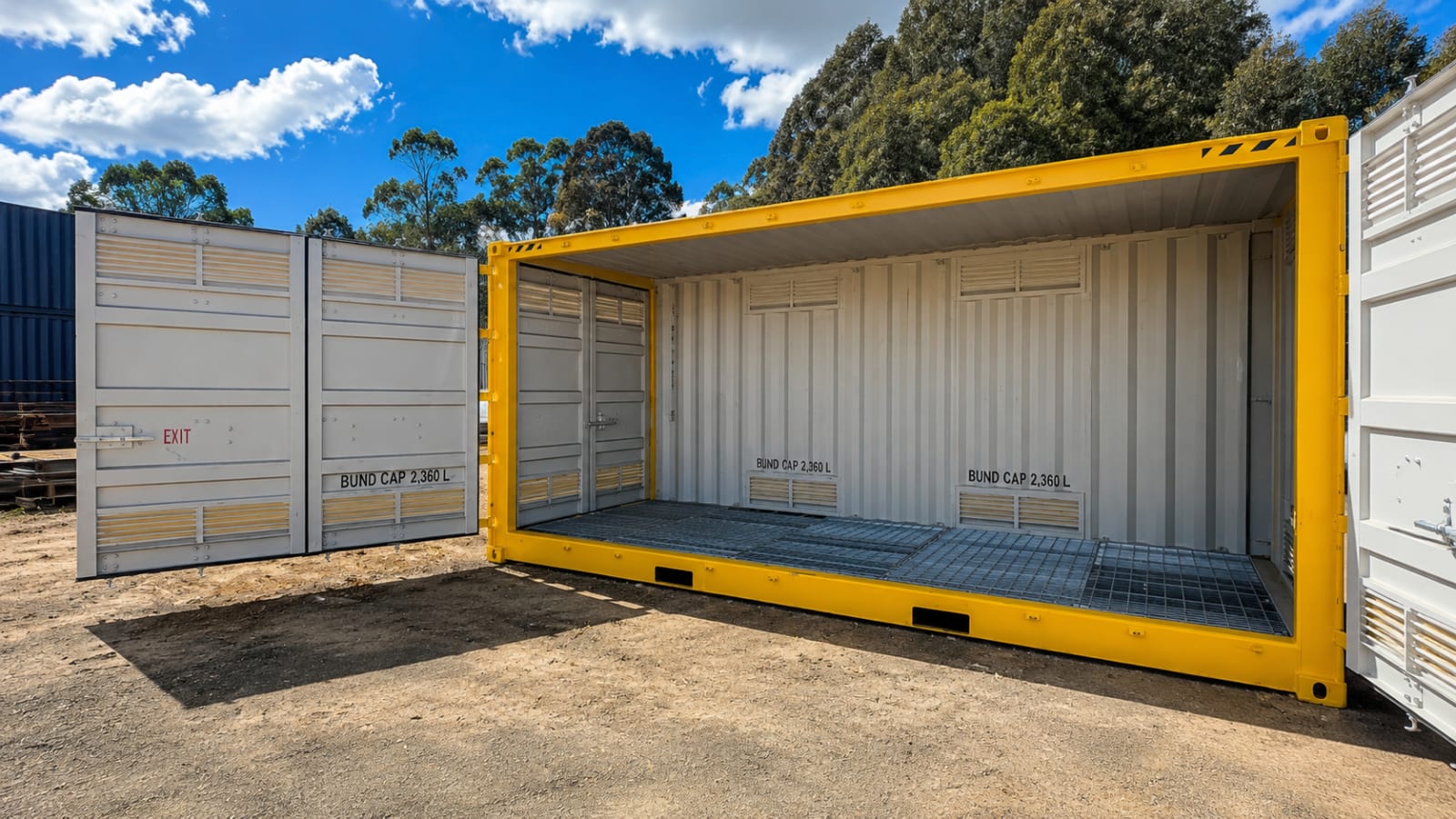
Bunded storage has secondary containment built in: a liquid-tight bund wall and sealed floor that retains a leak or spill so it cannot reach the ground, stormwater drains, or a waterway. The bund is the barrier. The drum, IBC, or tank inside it is the primary containment, and the bund is the secondary containment that catches whatever the primary container releases.

Defining what is bunded storage comes down to one test: whether the secondary containment is part of the store or supplied around it. In a DG container, that built-in layer is an integrated sump formed in the floor, with a welded bund wall tying into the frame. Unbunded storage is the opposite: there is no built-in containment, so the store relies on something supplied separately, such as an external bunded compound, drop-in spill pallets, or spill kits.

The distinction matters because Standards Australia ties the secondary-containment requirement to the goods and the quantity, not to the type of store. A bunded unit carries that compliance with it. An unbunded unit shifts the obligation onto whatever containment the operator builds and maintains around it.

02

Comparison

Bunded vs Unbunded: Key Differences

The difference is where the containment lives. A bunded store carries it internally as a sump. An unbunded store relies on an external compound, spill pallets, or kits provided separately.

Read the table by site, not by line item. A bunded container is one purchase order that arrives compliant. Relocatability is the row that decides most mid-sized fleets: when containment is welded into the box, moving the store between a laydown, a crib room, and a remote bay moves the compliance with it, while an external compound stays where it was poured. The spill-to-ground row is the risk a quality manager signs against: a sump captures a leak the moment it happens, whereas an external system only works if it was present, sized to the inventory, and maintained. Where the goods are corrosive, AS 3780:2023 sets that sump at a depth of at least 150 mm and a capacity of at least 25% of the aggregate stored volume. The whole-of-life row is where procurement does the real maths, because a lower unit price on an unbunded store is offset by the cost to design, build, and certify a compound around it.

Bunded (integrated) versus unbunded DG storage
AttributeBunded (integrated)Unbunded
Secondary containmentBuilt into the unit as a sump and bund floorRelies on an external compound, spill pallets, or kits
Compliance under AS 1940 / AS 3780Containment travels with the store and meets the secondary-containment requirement on arrivalOperator engineers and maintains separate containment to meet the standard
RelocatabilityContainment moves with the containerContainment is fixed to the site, and relocating the store leaves it behind
Spill reaching ground or drainsCaptured in the sumpDepends on the external system being present, correctly sized, and maintained
Whole-of-life costOne compliant unit, no separate civil bund worksLower unit price, plus the cost to build and certify a compound
03

Compliance

When Is Bunding Required Under Australian Law?

Bunding becomes mandatory once the stored quantity exceeds the relevant state's placard quantity under the WHS Regulations. Below that threshold, bunding is best-practice spill prevention rather than a legal requirement. Placard quantities are set in Schedule 11 of the model WHS Regulations and adopted by each state regulator, so confirm the figure that applies to your jurisdiction and your DG class with SafeWork Australia before you specify a store.

Above the threshold, the controlling standard sets how big the containment must be. For flammable and combustible liquids, AS 1940:2017 sizes secondary containment to the greater of 100% of the largest single container or 25% of the aggregate stored volume. Environment regulators commonly apply a stricter figure of 110% of the largest container, so a site near a drain or a watercourse is often built to the higher of the two rules. For corrosives, AS 3780:2023 sets a sump at least 150 mm deep holding at least 25% of the aggregate. The DG compliance and classification guide works through the class-by-class detail, and our container certification standards cover third-party inspection of the build.

When bunded storage is the right call

A bunded store is the right call when the inventory sits above the placard quantity, when the store has to relocate, or when the site has no existing engineered compound. Relocatable stores are the clearest case, because an integrated bund keeps the unit compliant on every pad it moves to. Sites near stormwater drains or watercourses come next, where the environmental consequence of an uncaptured spill is high. Remote operations carry it too, where building and certifying a civil compound is slow and costly. Class 3 bunded storage and Class 8 corrosive storage both ship this way, and for remote work see dangerous goods storage for mine sites.

When unbunded storage can be acceptable

Unbunded storage can be the correct and compliant choice in several cases. Below the placard quantity, secondary containment is best practice rather than a legal requirement, so a low-hazard, low-volume inventory may not need a built-in bund. A site with an existing engineered compound that is sized to the inventory and maintained already meets the secondary-containment requirement, and a separate bunded store inside it adds little. Short-term indoor storage of low-hazard goods, backed by adequate spill kits and a documented response plan, is another. The test is whether a maintained external system genuinely provides containment equal to what the standard asks of a built-in bund.
04

Mechanisms

What Is Spill Containment?

Spill containment is the practice of capturing a leak before it reaches the environment, using one of four mechanisms: integrated bunds, sumps, spill pallets, or spill kits. The first two are built into the store. The second two are added around an unbunded store.

  • Integrated bunds built into the structure of a store
  • Sumps formed in the floor as the bunded layer
  • Spill pallets placed under drums or IBCs
  • Spill kits for manual response to a release

The first two are part of a bunded unit. The last two are added to an unbunded store to give it the containment it does not have on its own. Each state environment regulator publishes guidance on the standard expected, and EPA Victoria is one example of the bunding and secondary-containment guidance that applies to fixed and relocatable stores. Spill containment is also where most regulator findings land, because a spill kit that is not restocked, or a pallet sized for one drum under three, fails at the moment it is needed.

05

SCS Build

Why SCS DG Containers Include Integrated Bunding

Every SCS DG container ships with integrated bunding as standard: a welded steel bund wall and sealed floor, so the secondary containment travels with the box and there is no separate compound to build, certify, or maintain. The bund wall is a structural element tied into the floor frame, not a tray dropped onto a flat floor, and a galvanised non-spark mesh sits over the sump so the working floor stays clear while a spill drains beneath it.

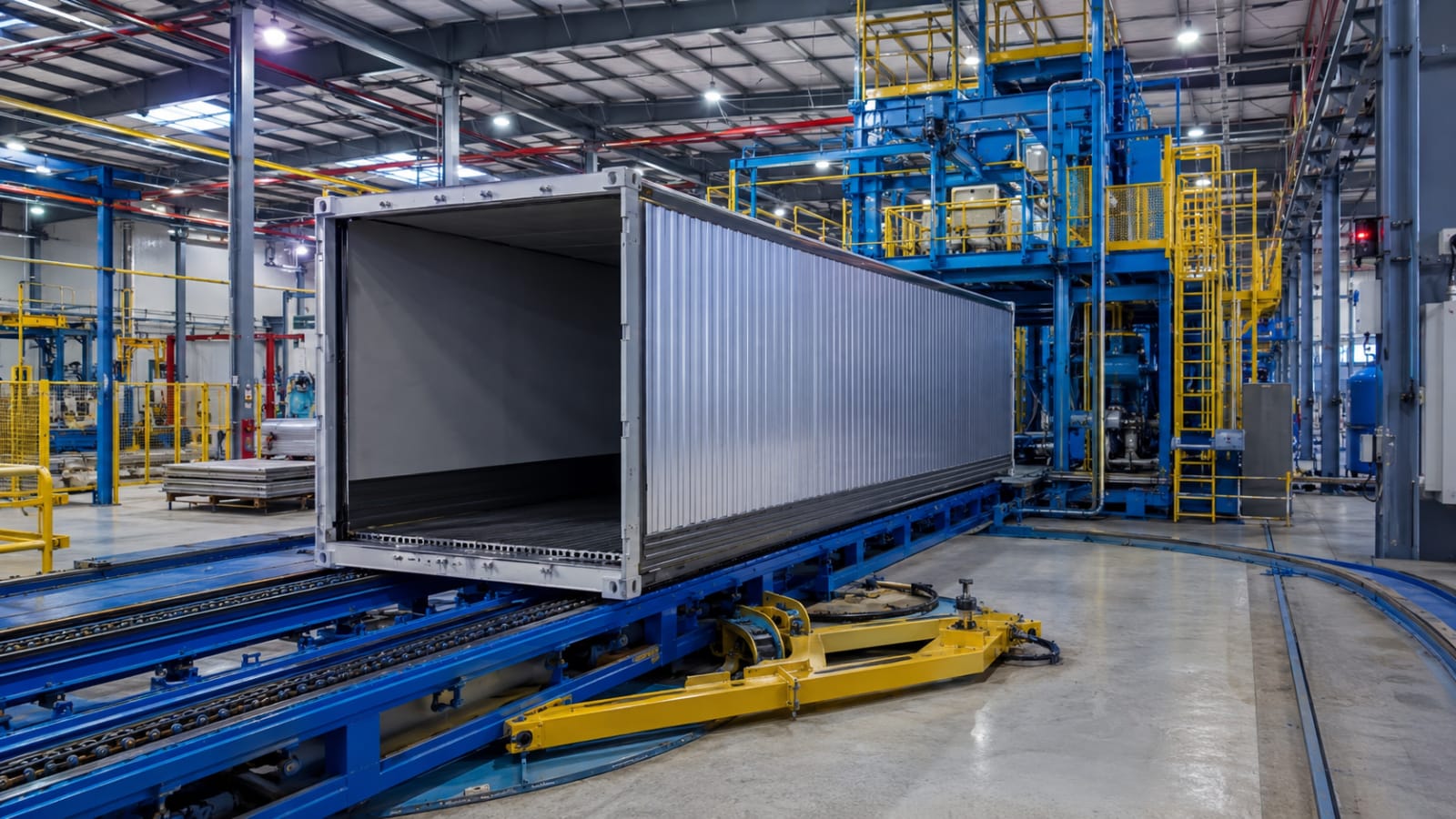
That build is the same across the range. Class 3 flammable liquid storage is sized to AS 1940, and bunded chemical storage covers single-class and mixed-class inventories. Our bunded DG containers are built factory-direct, so the bund, the drain hardware, and the certification are specified once on the production line rather than assembled from parts on site. See how we build DG containers for the manufacturing detail.

For a buyer, the result is one compliant unit on one purchase order. The containment is part of what arrives, sized to the goods you have specified, and it stays with the unit when the store moves to the next site.

06

Options

Types of Bunding: Integrated vs Aftermarket

Integrated bunding is built into the container and certified once at the factory. Aftermarket bunding is added to an existing unbunded store later, and it covers spill pallets, drop-in bund trays, and site-built compounds. Both are legitimate, and the right one depends on what is already on the ground.

Integrated bunding suits a new store, a relocatable store, or any site that wants the containment specified and signed off as part of the unit. The sizing is fixed to the box, so there is no recalculation when the store is craned to a new pad. Aftermarket bunding suits an existing unbunded asset that cannot be replaced yet, or a temporary store that needs containment for a defined period. A drop-in tray or a poured compound brings an unbunded unit up to the secondary-containment requirement, provided it is sized to the inventory under the same AS 1940:2017 rule that governs an integrated bund and is maintained over its life. The weakness of the aftermarket route is the same as any external system: it only works while it is present, correctly sized, and inspected.

07

FAQ

Frequently Asked Questions

What is the difference between bunded and unbunded DG storage?

A bunded DG store has secondary containment built in, a sump and bund wall that catch a leak before it spreads. An unbunded store has none and relies on an external compound, spill pallets, or kits provided separately. The bunded unit carries its compliance with it. An unbunded unit puts the containment obligation on whatever the operator builds and maintains around it.

What are the bunding requirements under AS 3780?

AS 3780:2023 sets the secondary containment for corrosive (Class 8) substances. The sump must be at least 150 mm deep and hold at least 25% of the aggregate storage capacity. The dangerous goods compliance guide covers how that sits alongside AS 1940 for flammable goods and AS 3833:2024 for mixed-class stores.

Do I need a bunded DG container for my site?

You need a bunded DG container if your stored quantity is above the relevant state's placard quantity, if the store has to relocate, or if there is no maintained external compound already on site. Below the placard quantity, with low-hazard goods and adequate spill kits, an unbunded store can be compliant. If you are unsure, work it through with an engineer against your DG class and quantity.

08

Selection

Choose the Right Bunded DG Container

Choose by DG class first, then by size. The class sets the controlling standard and the internal build, and the size is set by how much you store and your largest single container. Class 3 flammable and combustible liquids are built to AS 1940. Class 8 acids and bases are built to AS 3780. Mixed or general chemical inventories are laid out to AS 3833:2024.

On size, the 10ft DG container suits light to moderate inventories and tight footprints, while the 20ft DG container doubles the floor area for larger drum and IBC counts. If you are unsure whether bunded or unbunded storage fits your site, talk to an engineer against your class and quantity before you commit.

Standards & references

Standards that govern secondary containment

Bunding requirements come from the controlling storage standard for the class, above the state placard quantity. Follow any link through to the source authority for the current revision.

AS 1940:2017 Storage and handling of flammable and combustible liquids. Sizes secondary containment to the greater of 100% of the largest single container or 25% of the aggregate stored volume. Standards Australia
AS 3780:2023 Storage and handling of corrosive substances. Sets the sump at least 150 mm deep, holding at least 25% of the aggregate stored volume. Standards Australia
WHS Regulations (Schedule 11) Placard and manifest quantities that set the threshold above which secondary containment becomes mandatory, as adopted by each state regulator. SafeWork Australia
EPA Victoria State environment-regulator guidance on bunding and secondary containment for fixed and relocatable stores (one example of the state guidance that applies). EPA Victoria

Expert perspective

Why relocatability decides the bunded-vs-unbunded call

“Buyers fixate on the unit price and miss the row that actually decides it: relocatability. When the containment is welded into the box, the compliance moves with the store from one pad to the next. An external compound stays where it was poured, so the day you relocate an unbunded store, you are rebuilding and recertifying containment somewhere else. For a mid-sized fleet that moves with the work, integrated bunding is almost always the lower whole-of-life cost, even at a higher sticker price.”

Managing Director Adam Baker

Next step

Talk to an engineer about your DG storage

If you are unsure whether bunded or unbunded storage fits your site, talk to an engineer and we will size the containment against your DG class and quantity, then provide a factory-direct quotation with the compliance documentation.