Class 8 Dangerous Goods: AS 3780 Corrosive Storage
- DG class
- Class 8 corrosives
- Standard
- AS 3780:2023
- Lining
- Chemical-resistant
- Sizes
- 10ft / 20ft / side-open
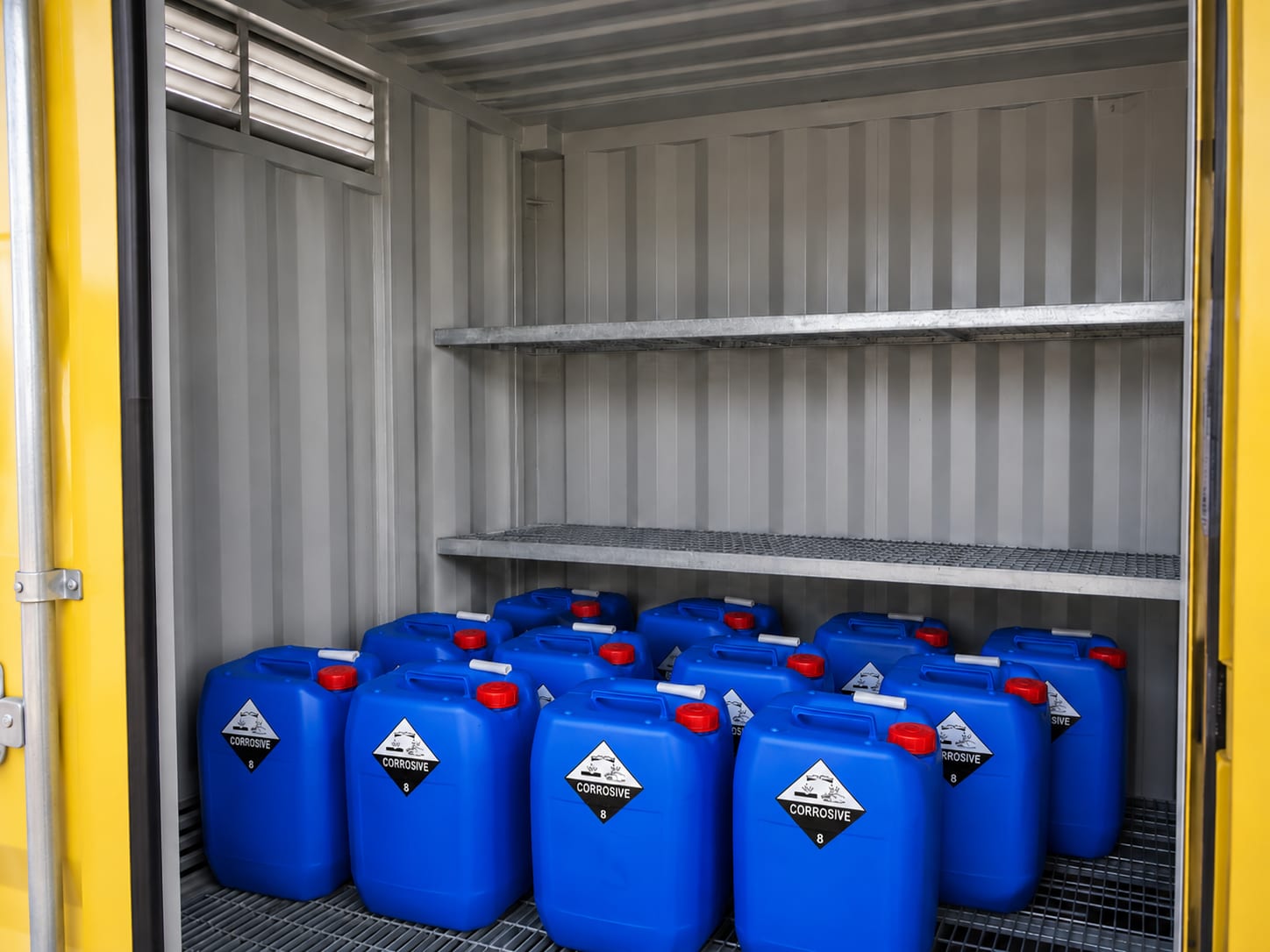
Bunded steel store with a chemical-resistant internal lining, integrated steel sump (≥150 mm deep, ≥25% of aggregate), non-spark mesh floor, and a lockable stainless drain valve. Built 10ft, 20ft, and 20ft side-opening, with 40ft, bolster, high-cube, and pallet-wide variants available.
AS 3780:2023 for Class 8 corrosives, with AS 1940:2017 where corrosives are co-stored with flammables and AS 3833:2024 for mixed-class layouts. Certificate of Compliance per unit. Safety shower / eyewash required within 2 to 10 m (site provision).
Mining flotation reagents and process acids, water-treatment dosing stock, chemical-manufacturing and electroplating feedstock, and council corrosive consumables. Relocatable on forklift pockets, lifting eyes, and ISO corner castings.
Overview
Class 8 corrosive storage, factory-direct
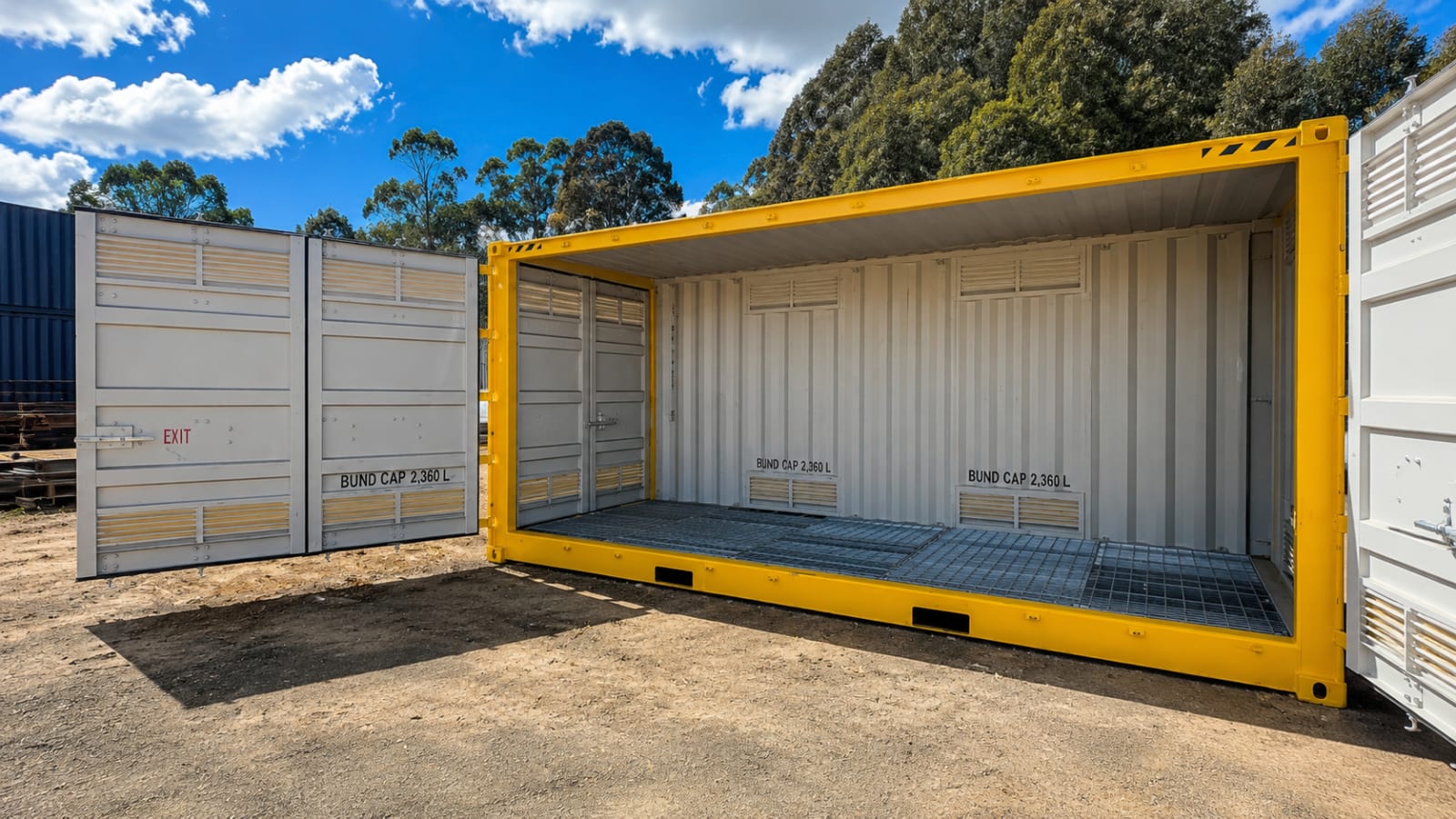
SCS Global builds corrosive storage containers for Class 8 dangerous goods, compliant with AS 3780, the controlling Australian standard for storing acids and alkalis. Each unit is a bunded steel box with a chemical-resistant internal lining, high and low passive ventilation, and a lockable stainless-steel drain valve. Class 8 corrosive substances are the acids and alkalis that attack skin, metal, and other materials, and they need a store built to resist chemical attack and contain spills, not a general-purpose container. Each unit sits inside our range of dangerous goods containers and ships factory-direct in 10ft, 20ft, and 20ft side-opening sizes, with a Certificate of Compliance per unit. The buyers specifying corrosive storage are mining operations, water-treatment plants, chemical manufacturers, electroplaters, and council depots, anywhere bulk acid or alkali inventory sits outdoors where a leak reaches soil, stormwater, or staff.
Specifications
Container Features for Corrosive Chemical Storage
SCS corrosive storage containers ship in 10ft, 20ft, and 20ft side-opening sizes, each built as a Class 8 corrosive store with an integrated bunded steel floor, chemical-resistant lining, and a lockable stainless-steel drain valve. The floor is a fully welded bunded steel deck with a non-spark mesh grid over an integrated steel bund, with no timber, so a spill drops below the working floor and stays clear of drums and foot traffic.
| Specification | Value |
|---|---|
| Sizes offered | 10ft, 20ft, 20ft side-opening (40ft / bolster / high-cube / pallet-wide available) |
| DG class coverage | Class 8 corrosives primary, with the range also supporting Class 3, Class 6, and organic peroxides (subject to SDS compatibility) |
| Sump depth (AS 3780) | ≥150 mm |
| Sump capacity (AS 3780) | ≥25% of aggregate storage capacity, or the largest container if greater |
| Integrated bund capacity | 10ft 800 L, 20ft 1,200 L |
| Internal lining | Chemical-resistant (thermoplastic / polyethylene category-standard) |
| Doors | Self-closing, self-latching, multi-point (no inward-opening), internal emergency-exit release |
| Floor system | Fully welded bunded steel floor, non-spark mesh grid, integrated steel bund (no timber) |
| Bund drain valve | Lockable stainless-steel |
| Ventilation | High and low passive vents with flash arrestors (risk-assessment sized), plus an optional electric extraction fan |
| Shell and finish | Corten steel shell, marine-grade components, weatherproof UV-rated painted exterior |
| Signage | Class 8 "Corrosive" placards and applicable DG signage supplied |
| Safety shower / eyewash (deployment) | Required within 2 to 10 m of the store |

Class 8
What Are Class 8 Corrosive Substances?
Class 8 corrosive substances are the acids and alkalis that attack skin, metal, and other materials. They need a store built to resist the chemistry inside it, not a general-purpose container; searches for corrosive 8 storage or corrosive material storage point to the same requirement. A corrosive substance storage container contains spills in an integrated bund, resists acid and alkali attack through a chemical-resistant internal lining, and carries the doors, ventilation, and signage Safe Work Australia and the controlling standard require. SCS builds all of that in at the factory.

Lining
Chemical-Resistant Lining and Material Compatibility
The defining feature of a Class 8 store is its chemical-resistant internal lining. A thermoplastic or polyethylene lining resists the acid and alkali attack that pits and fails bare steel at the weld lines and the bund; this is what separates a corrosive store from a Class 3 flammable store. The lining is the category-standard means of meeting the AS 3780 internal-finish requirement for the storage of corrosive chemicals. Lining selection follows the chemistry: the Safety Data Sheet sets the compatibility range, so confirm your SDS register at order.
Compliance
AS 3780 Compliance for Corrosive Storage
A Class 8 corrosive store complies with AS 3780:2023, the controlling Australian standard for corrosive storage, separate from the AS 1940 rules for flammable liquids. The requirements that drive the build are a secondary-containment sump at least 150 mm deep holding at least 25% of the aggregate storage capacity inside the unit, or the largest container if greater; self-closing, self-latching, multi-point doors with no inward-opening leaf; a chemical-resistant internal lining that resists acid and alkali attack; high and low venting fitted with flash arrestors and sized on a risk assessment; and an emergency safety shower or eyewash within 2 to 10 m of the store. SCS sizes the integrated bund at 800 L on the 10ft store and 1,200 L on the 20ft, so under the at-least-25% rule the 800 L bund covers an aggregate corrosive volume up to 3,200 L and the 1,200 L bund up to 4,800 L. SCS supplies a Certificate of Compliance with each unit; the safety shower is a site provision rather than part of the container, so factor it into the deployment layout.
 ISO
ISO  Bureau Veritas
  DNV
DNV  Lloyd's Register
  BIC
BIC  ABS
ABS Standards & References
Standards we build to
A Class 8 corrosive store is governed by AS 3780, with AS 1940 and AS 3833:2024 applying where corrosives are co-stored or mixed. Click through to the source authority for the current revision.
Applications
Applications: Mining, Water Treatment, Manufacturing
SCS deploys corrosive storage containers across mining, water treatment, and chemical manufacturing, anywhere acids, alkalis, or other Class 8 substances are stored outdoors in bulk. Sizing follows the inventory: the compact 10ft suits depots, laboratories, and tight worksites, while the 20ft handles larger drum and IBC volumes.
Mining & Resources
An acid storage container for flotation reagents, sulphuric and hydrochloric acid, and process chemicals at the plant and ROM pad, with the bund sized to the greater of 25% of the aggregate or the largest drum or IBC.
Energy & Water Treatment
Sodium hypochlorite, hydrochloric acid, and caustic soda dosing stock at municipal and industrial water-treatment and processing plants, kept in a lined, vented, bunded store.
Manufacturing & Industrial
Bulk acid and alkali feedstock and spent-bath holding for chemical manufacturing and electroplating, with chemical-resistant lining matched to the chemistry.
Council & Government
Mixed corrosive consumables held under one compliant roof at council depots and government sites, sealed, lined, and access-controlled.
Send us the corrosive substances and volumes on your SDS register, and SCS sizes the bund, lining, and ventilation to match.
Engineering Resources
Download technical documentation
Class 8 spec sheet, AS 3780 compliance summary, and CAD drawing for engineering review. Each is produced at project handoff and is not gated.
Class 8 Corrosive Storage Spec Sheet
Class 8 specification matrix and AS 3780 compliance summary.
RequestAS 3780 Compliance Summary
One-page summary of AS 3780:2023 secondary containment, doors, lining, and ventilation rules.
RequestCorrosive Storage CAD Drawing
Plan, elevation, and section drawings for engineering reference.
RequestRelated Products
Explore the DG range
Sister products and guides in the SCS dangerous goods container range, built on the same Yixing line against the same compliance baseline.
10ft Dangerous Goods Container
Compact bunded Class 8 unit for depots, laboratories, and tight worksites. Compliant sump, doors, and lining.
10ft dangerous goods container
20ft Dangerous Goods Container
Larger floor area and higher bund volume for drum and IBC corrosive inventories. Bunded and lined to the standard.
20ft dangerous goods container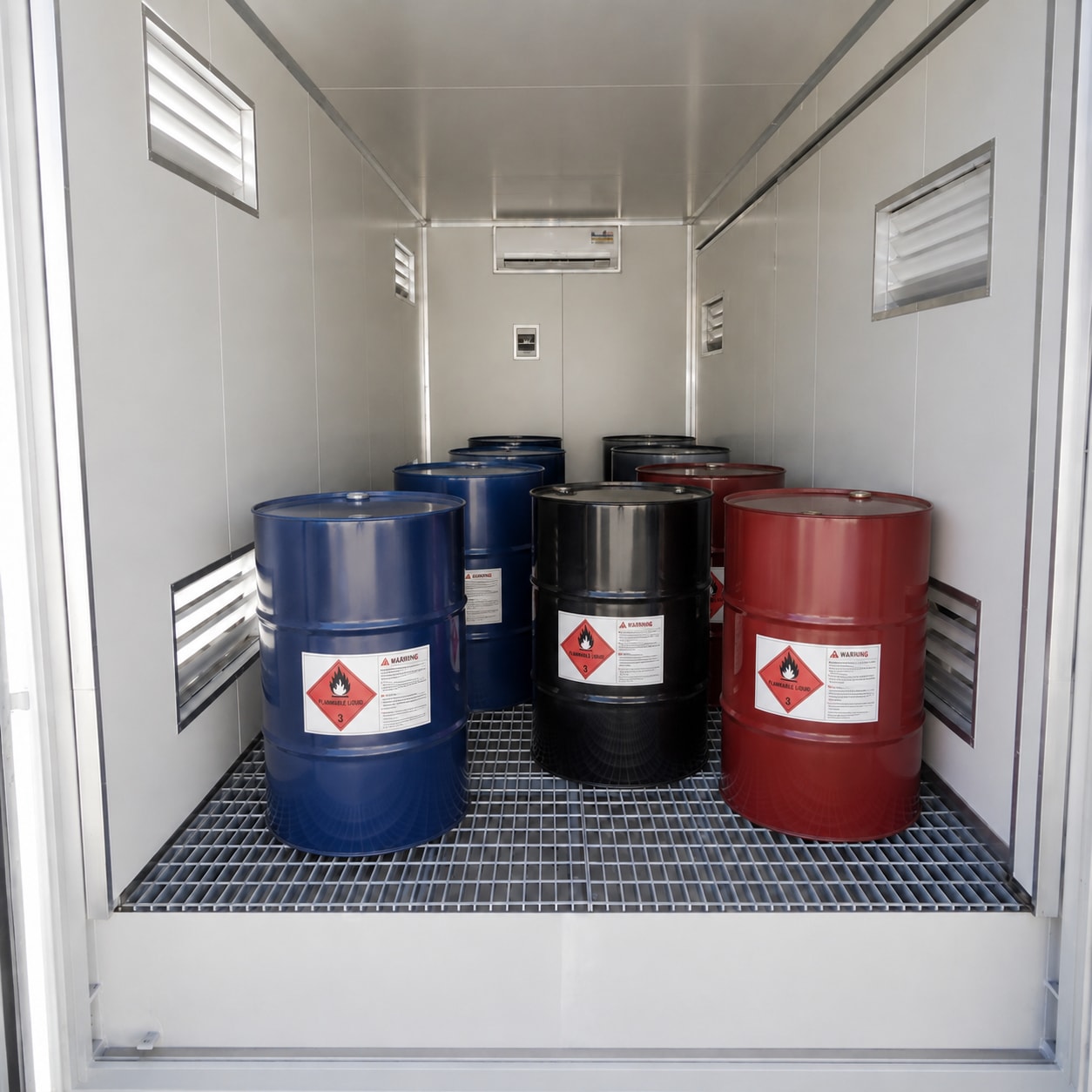
Flammable Liquid Storage (Class 3)
Dedicated Class 3 storage for fuels, solvents, and combustibles. AS 1940-aligned bunding, ventilation, and signage.
flammable liquid storage
Chemical Storage Containers
Broader chemical storage range across single-class and mixed-class deployments, with custom fit-out and lining.
chemical storage containers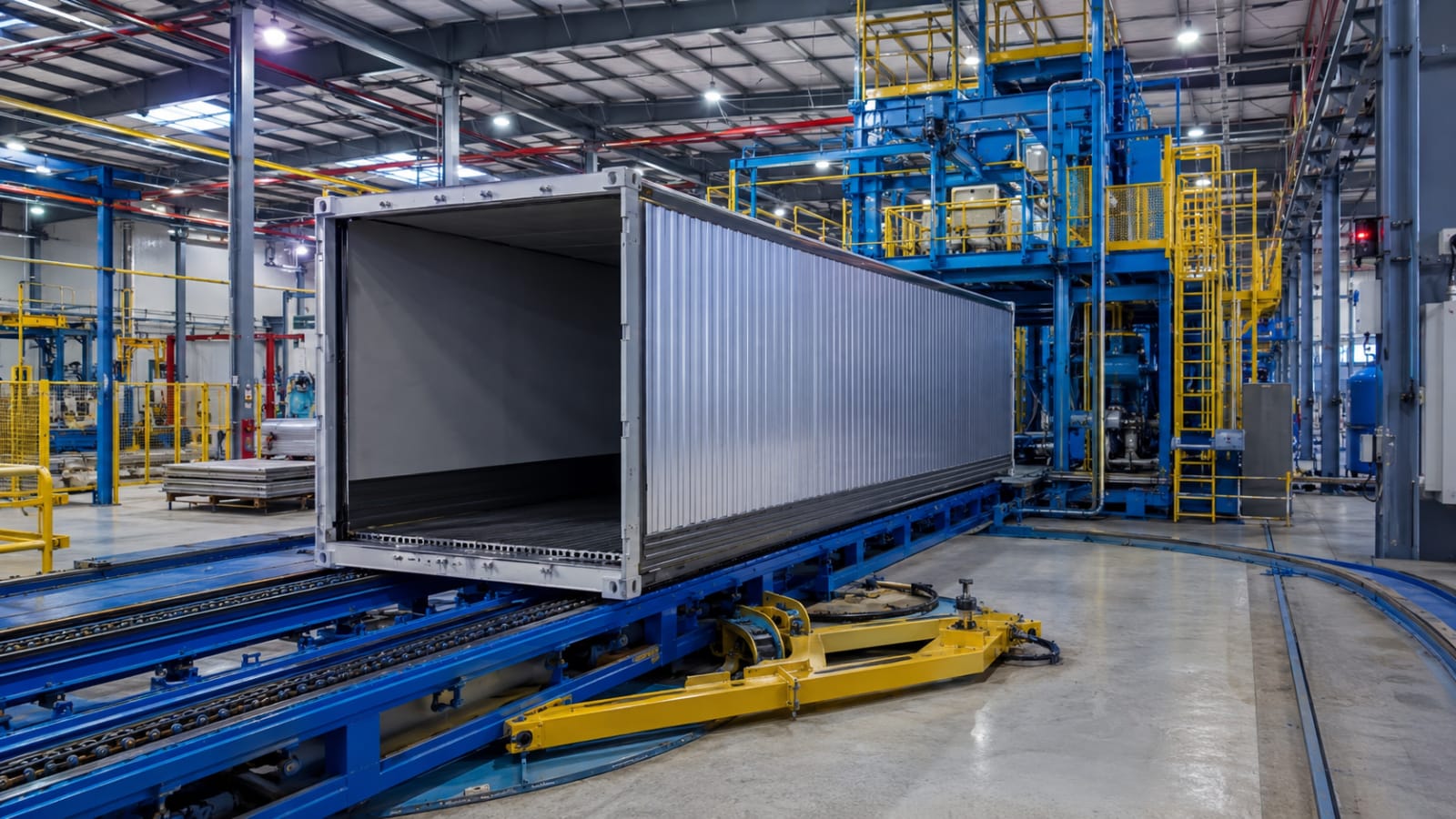
DG Compliance Guide
Class-by-class storage rules and AS 3780 / AS 1940 / AS 3833:2024 classification reference.
dg compliance guide
Bunded vs Unbunded DG Storage
When secondary containment is required and how bund volume is sized.
bunded vs unbunded dg storageFAQ
Frequently Asked Questions
Three questions procurement and HSE teams ask most often about Class 8 corrosive storage.
What is a Class 8 corrosive substance?
A Class 8 corrosive substance is an acid or alkali that attacks skin, metal, and other materials on contact. Examples include hydrochloric and sulphuric acid, sodium hydroxide, and sodium hypochlorite. Stored in bulk, they require a store built to AS 3780:2023 with secondary containment and a chemical-resistant lining.
How should corrosive chemicals be stored?
Corrosive chemicals are stored in a bunded, chemical-resistant unit that complies with AS 3780:2023. The standard requires a sump at least 150 mm deep holding at least 25% of aggregate capacity, self-closing multi-point doors, flash-arrestor ventilation, and a safety shower within 2 to 10 m. Substances are segregated by SDS compatibility.
What lining is required for corrosive storage containers?
A chemical-resistant internal lining is required so the store resists acid and alkali attack that would corrode bare or galvanised steel. A thermoplastic or polyethylene lining is the category-standard means of meeting the AS 3780 internal-finish clause. The exact lining is matched to the chemistry on your Safety Data Sheet register.