Door arrangement
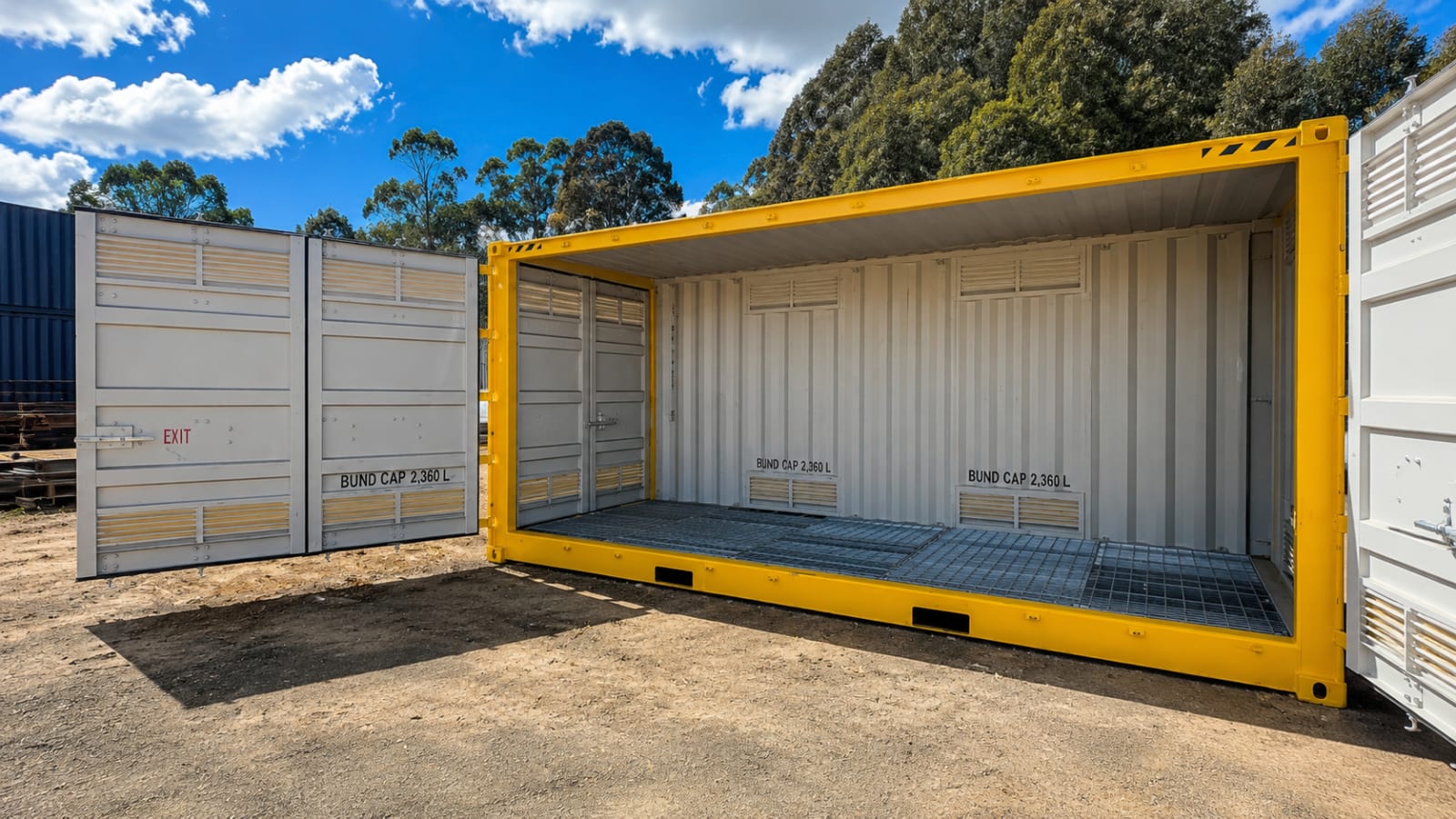
End-opening doors as standard, or a side-opening variant that opens a full bay for forklift, drum, and IBC handling.

Integrated welded steel bund (100% leak containment), chemical-resistant internal lining, high and low passive ventilation, non-spark mesh floor over the bund. Built 10ft, 20ft, 20ft side-opening, and 40ft / large-sump, with bund volume from 800 L up to 5,000 L.
AS 1940:2017 (flammable and combustible liquids), AS 3780:2023 (corrosives), AS 3833:2024 (mixed-class). Certificate of Compliance per unit. Covers Class 3, 5.1, 6.1, and 8 subject to SDS compatibility.
Chemical plants, mining, construction, agriculture, and laboratories holding solvents, acids, oxidisers, and toxics in drums and IBCs. Relocatable on ISO corner castings, forklift pockets, and crane lugs.
Overview
Bunded chemical storage shipping containers are outdoor steel stores with an integrated leak-tight bund, a chemical-resistant internal finish, and high and low ventilation, built to hold flammable, corrosive, or toxic chemicals safely. SCS Global makes them factory-direct in 10ft, 20ft, 20ft side-opening, and large-sump builds, each compliant with AS 1940:2017 and AS 3780:2023. Many buyers search for chemical storage without knowing their goods are classified dangerous goods: if you store solvents, acids, oxidisers, or agricultural chemistry, those goods almost certainly fall under a dangerous goods class, and a bunded container is the compliant answer. Every unit is part of our range of dangerous goods containers and ships with a Certificate of Compliance. The bund is a welded steel floor that captures the full contents of a spill or leak below the working floor, so nothing reaches the ground or the stormwater system. SCS builds factory-direct from Yixing, Jiangsu, then ships each unit ready-signed and AS-compliant.
Specifications
Every bunded chemical store carries the same core capability set, scaled to size. The bund is integrated into the welded floor frame, the lining is matched to the chemistry, and ventilation disperses vapour, all sized to the chemicals the unit will hold rather than fixed at one figure.
| Specification | Value |
|---|---|
| Secondary containment (bund / sump) | Integrated welded steel bund, 100% leak containment. SCS design 800 L (10ft), 1,200 L (20ft), large-capacity builds to 5,000 L. Volume governed by AS 1940 and AS 3780, sized to the chemicals stored. |
| Floor | Fully welded steel floor on an RHS frame, with a non-spark mesh floor covering (no timber) over the integrated bund. |
| Internal lining | Chemical-resistant internal finish. Thermoplastic or polyethylene lining meets the AS 3780 chemical-resistant-finish requirement for Class 8 corrosives. |
| Ventilation (passive) | High and low passive ventilation, free-flow louvre and weatherproof vent grilles, to disperse vapour. |
| Ventilation (mechanical, option) | Electric extraction fan available as a factory option where a risk assessment requires forced extraction. |
| Doors | End-opening standard, with a side-opening variant for full-bay forklift, drum, and IBC access. ISO locking bars and lockable security doors. |
| Door internal release | Internal emergency-exit release, with manual override from inside. |
| Doors (Class 8 service) | Self-closing, self-latching, multi-point doors with no inward-opening leaf. |
| Drain / decant valve | Lockable stainless-steel bund drain and decant valve. |
| Wall / roof construction | Corten steel shell, fully welded, corrugated walls, cambered roof for run-off, marine-grade components. |
| Lifting / anchoring | Forklift pockets and crane lifting lugs, ISO corner castings, heavy-duty anchoring with earth-bonding base plates for ignition-source control. |
| Exterior coating | High-build two-pack polyurethane primer with a high-gloss topcoat. |
| Signage / placards | DG-class placards (Class 3, 5.1, 6.1, 8) plus No Smoking / No Naked Flame warning signage, supplied compliant. |
| Certificate of compliance | Compliance documentation, technical specifications, and delivery certifications supplied with each unit on request. |
| DG class coverage | Class 3, 5.1, 6.1, and 8, subject to SDS compatibility for the substances stored. |

Australia
In Australia, chemical storage in a bunded DG container is governed by AS 1940, AS 3780, and AS 3833:2024, and discharges the operator's WHS dangerous-goods duties under the state regulator. The controlling standards are Australian, so chemical storage containers in Australia are specified against those documents rather than overseas codes. SCS ships factory-direct, delivered DDP to your nearest port, so the unit arrives built, signed, and certified, with one supplier covering build, shipping, and compliance documentation. New Zealand runs the separate HSNO regime, so assess NZ deployments against HSNO instead.

Sizes
SCS builds bunded chemical stores in 10ft, 20ft, 20ft side-opening, and 40ft or large-sump configurations, with bund capacity from 800 L to 5,000 L. The 10ft (2,840 mm internal, 800 L bund) is one of the more portable chemical storage containers for tight worksites, depots, and laboratories. The 20ft (5,900 mm internal, 1,200 L bund) and the side-opening build add full-bay forklift access, while the 40ft and large-sump builds answer the brief for large chemical storage containers holding bulk drum and IBC inventory. The size spokes carry full dimensional tables.
Platform
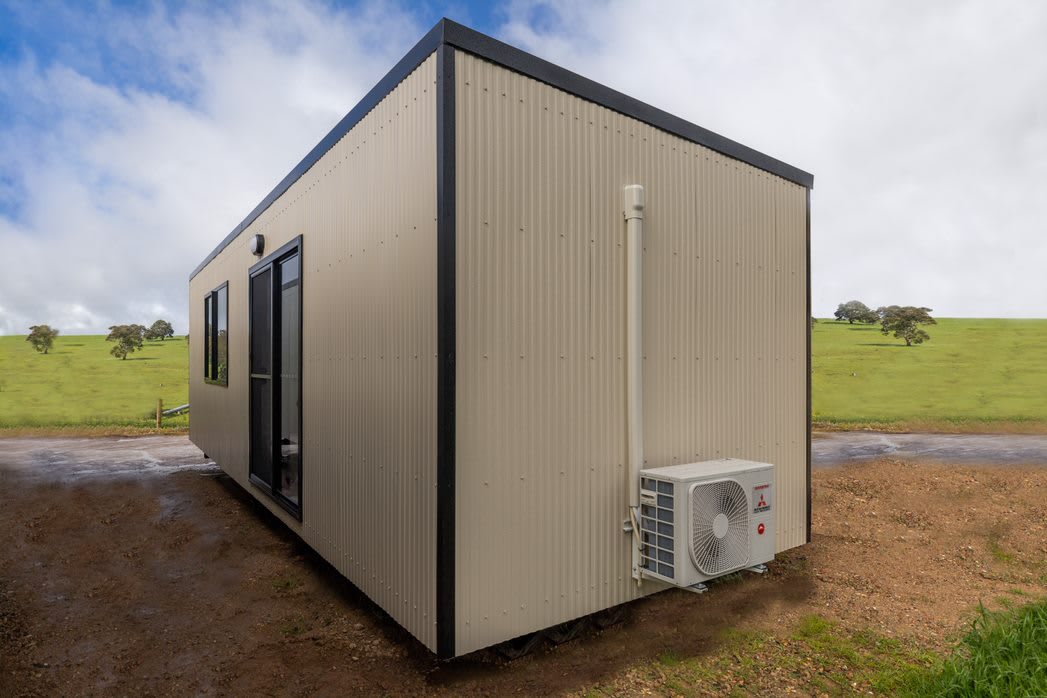
A shipping-container platform makes a sound chemical store: a fully welded Corten steel shell, ISO corner castings, forklift pockets, and crane lugs make it relocatable and site-ready. Chemical storage shipping containers start from a structure already rated for stacking, craning, and sea transport, so the box tolerates rough handling a purpose-built fixed bund store is not designed for. When the site moves, the store moves with it, craned into place with no demolition. A container-derived build also lands at lower cost and shorter lead time than fixed infrastructure.
Compliance
Which standard governs a chemical store depends on the goods: AS 1940 for flammable and combustible liquids, AS 3780 for corrosives, and AS 3833:2024 where incompatible classes are stored together. Hazardous chemical containers are not specified by container size alone, but by the class of chemistry inside them. Map your inventory to its class first, and the controlling standard follows: flammable solvents and fuels to Class 3, acids and alkalis to Class 8, oxidisers to Class 5.1, toxics to Class 6.1, and any mixed inventory to the segregation rules of AS 3833:2024. SCS supplies hazardous chemical storage containers built to the standard that matches your register, with a Certificate of Compliance and third-party inspection on each unit.
 ISO
ISO  Bureau Veritas
  DNV
DNV  Lloyd's Register
  BIC
BIC  ABS
ABS Standards & References
Which standard governs a chemical store depends on the class of the goods inside. Each unit is engineered against the standards below; click through to the source authority for the current revision.
Configuration Options
Each size accepts the same configuration options, specified at order so the factory builds to the deployment rather than retrofitting on site.
End-opening doors as standard, or a side-opening variant that opens a full bay for forklift, drum, and IBC handling.
Passive high and low ventilation as standard, with an electric extraction fan added where a risk assessment requires forced extraction.
A chemical-resistant lining for aggressive acid and alkali chemistries, meeting the AS 3780 finish requirement for Class 8.
A fire-rated build where chemicals are co-stored with flammables.
Internal shelving and bunded trays for drum, IBC, and jerry-can layouts.
Applications
SCS bunded chemical stores deploy across chemical plants, mining, construction, agriculture, and laboratories, holding flammables, corrosives, oxidisers, and toxics subject to SDS compatibility. A single bunded chemical store can hold Class 3 solvents and fuels, Class 8 acids and bases, Class 5.1 oxidisers, Class 6.1 toxics, and agricultural chemistry, provided the substances stored together are compatible on their Safety Data Sheets.
Sits alongside fuel bays, lube stores, and reagent lockups holding solvents, oxidisers, and process reagents, sized to the SDS register for the site.
Bulk solvent, treatment-chemical, and corrosive storage for processing facilities, with chemical-resistant lining and forced ventilation where the chemistry requires it.
Relocatable solvent, sealant, and treatment-chemical storage that lifts to the next stage of the build on forklift pockets and ISO corners.
Sealed, ventilated, lockable storage for laboratory and field chemistry, keeping Class 6.1 toxic inventory contained and access-controlled.
Send us the chemicals you store and the volumes, and SCS sizes the bund, lining, and ventilation to match.
Engineering Resources
Capability spec sheet, size-options data sheet, CAD drawing, and compliance summary for engineering review. Each is produced at project handoff.
Full capability matrix and AS-standard compliance summary.
Request10ft, 20ft, 20ft side-opening, and large-sump dimensions and bund volumes.
RequestPlan, elevation, and section drawings for engineering reference.
RequestOne-page summary of the three controlling AU/NZ DG standards.
RequestRelated Products
Sister products and guides in the SCS dangerous goods container range, built on the same Yixing line against the same compliance baseline.
Compact bunded DG store for tight worksites, depots, and laboratories. AS 1940, AS 3780, AS 3833:2024 compliant.
10ft dangerous goods container Larger floor area and higher bund volume for bulk drum and IBC inventories. AS 1940, AS 3780, AS 3833:2024 compliant.
20ft dangerous goods container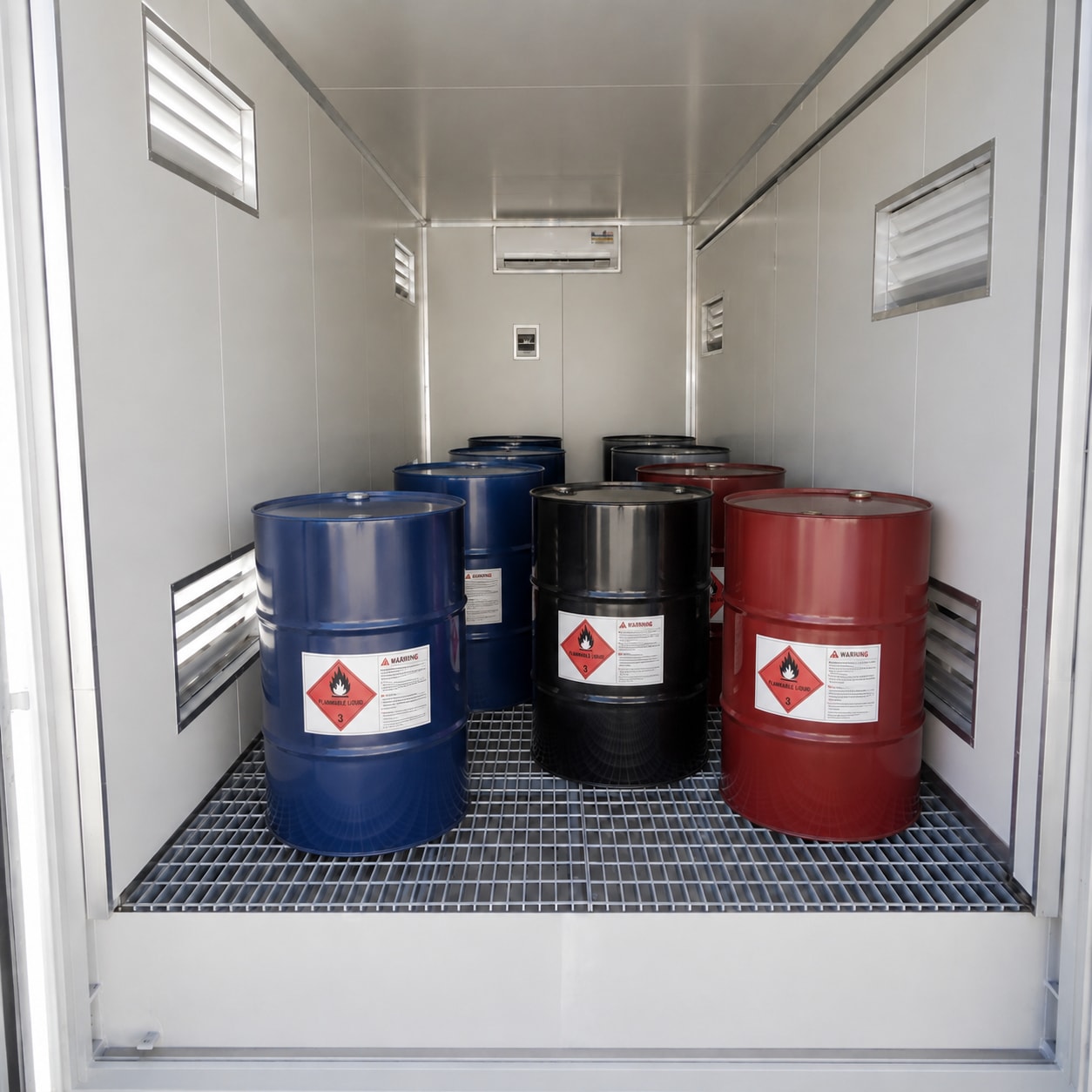
Dedicated Class 3 storage for fuels, solvents, and combustibles. AS 1940-aligned bunding, ventilation, and signage.
flammable liquid storage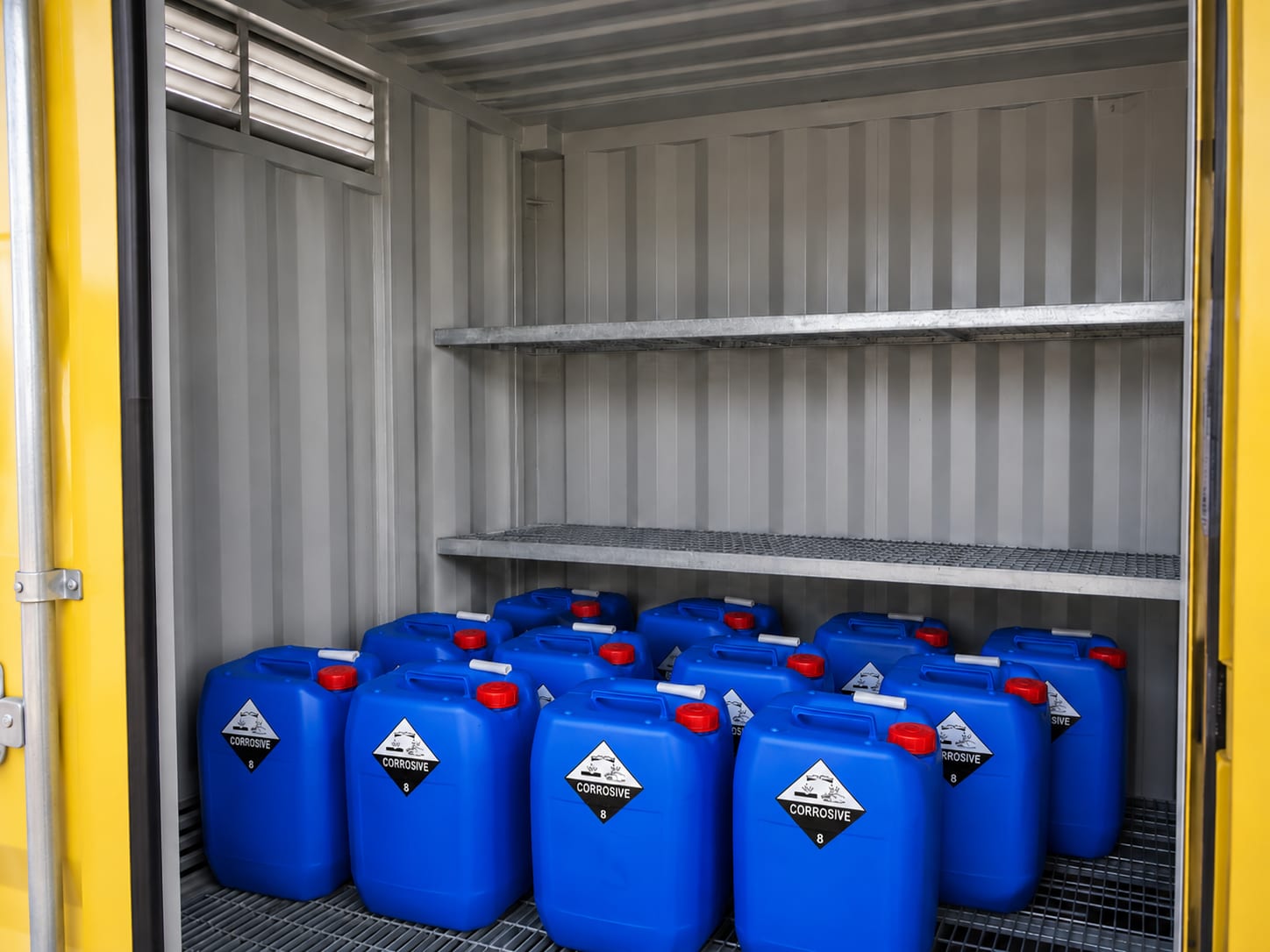
Chemical-resistant lined storage for acids and bases. AS 3780-aligned sump depth, doors, and ventilation.
corrosive storage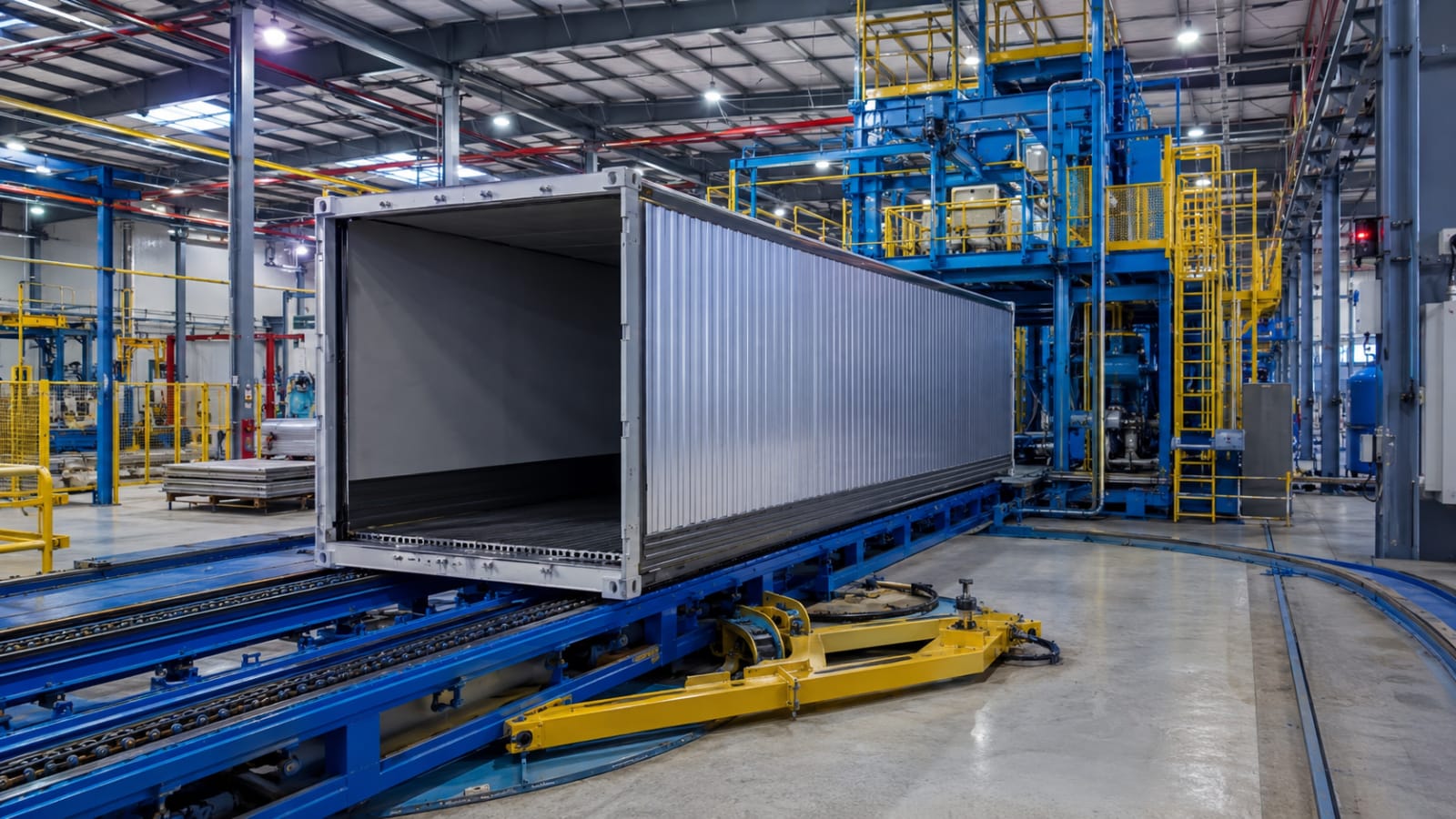
Class-by-class storage rules across AS 1940, AS 3780, and AS 3833:2024.
dg compliance and classification guide
When secondary containment is required, and when an unbunded store is permitted.
bunded vs unbunded storageFAQ
Three questions procurement and HSE teams ask most often about bunded chemical storage containers.
Chemical storage is the controlled holding of hazardous chemicals in a way that contains spills, manages vapour, and separates incompatible substances. For outdoor or bulk volumes, that means a bunded, ventilated steel store built to AS 1940 and AS 3780, sized to the chemicals held and supplied with a Certificate of Compliance.
Flammable and combustible liquids, corrosive acids and bases, oxidisers, toxics, and most working chemistry held in drums or IBCs require secondary containment under AS 1940 or AS 3780. If a spill could reach the ground or the stormwater system, the store needs a bund sized to the chemicals held.
A cabinet is an indoor, small-volume unit for litres of chemistry inside a building. A chemical storage container is an outdoor, bulk, relocatable steel store for drums and IBCs, with an integrated bund and AS-compliant ventilation. Choose a container for outdoor bulk storage and a cabinet for small indoor quantities.