
10ft Single-WC Unit
1 WC pan, 2-man urinal, 1 hand basin. Compact satellite amenity for 2 to 6 workers or for the perimeter of a larger camp.

10ft, 20ft, and 40ft container-built configurations plus flat-pack variants. Welded steel shell, insulated panels, non-slip wet-area flooring, stainless steel fixtures, LED lighting, and factory-fitted hot water system.
AS/NZS 3500 plumbing, AS/NZS 3000 electrical, AS 3740 wet-area waterproofing, NCC 2022 habitable building. Disabled-access to AS 1428.1 and Region D cyclone rating to AS/NZS 1170.2 available.
Mining camps, construction laydowns, defence forward bases, oil and gas pads, and remote project sites. Container-built units for international freight, flat-pack for transport-efficient remote-site assembly.
Overview
Ablution blocks are SCS Global's portable shower, toilet, and amenities buildings for mining camps, construction sites, and remote project locations. We build them factory-direct from our Yixing, Jiangsu facility in 10ft, 20ft, and 40ft container configurations, plus flat-pack variants for transport-efficient shipping. Each unit is pre-plumbed and pre-wired to AS/NZS 3500 and AS/NZS 3000 for Australian and New Zealand deployments, with disabled-access and Region D cyclone-rated options available on order. The full range sits inside our mining camp accommodation cluster, and every amenities block ships globally with a Certificate of Compliance per unit.
Specifications
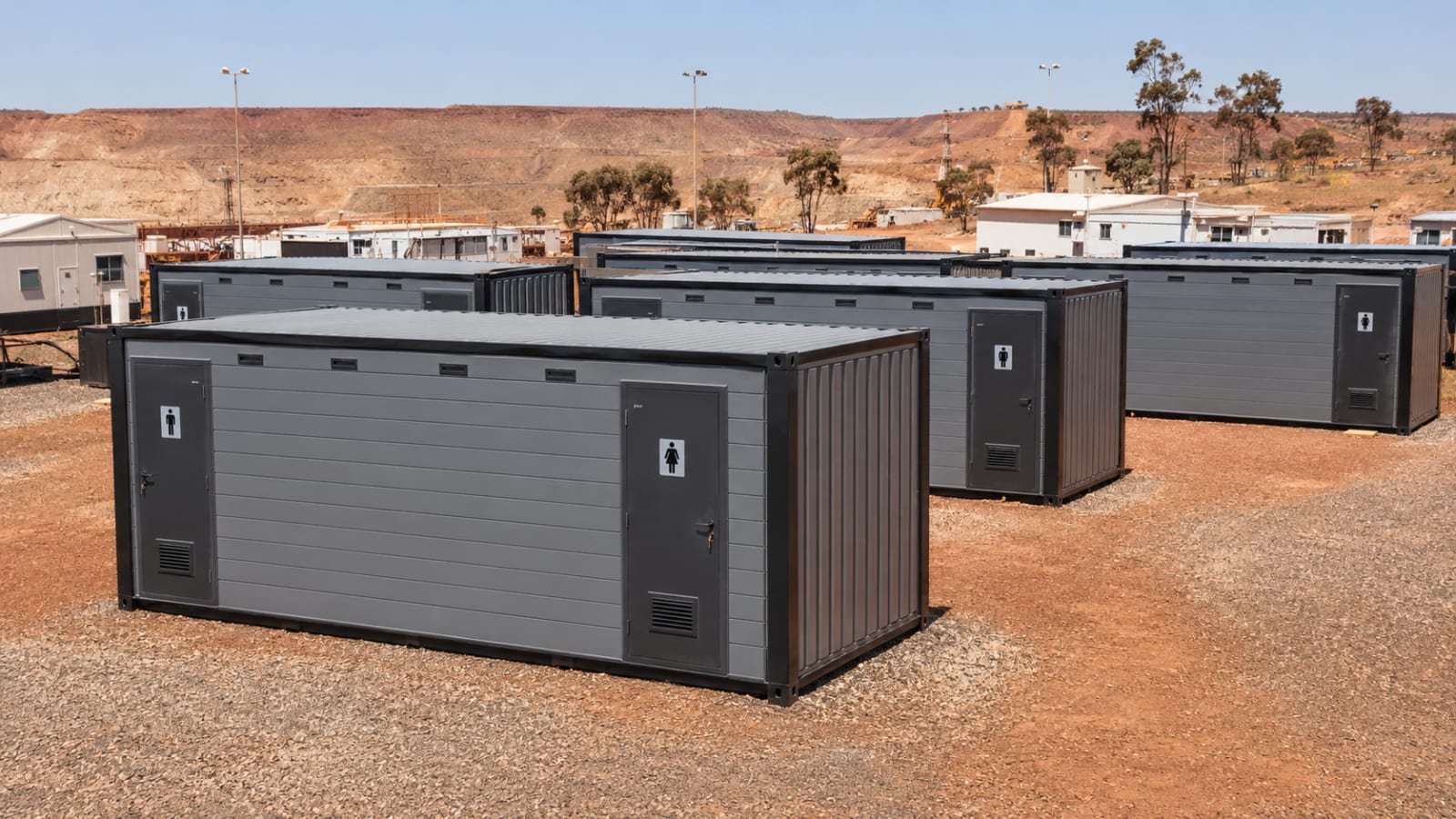
Units are built on ISO 668:2020 10ft, 20ft, and 40ft container shells with internal cubic capacities of 15.4, 33.2, and 67 m3 respectively. The base shell is welded steel with insulated wall and ceiling panels, non-slip wet-area flooring, and a factory-applied paint system. Plumbing, electrical, ventilation, and fixtures are fitted on the line at Yixing before dispatch.
| Specification | Value |
|---|---|
| Available form factors | 10ft, 20ft (split M/F or toilet+shower combo), 40ft container-built; flat-pack variant |
| 10ft external dimensions (L x W x H) | 2,991 x 2,438 x 2,591 mm (9'10" x 8'0" x 8'6") |
| 20ft external dimensions (L x W x H) | 6,058 x 2,438 x 2,591 mm (19'10" x 8'0" x 8'6") |
| 40ft external dimensions (L x W x H) | 12,192 x 2,438 x 2,591 mm (40'0" x 8'0" x 8'6") |
| Internal cubic capacity (10ft / 20ft / 40ft) | 15.4 m3 / 33.2 m3 / 67 m3 |
| Tare weight (base shell, 10ft / 20ft / 40ft) | 1,500 kg / 2,360 kg / 3,980 kg |
| Wall / roof construction | Welded steel container shell, insulated wall and ceiling panels, insulated cubicle partitions |
| Flooring | Non-slip wet-area flooring as standard |
| Plumbing fitout | Full hot/cold reticulation, drainage, vent stacks, sewer/waste connection points (AS/NZS 3500) |
| Electrical fitout | Switchboard, lighting, exhaust-fan, hot-water, GPOs, RCD protection (AS/NZS 3000) |
| Hot water system | Gas or electric HWS, anti-scald thermostatic mixers to AS/NZS 3500.4 |
| Ventilation | Passive cross-flow plus mechanical exhaust on shower/toilet zones per NCC 2022 |
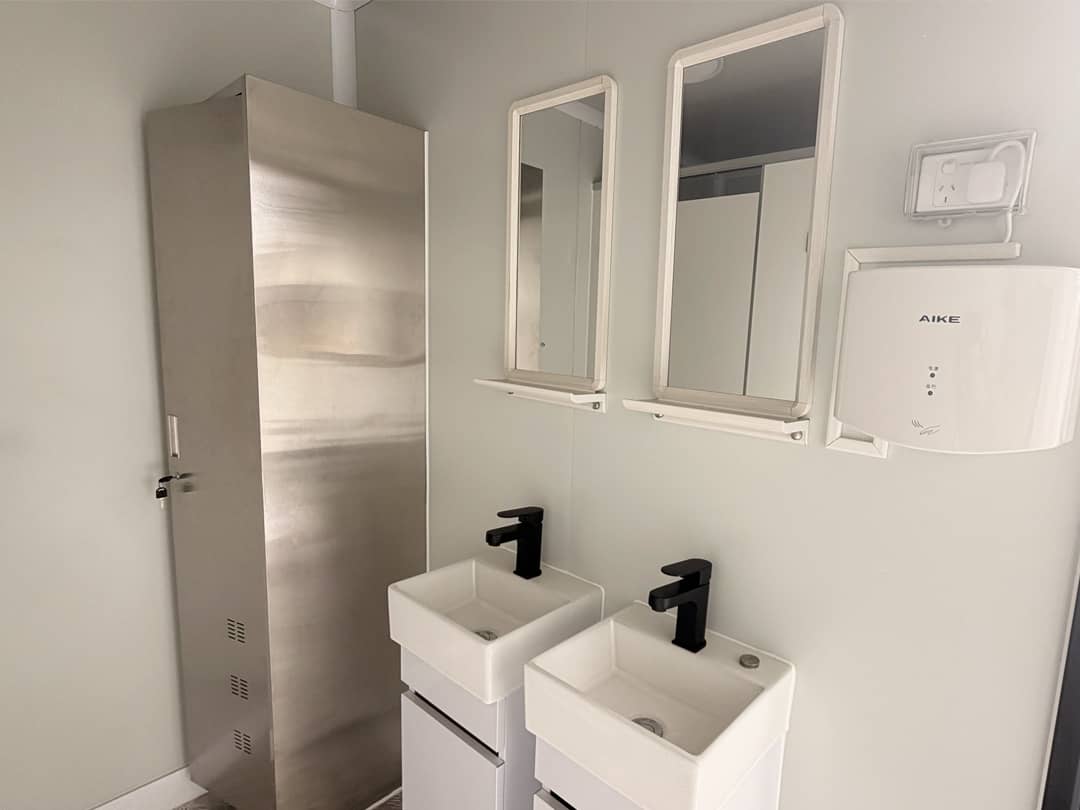
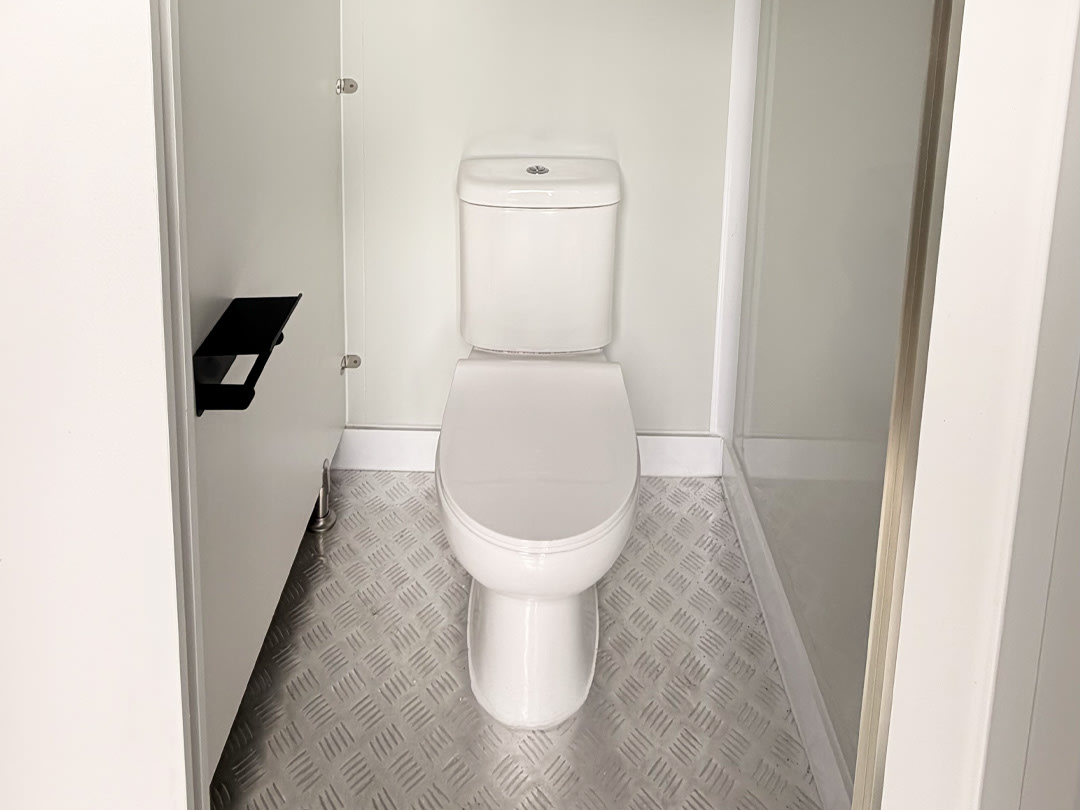
| Fixtures | Stainless steel sinks, vandal-resistant steel urinals, close-coupled WC pans, soap dispensers |
| Disabled-access option | Accessible cubicle, grab rails, basin, level entry to AS 1428.1 |
| Cyclone rating | Region A/B/C/D engineering option to AS/NZS 1170.2 |
Container-Built
Container-built units use a converted ISO 10ft, 20ft, or 40ft shell with a CSC plate for international transport. The shell is the freight container, so the box travels on standard container vessels, rail wagons, and twist-lock chassis with no separate transport frame and no on-site re-assembly. The external paint system is factory-applied for coastal, equatorial, and Region D cyclonic exposures across the Asia-Pacific, the Gulf, and sub-Saharan Africa. Specifiers also list these units as container shower blocks or shower containers; it is the same build under a different label.
Flat-Pack
Flat-pack units ship as a steel-framed panel chassis with cladding, plumbing assemblies, and fixtures packed for on-site assembly. They suit scenarios where multiple units are consolidated into a single shipment, or where the site can absorb a few days of assembly trades to save on freight. Container-built prefab ablution blocks arrive factory-fitted with only final water, waste, and power connections to make. Both formats are designed for relocation across a multi-year project lifecycle.

Off-Grid
Off-grid units run without grid power, mains water, or sewerage. Solar PV array and battery storage for electrical, gas HWS sized to shower count and recovery rate, tank water with pressure pump, and bunded sump or septic tank for waste. The system is sized at order to match the headcount and runtime the site needs. Suits exploration camps, early-works civil sites, defence forward bases, and remote pads where running services to the building is the wrong economic call.
Compliance
Every unit complies with AS/NZS 3500 plumbing, AS/NZS 3000 electrical, AS 3740 wet-area waterproofing, and NCC 2022 habitable building requirements. Plumbing assemblies pass a pressure and leak test, electrical circuits pass continuity, insulation resistance, RCD trip, and earth-fault loop tests, and wet-area waterproofing is laid before fixtures are set. Disabled-access cubicles are engineered to AS 1428.1. Region D cyclonic engineering meets AS/NZS 1170.2 design gust pressures. WC pans and showerheads are selected against AS/NZS 6400 WELS targets.
 ISO
ISO  Bureau Veritas
  DNV
DNV  Lloyd's Register
  BIC
BIC  ABS
ABS Standards & References
Every ablution block we manufacture is engineered against the standards below. Click through to the source authority for the full text and current revision.
Configuration Options
Six factory-fitted variants, each shipped quality-tested from our Yixing line. Gender split is configurable: unisex, male-only, female-only, or mixed.
1 WC pan, 2-man urinal, 1 hand basin. Compact satellite amenity for 2 to 6 workers or for the perimeter of a larger camp.
4 toilets, 1 urinal, 4 hand basins, partitioned for dual-gender use. The standard mid-camp configuration.
2 toilets, 3 showers, 1 urinal, 2 hand basins, bench. Combined wet-area amenity.
3 toilets, 3 showers, 1 urinal, 2 hand basins, bench. Higher fixture density on the same 20ft footprint.
Extended fixture layout for higher headcounts. Configured to project brief.
Kit-of-parts variant. Transport-efficient pack-out, on-site assembly. Suits consolidated multi-unit shipments.
Available across the container range. Accessible cubicle, grab rails, accessible basin, level entry to AS 1428.1.
Applications
Portable toilet blocks and shower units deploy wherever permanent amenities don't exist. Mining camps, construction laydowns, defence forward bases, and oil and gas pads across Australia, the Gulf, Africa, and the Pacific.
Camp hygiene infrastructure for iron-ore, copper, gold, and bauxite operations. Fixture-to-headcount ratios configured per operator specification.
Shower and toilet facilities for pipeline projects, oilfield camps, and LNG construction sites. Off-grid variants for remote pads.
BoP and Tier 1 construction laydowns. Flat-pack for transport-efficient mobilisation, container-built for immediate commissioning.
Forward operating bases, emergency deployments, and remote industrial sites. Self-contained off-grid configurations with solar, tank water, and sump.
Tell us the headcount, site services, and deployment region. We quote factory-direct from Yixing.
Engineering Resources
Spec sheet, CAD floor plans, and compliance packs for engineering review. Every document published here has a crawlable HTML equivalent elsewhere on the page.
Full specification matrix, variant fixture counts, compliance summary.
RequestPlan view, fixture layout, plumbing and electrical points.
RequestPartitioned dual-gender layout, fixture counts.
RequestBoth variant layouts, fixture counts.
RequestRelated Products
Sister products in the SCS mining camp accommodation range. Ablution blocks rarely deploy alone. SCS builds the full set of camp modules on the same Yixing line.
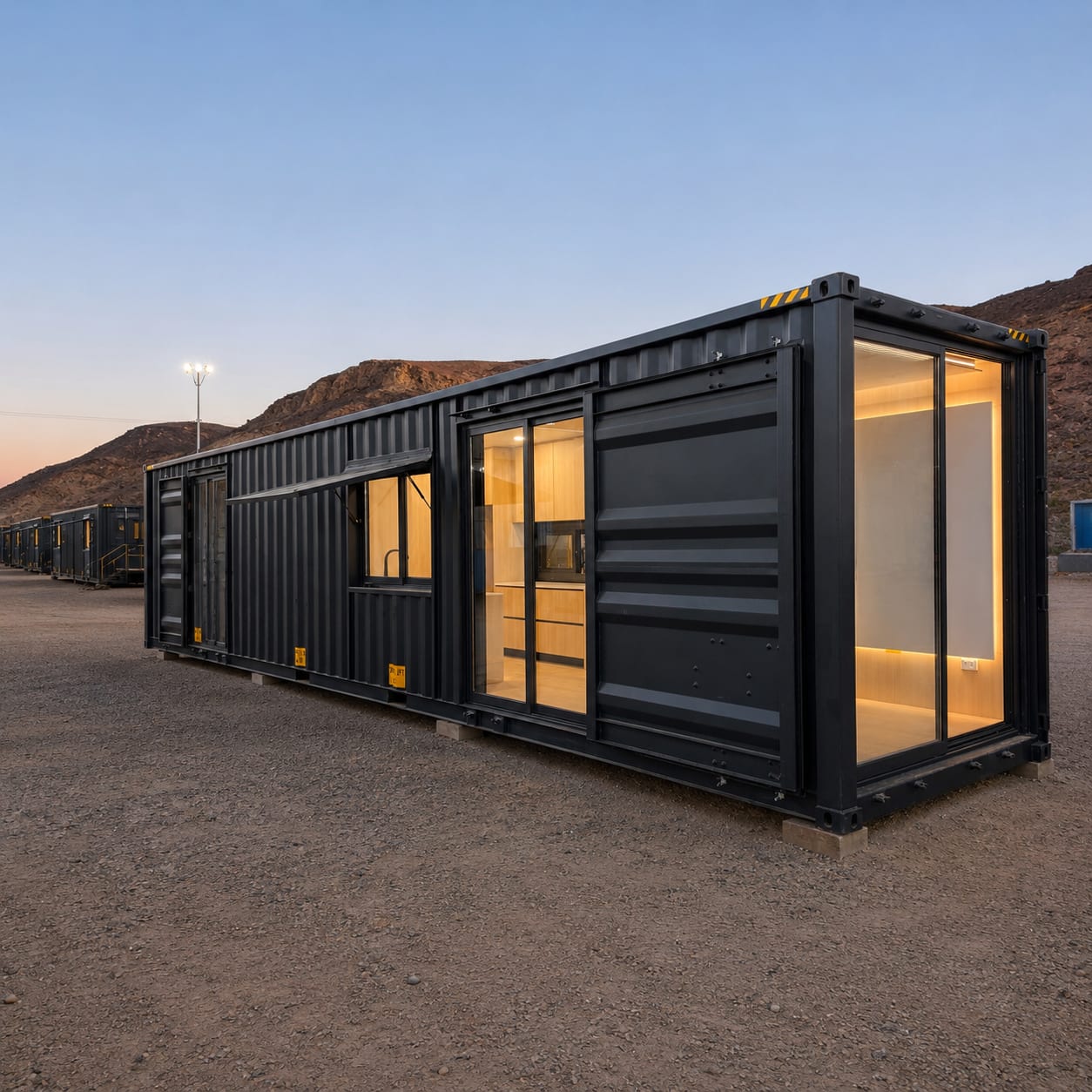
Single, twin-share, and ensuite sleeping units for FIFO and remote-site accommodation. Built on the same factory line.
mining housing units
Wet-facility companion: washer/dryer bays, drying lines, plumbing to AS/NZS 3500.
portable laundry containers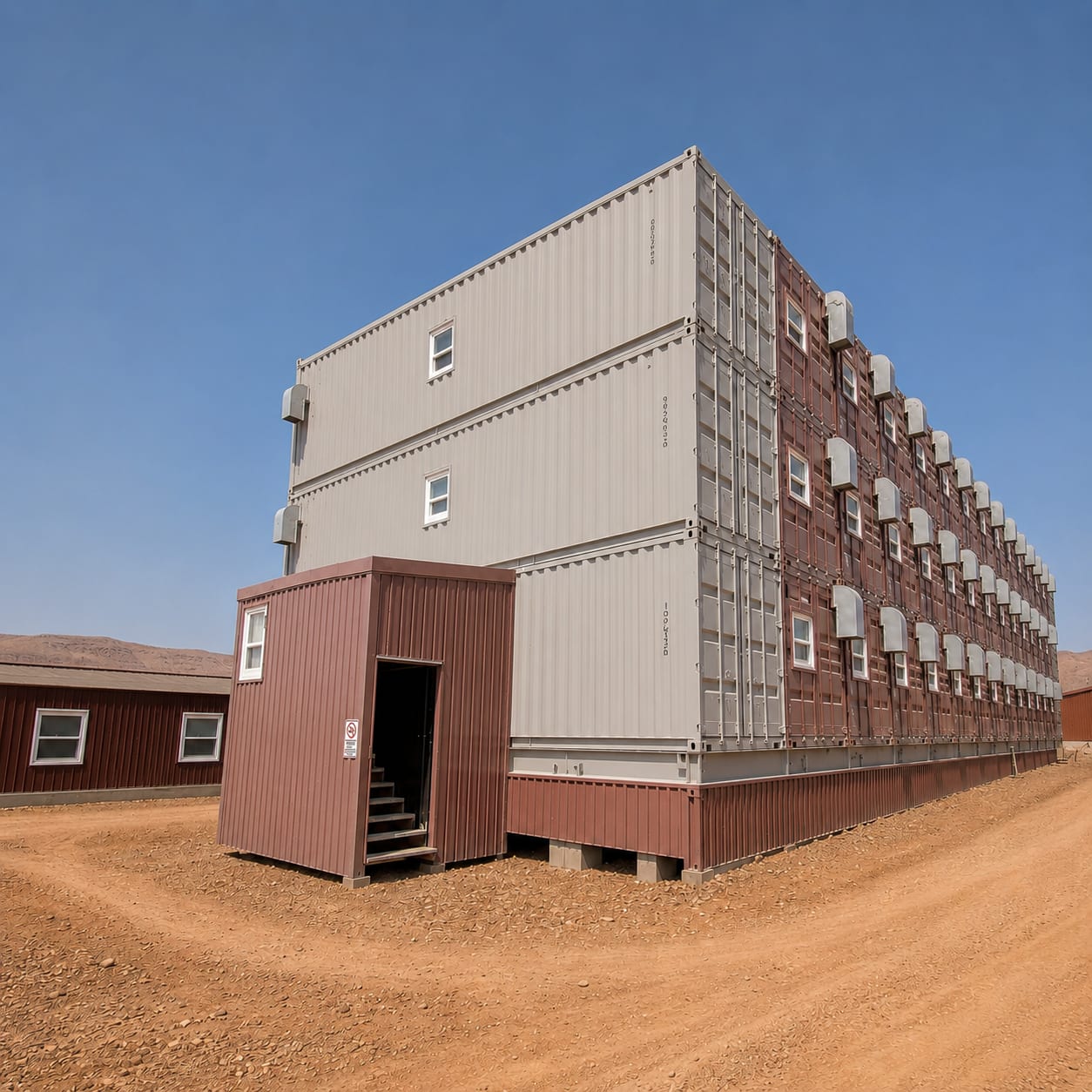
Turnkey camp solutions where SCS supplies every module under one factory order.
modular mining campsFAQ
Three questions procurement and engineering ask most often about these amenities buildings.
An ablution block is a self-contained portable building with showers, toilets, and hand basins, used at mining camps, construction sites, defence forward bases, and remote project locations. It plumbs into mains or tank water, drains to sewerage or septic, and runs on grid or off-grid power. SCS builds them on 10ft, 20ft, and 40ft container shells, plus flat-pack variants.
A unit built on a welded steel container shell lasts 25+ years with routine maintenance. The maintenance cycle is annual plumbing service, paint refresh as exterior coating ages, and fixture replacement at 7 to 10 years. Region D cyclonic, coastal corrosion, and extreme heat exposures shorten paint-cycle intervals.
Yes. Mains sewerage is the standard waste arrangement for grid-connected sites. Off-grid alternatives are direct connection to a septic tank or a bunded sump with pump-out access. The waste configuration is set at order against the site's available services.