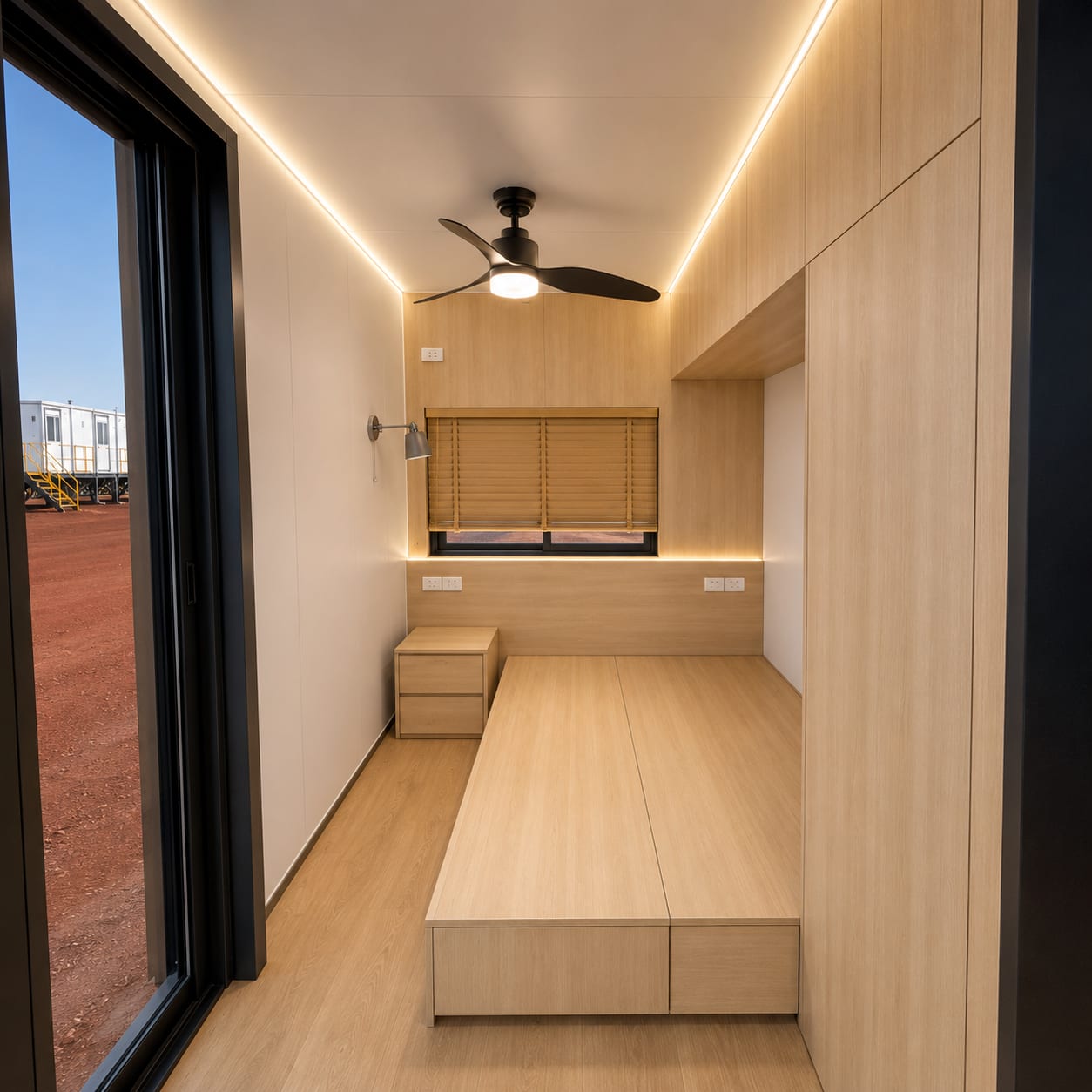
Case Study · Iron Ore

Pilbara Mining Camp: 120-Bed FIFO Accommodation Village, WA

A 120-bed FIFO village delivered to a Pilbara iron ore operation, craned in ahead of crew mobilisation

Results snapshot

A 120-bed FIFO village delivered to a Pilbara iron ore operation, craned in ahead of crew mobilisation

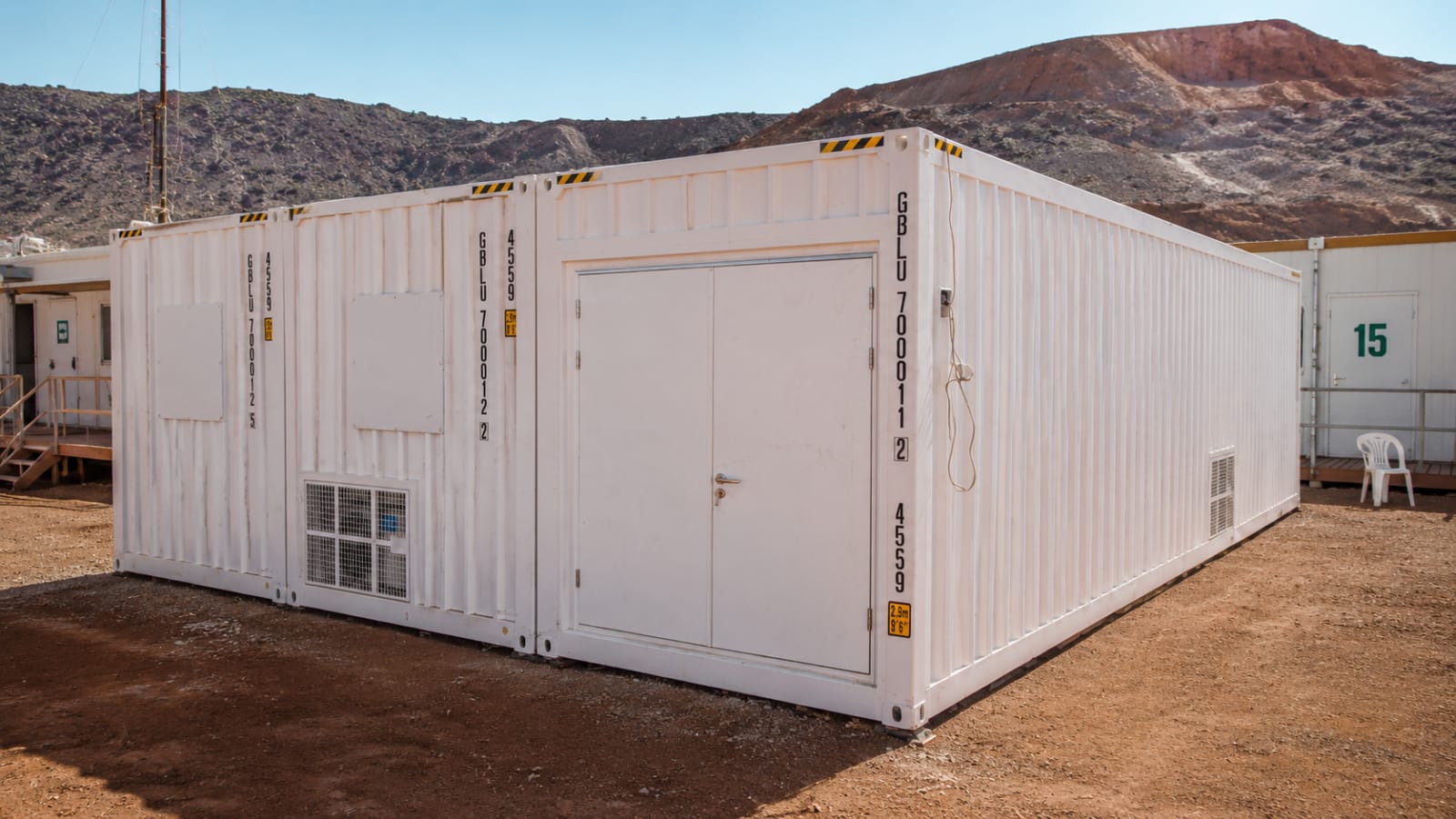
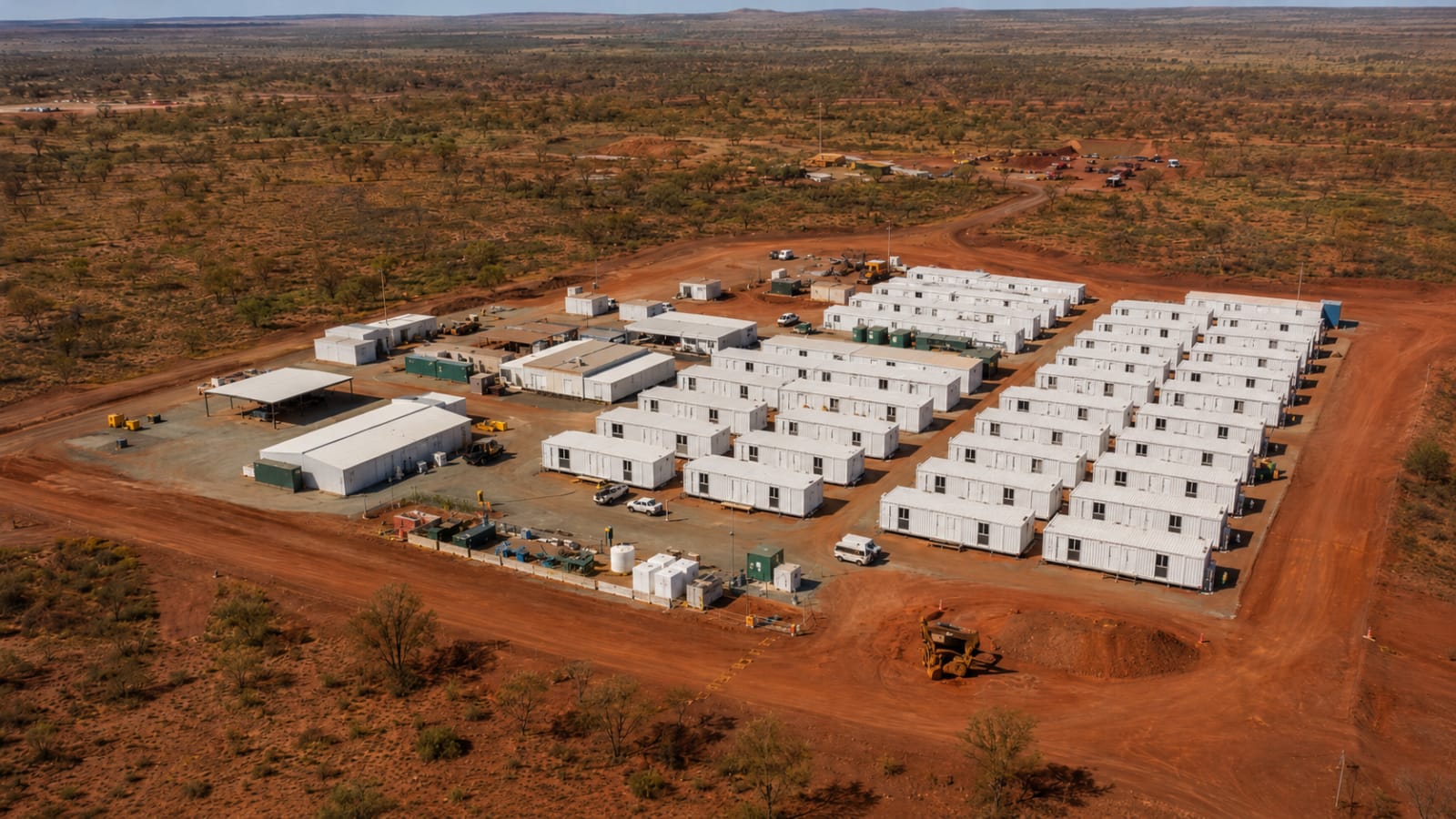
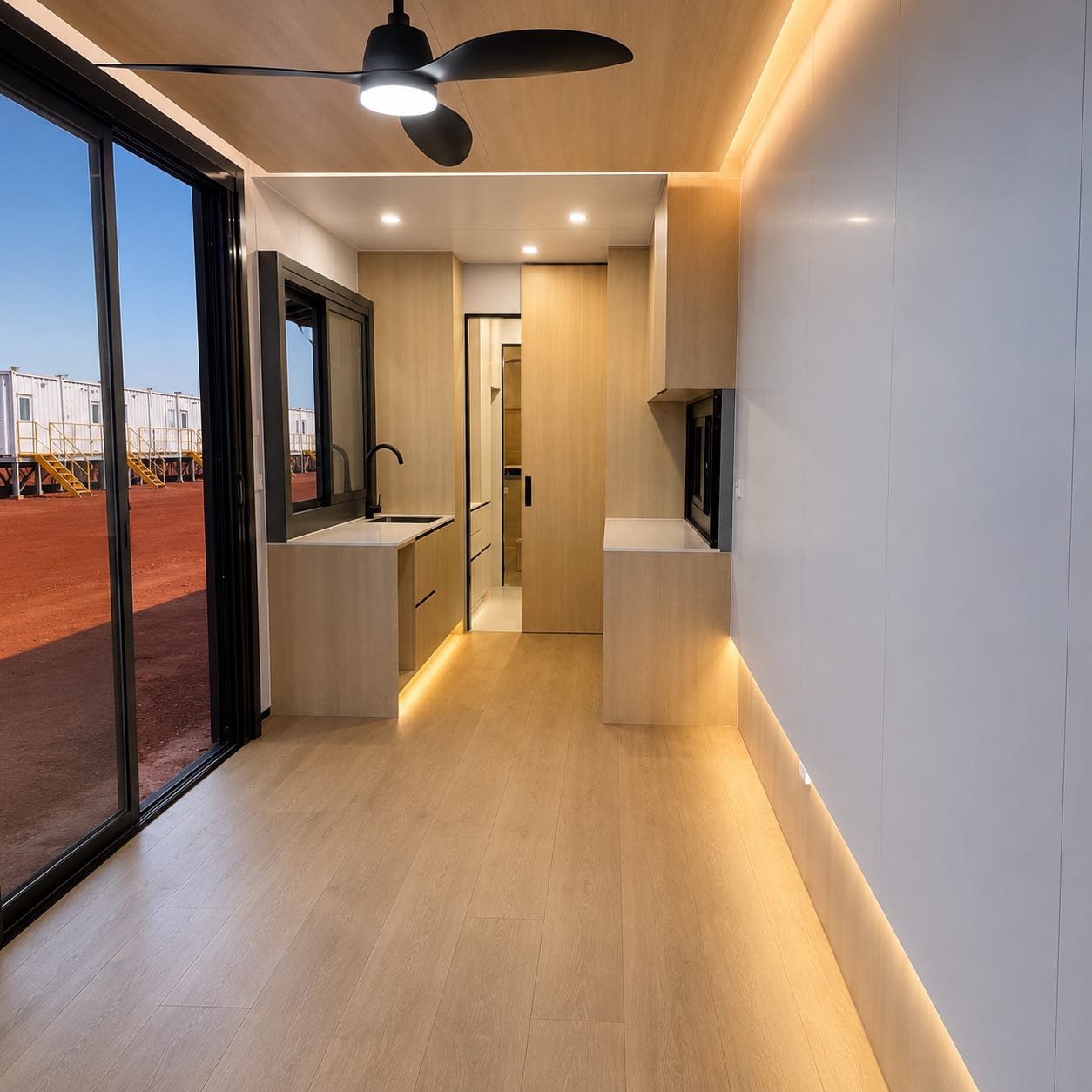
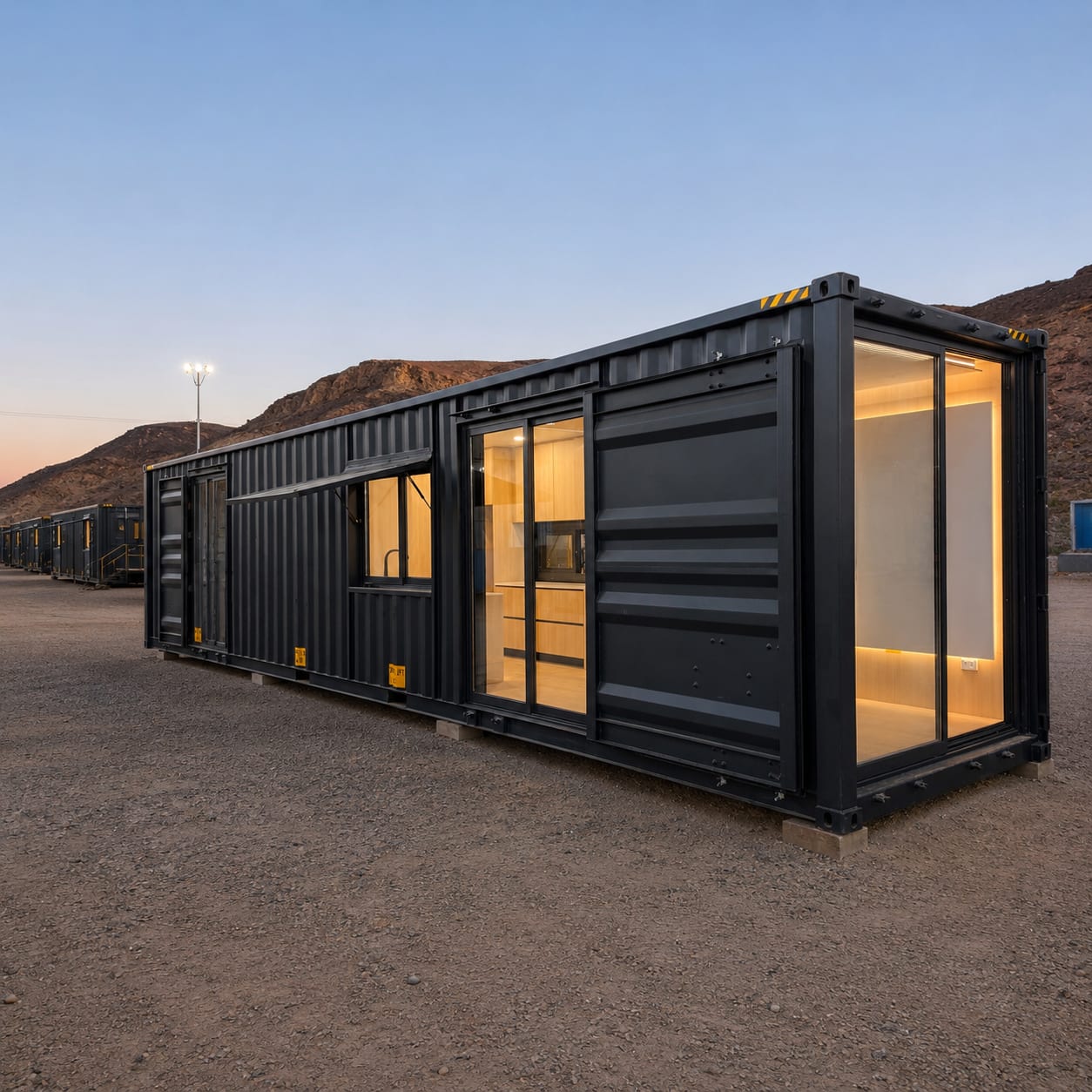
SCS Global delivered a 120-bed fly-in fly-out accommodation village to a Tier-1 iron ore operation in the Pilbara, Western Australia. The package combined single-person modular housing, ablution blocks, and a commercial kitchen and mess, all built and fitted out at the SCS factory, shipped to Port Hedland, and craned onto the prepared pads. The village was commissioned ahead of the operation's crew mobilisation date, engineered against AS/NZS 1170.2 for the Pilbara cyclonic wind region and AS 3959 for bushfire exposure, with the full stamped compliance pack archived to the site standard. The order, 120 beds plus amenities, sits squarely in the SCS mid-sized sweet spot. This project sits inside our mining camp accommodation hub at SCS Global.

Project narrative

How the project ran

Three stages: the problem the operator brought, the engineering calls SCS made, and the outcome the day after commissioning.

Challenge

The challenge: 120 beds commissioned before crew mobilisation, in a cyclone region

A Tier-1 iron ore producer needed a 120-bed fly-in fly-out village at a remote Pilbara pit, standing and commissioned before crews mobilised for a plant expansion. The site sits in AS/NZS 1170.2 cyclonic wind country and carries AS 3959 bushfire exposure, the kitchen had to meet AS 4674, and the whole village had to land on a fixed mobilisation date. A workforce with nowhere compliant to sleep is idle cost against the expansion, accruing daily.
Action

The action: factory-built housing, ablutions, and kitchen on one compliance envelope

SCS built the village as one factory-finished package: single-person rooms, ablution blocks, and a commercial kitchen and mess. Every building carried the same envelope: AS/NZS 1170.2 cyclonic wind design with rated tie-down, AS 3959 bushfire construction, AS/NZS 3000 and 3500 services, and an AS 4674 kitchen fit-out, each shipped with its stamped compliance pack. Built under the QA in our manufacturing process, the units shipped to Port Hedland, were craned onto footings, and were commissioned to the site standard.

Result

The result: village commissioned ahead of mobilisation, zero schedule slip

All 120 beds, the ablutions, and the kitchen were commissioned nine days ahead of crew mobilisation, with zero schedule slip. Every building passed handover first time, with no remediation and no on-site retrofit, and the lead time came in three weeks inside budget. The stamped compliance packs dropped straight onto the operation's asset register, crews started on schedule rather than waiting on accommodation, and the operation reused the package as its reference for adjacent camps.

Outcomes

Quantifiable transformation

Before, after, and the delta against the project deliverables that SCS and the operator tracked.

Commissioned vs mobilisation date

Before
Target: on or before
After
9 days ahead
Delta
+9 days

Beds delivered

Before
Brief: 120
After
120
Delta
100%

Handover inspection pass

Before
Target: first pass
After
First pass, all lots
Delta
0 reworks

Factory-to-site lead time

Before
Budget: 18 weeks
After
15 weeks
Delta
-3 wks

Next step

Want a similar outcome? Talk to engineering.

Bring the substance, the volume, the jurisdiction, and the operator standard. Our engineering team will walk through the engineering and compliance pathway against your scenario and return a factory documentation pack you can take to procurement.