Guide

DNV Standards – Offshore Container Certification Guide

A manufacturer's guide to the DNV standards that govern offshore container design, certification, and inspection. Written for procurement managers, quality engineers, and project directors specifying offshore equipment against the right standard.

Summary

DNV standards govern the design, manufacture, testing, and certification of every offshore container and portable unit. The three core standards are DNV 2.7-1 (containers up to 25,000 kg, design-by-code), DNV 2.7-2 (installation of fitted service modules), and DNV 2.7-3 (portable offshore units above 25,000 kg, design-by-analysis). They work alongside the Container Safety Convention for international transport, classification society type approval through DNV, LR, BV, or ABS, and A60 fire ratings under SOLAS and the IMO FTP Code. SCS Global manufactures and certifies offshore containers through six classification and inspection bodies: DNV, Lloyd's Register, Bureau Veritas, ABS, SGS, and Intertek. This guide sits alongside our dnv offshore & marine equipment pages at SCS Global, covering the product specifications and compliance documentation that support the same procurement audience.

01

2.7-3

DNV 2.7-3 – Portable Offshore Units (Non-Operating)

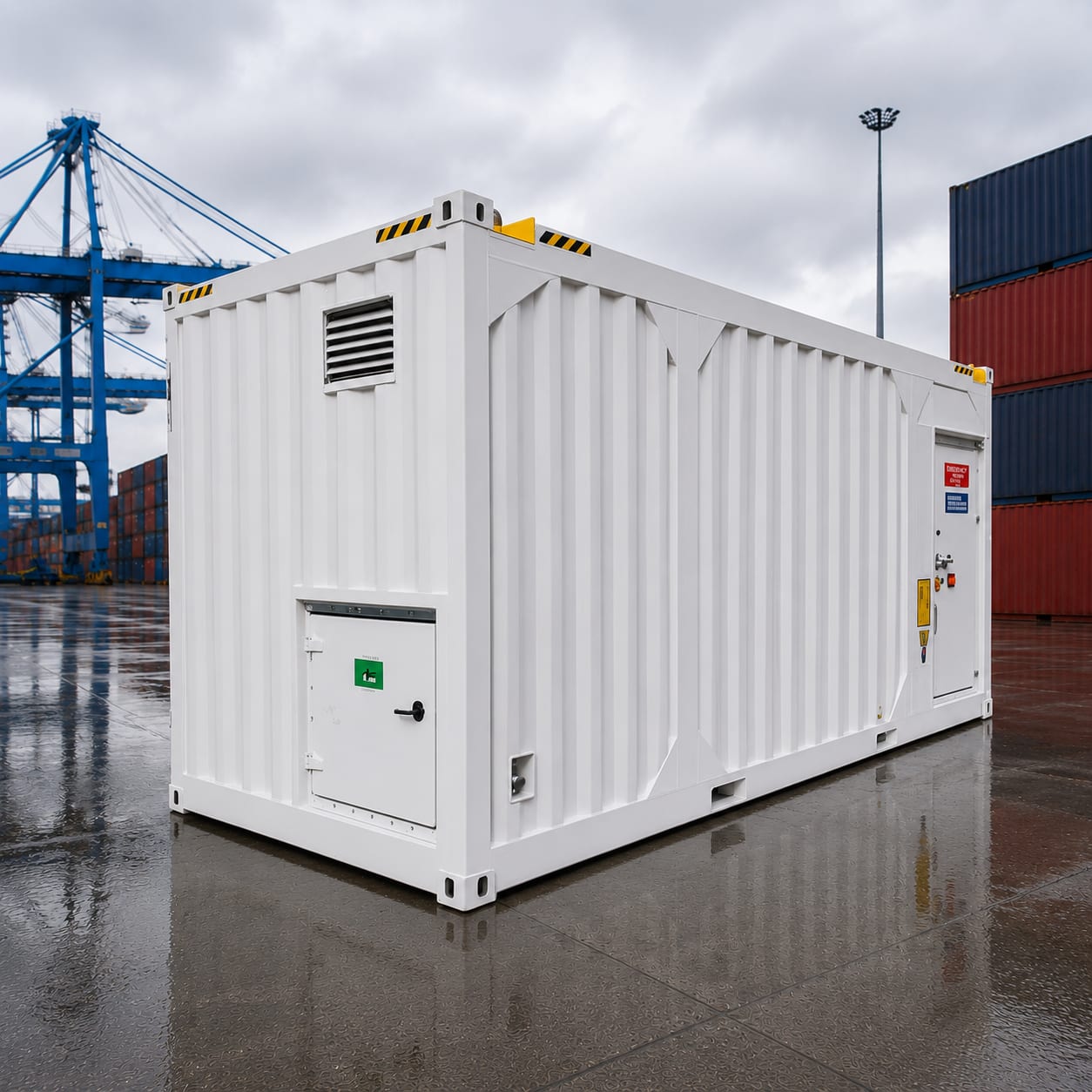
DNV 2.7-3 (DNVGL-ST-E273) is the standard for portable offshore units weighing more than 25,000 kg, covering design, certification, and operation using a design-by-analysis approach. Unlike the prescriptive code-based method of 2.7-1, DNV 2.7-3 requires the design engineer to provide the full design basis, conduct limits-of-operation analyses, and define acceptance criteria for each load case scenario. Maximum gross weight for units under this standard can reach approximately 100 tonnes. The standard covers five POU types (A through E), each classified by operational profile and structural configuration, including laboratories, workshops, stores, power plants, control stations, tank containers, skids, and non-standard geometries that do not conform to a container profile.

The longer review cycle and higher certification cost compared to 2.7-1 reflect the depth of engineering analysis required. For procurement teams, the key distinction is structural: if the unit lacks a box-like crash-frame structure, or weighs above 25 tonnes, 2.7-3 applies. SCS manufactures portable offshore units to this standard, including engineered skids and frames for equipment that exceeds standard container profiles.
02

2.7-2

DNV 2.7-2 – Portable Offshore Units (Service Modules)

DNV 2.7-2 (DNVGL-ST-E272) covers installation requirements for container-shaped service modules on offshore installations, including electrical systems, safety systems, and hook-up procedures. Published in February 2016, this standard consolidates requirements from IMO, SOLAS, FTP, MODU, and explosion safety frameworks into a single reference document. Where 2.7-1 certifies the container for safe crane lifting and sea transport, 2.7-2 certifies the module for operation once installed on the platform. A service container deployed offshore typically requires both certifications: 2.7-1 for transport and 2.7-2 for installation.

This dual certification requirement applies to offshore workshop containers, control rooms, laboratories, data logging units, MCC rooms, and equipment enclosures. For procurement teams, specifying 2.7-2 alongside 2.7-1 is standard practice for any service module that will operate as a permanent or semi-permanent installation on an offshore facility.

03

2.7-1

DNV 2.7-1 Offshore Container Standard

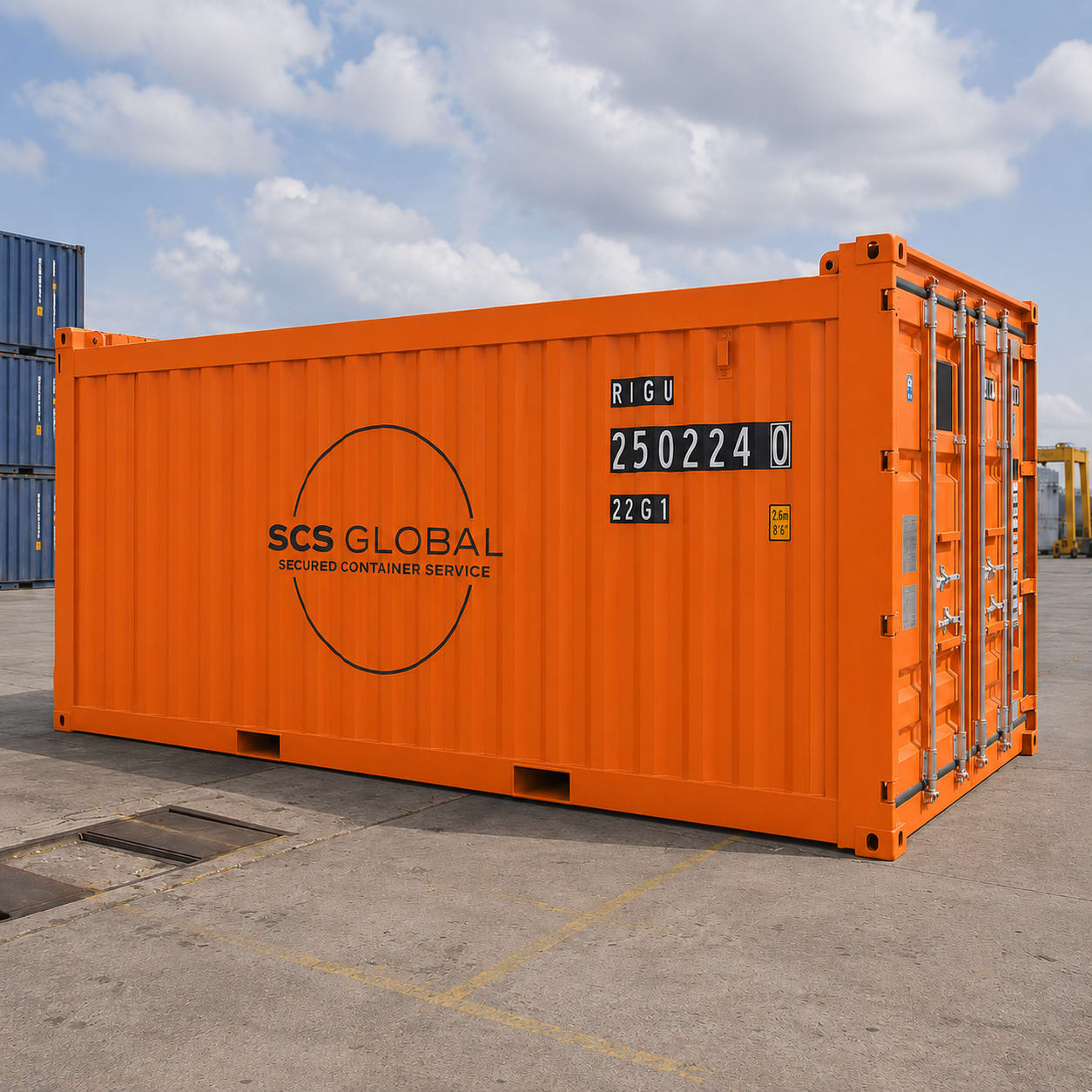
DNV 2.7-1 (DNVGL-ST-E271) is the certification standard for offshore containers weighing up to 25,000 kg, governing design, manufacture, testing, and periodic inspection using a design-by-code approach. The current edition (2023-03, amended 2024-12) is based on the European standard EN 12079. The design-by-code philosophy means that if a container falls within specified categories, designated design criteria apply directly, producing a streamlined review process and a faster, less expensive certification cycle compared to 2.7-3. SCS manufactures across all three categories, including certified cargo containers, offshore baskets, and mud skip containers.

Container categories under DNV 2.7-1
CategoryDescriptionExamples
Offshore freight containerGeneral cargo for goods and equipment transportClosed containers, cargo baskets, tank containers, bulk containers, bottle racks
Offshore service containerContainer built for special service tasks as temporary installationLaboratories, workshops, stores, power plants, control stations, accommodation
Offshore waste skipContainer for holding and removing waste, open or closedFlat steel plate construction with profile bracing, side-mounted lugs
04

Selection

DNV 2.7-1 vs 2.7-3 – Key Differences

The main difference between DNV 2.7-1 vs 2.7-3 is weight and design philosophy: 2.7-1 certifies box-like containers under 25 tonnes using design-by-code, while 2.7-3 certifies heavier portable offshore units using design-by-analysis. If the unit weighs under 25 tonnes and fits a standard container profile, specify 2.7-1. If it exceeds 25 tonnes, has a non-standard shape, requires subsea rating, or will only be transported once, specify 2.7-3. Some units near the 25-tonne boundary may qualify under either standard, and the classification society confirms this during the design review stage.

The 25,000 kg boundary is the primary decision point, but structure type and transport frequency also determine which standard applies.

Selection criteria: when to use 2.7-1 vs 2.7-3
CriterionDNV 2.7-1DNV 2.7-3
Maximum Gross Weight≤ 25,000 kg> 25,000 kg (up to ~100 t)
StructureBox-like or crash frameNo crash frame required
Design philosophyDesign by codeDesign by analysis
Transport frequencyRepeated useSingle or repeated use
Subsea liftingNot coveredCovered
Certification cycleFaster, less expensiveLonger, more expensive
05

CSC

Container Safety Convention (CSC)

The Container Safety Convention (CSC) is a 1972 IMO treaty that sets international design-approval and safety-inspection standards for all containers used in international transport by sea, land, and road. Every container in international transport must carry a CSC safety approval plate and undergo periodic examination. This framework operates independently of DNV offshore-specific standards but applies to all shipping containers, including those that also hold 2.7-1 certification. The first examination must occur no more than 5 years after manufacture, with subsequent examinations at intervals of no more than 30 months.

The European standard BS EN 12079 was the original basis for 2.7-1 and has been withdrawn and replaced by EN ISO 10855. ISO 10855 adds snagging requirements absent from EN 12079 and references ISO and ASNT standards instead of exclusively European ones. All containers certified to EN 12079 or DNV 2.7-1 are considered equivalent to ISO 10855, so existing certifications remain valid without re-certification.

06

Type Approval

DNV Type Approval Process

What is DNV certification?

DNV certification is a classification society's formal verification that an offshore container's design, materials, welding, and testing meet the DNV standard it is built to, most commonly DNV 2.7-1 for cargo carrying units. The certificate, plate, and documentation pack are what an operator's marine warranty surveyor accepts at mobilisation.

How do you get DNV certification?

Certification is arranged by the manufacturer with a classification society: design review against the standard, qualified welding procedures, witnessed load and NDT testing, documentation, then the certificate, plate, and marking issued before dispatch.

DNV type approval for offshore containers follows a seven-step process: design review, manufacturing oversight, testing, documentation, certification, marking, and periodic in-service inspection. The process applies whether the certifying body is DNV itself, Lloyd's Register, Bureau Veritas, or ABS, as all major classification societies work to the same standard. SCS completes this process at our manufacturing facility for every offshore container produced, with third-party inspection by the project's nominated certifying body. For the full scope of SCS certification and compliance services, each unit ships with complete engineering documentation, mill certificates, and inspection reports.

Design review and certification steps

  1. Design review: the classification society reviews engineering drawings, structural calculations, and material specifications against the applicable standard.
  2. Manufacturing oversight: welding procedures are qualified (WPS and PQR) and welders are certified to DNV and ISO welding standards.
  3. Testing: MPI/NDT weld testing, load testing to the applicable standard, sling certification, and dimensional inspection.
  4. Documentation: material traceability through mill certificates, coating DFT testing, and pre-shipment inspection reports with photographic evidence.
  5. Certification: the classification society issues the certificate of approval.
  6. Marking: the certified container is marked per the applicable standard's requirements.
  7. Periodic inspection: in-service examination at prescribed intervals to maintain valid certification.
07

Societies

Classification Society Type Approval

The four major classification societies for offshore container certification are DNV, Lloyd's Register (LR), Bureau Veritas (BV), and the American Bureau of Shipping (ABS), each with different specialisations by product type and geography. Which society to nominate on a purchase order depends on the operator's existing fleet, flag state requirements, and contract conditions. SCS Global certifies through all four major societies plus SGS and Intertek for additional third-party inspection and verification. Most operators accept certification from any member of the International Association of Classification Societies (IACS).

Classification society specialisations
Classification SocietyTypical Specialisation
DNVPrimary standard publisher, leading offshore authority. Dominant in North Sea and global oil and gas operations.
LR (Lloyd's Register)LR type approval common for stock and repeat-build offshore containers. Strong in North Sea and Asia-Pacific.
BV (Bureau Veritas)BV type approval frequently used for offshore refrigerated containers and West African operations.
ABS (American Bureau of Shipping)Common for US-market CSC and DOT certifications. Also certifies portable accommodation modules.
08

Fire Rating

A60 Fire Rating Explained

An A60 fire rating means a structure can withstand a cellulosic fire for 60 minutes while maintaining structural integrity and preventing flame or smoke penetration, tested per SOLAS and IMO FTP Code (MSC.307(88)) standards. The classification centres on three simultaneous criteria maintained for the full 60-minute test: integrity (no flame penetration), insulation (average temperature rise on the unexposed face below 140°C, with no single point exceeding 180°C), and structural stability. The hydrocarbon fire curve is substantially more aggressive, exceeding 1,000°C within minutes, so modules on production platforms where hydrocarbon pool fires are the primary risk may require H-class ratings. The governing standards are SOLAS (1974), the IMO FTP Code, and ISO 834. SCS builds A60 fire rated modules for offshore deployment as hazardous area modules and offshore living quarters.

A0 vs A60 vs H60 fire rating classes
RatingFire TypeDurationInsulation
A0Cellulosic60 minNo insulation requirement
A15Cellulosic60 min15 min
A30Cellulosic60 min30 min
A60Cellulosic60 min60 min
H0Hydrocarbon60 minNo insulation requirement
H60Hydrocarbon60 min60 min
H120Hydrocarbon120 min120 min
09

Specification

How to Specify Offshore Containers for Your Project

To specify offshore containers correctly, procurement teams need to confirm the applicable standard, maximum gross weight, fire rating requirement, classification society preference, and lifting arrangement before issuing the RFQ. Getting the specification right at the enquiry stage prevents re-engineering and re-certification costs that arise when requirements change after production begins. The specification should reference specific standard document numbers (DNVGL-ST-E271 for 2.7-1, DNVGL-ST-E273 for 2.7-3) rather than general terms. SCS engineers review each enquiry specification for offshore container compliance and flag gaps before production quotation.

Your offshore container specification checklist

  1. Unit type: offshore freight container, offshore service container, offshore waste skip, or portable offshore unit.
  2. Applicable standard: 2.7-1 (≤ 25 tonnes, container profile) or 2.7-3 (> 25 tonnes or non-standard).
  3. Maximum Gross Weight: total MGW including payload, tare, and all installed equipment.
  4. Fire rating: A0, A60, H60, or H120 based on the platform fire risk assessment.
  5. Hazardous area classification: Zone 0, 1, or 2, and ATEX or IECEx if the container deploys in explosive atmospheres.
  6. Classification society: DNV, LR, BV, ABS, or operator-specified body.
  7. Lifting arrangement: 4-leg sling, pad-eye configuration, rated safe working load (SWL).
  8. Transport mode: crane lift, roll-on/roll-off, or combined.
  9. Installation requirements: if the module installs on a platform, 2.7-2 applies.
  10. Inspection interval requirements: CSC (5-year initial, 30-month subsequent) plus any operator-mandated intervals.

Standards & references

Standards referenced in this guide

Every standard discussed on this page traces to one of the source authorities below. Follow any link through to the issuing body for the current revision.

DNVGL-ST-E271 (DNV 2.7-1) Offshore containers up to 25,000 kg MGW: design, manufacture, testing, periodic inspection. DNV
DNVGL-ST-E272 (DNV 2.7-2) Portable offshore service units: installation, electrical, fire, ventilation, hook-up. DNV
DNVGL-ST-E273 (DNV 2.7-3) Portable offshore units above 25,000 kg: design-by-analysis approach. DNV
EN ISO 10855 Offshore containers and associated lifting sets. Supersedes EN 12079. ISO
CSC 1972 Convention for Safe Containers: international transport safety-approval plate and periodic examination. IMO
IMO FTP Code (MSC.307(88)) Fire test procedures for A-class and H-class divisions under SOLAS Chapter II-2. IMO
ISO 834 Fire-resistance tests: the cellulosic and hydrocarbon fire curves. ISO
IACS International Association of Classification Societies: members whose certification most operators accept. IACS

Expert perspective

A manufacturer's note on getting the specification right

“The single most common enquiry we receive from procurement teams is the difference between DNV 2.7-1 and 2.7-3, and it is almost always a question about weight and structure. Get that decision right at the enquiry stage and the whole certification path follows cleanly. The expensive mistakes happen when fire rating, hazardous-area classification, or the nominated classification society change after production begins, because re-engineering and re-certification cost far more than specifying correctly the first time. Reference the specific standard document numbers, confirm the certifying body with the platform operator before the RFQ is issued, and the rest is execution.”

Managing Director Adam Baker

Next step

Specifying offshore containers? Talk to an engineer.

Send your requirements and our engineering team will confirm the applicable standards, recommend the certification path, and return a factory-direct quotation with complete engineering documentation.