Guide

CSC Certified Container: How SCS Containers Get CSC-Approved

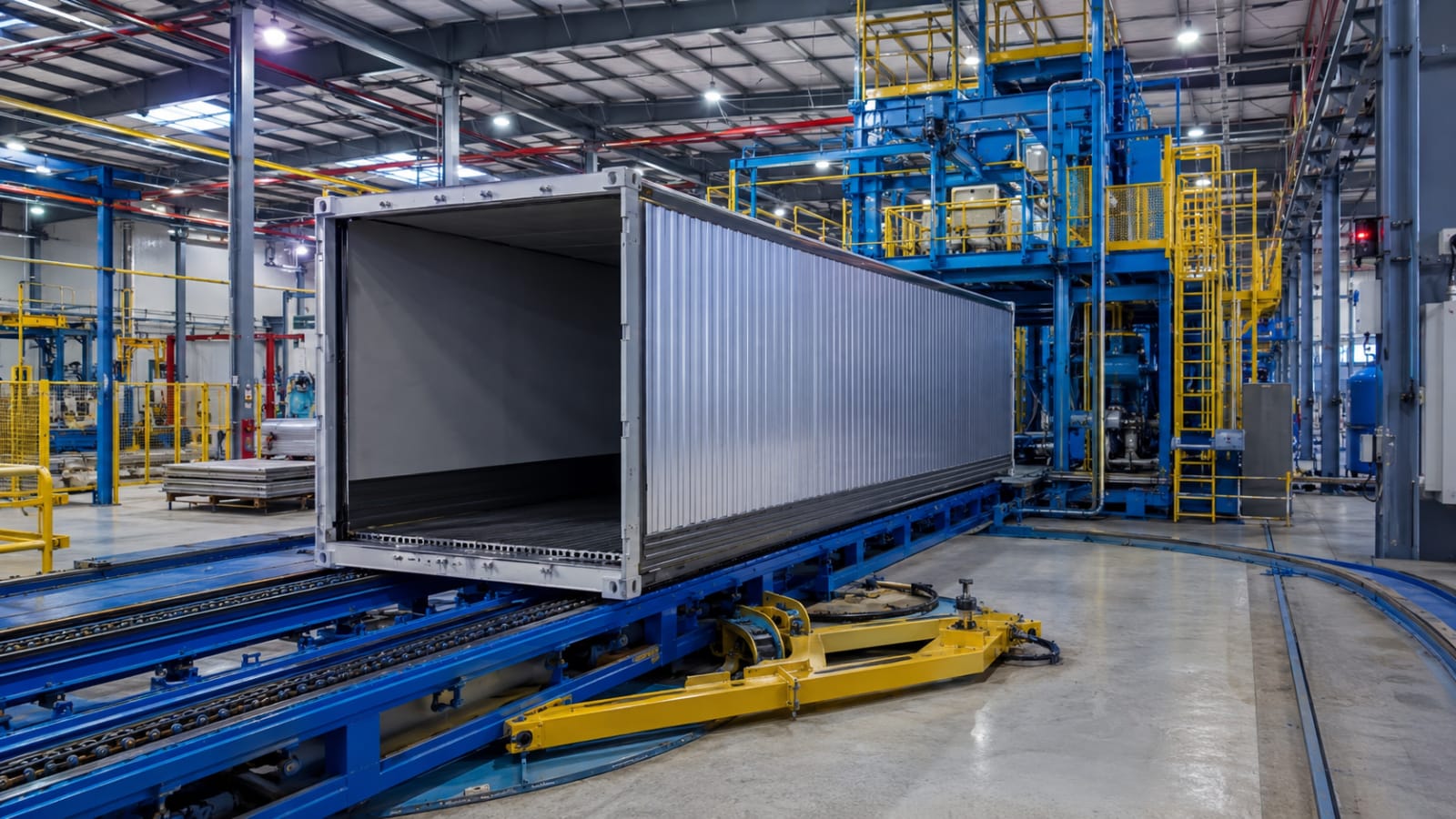
Every container SCS ships into international transport is a CSC certified container: it carries a CSC Safety Approval Plate, stamped on our line once an authorised classification society has completed the first examination at the factory. This guide explains the factory-stage process behind every CSC-approved box we build.

Summary

A CSC certified container carries a CSC Safety Approval Plate confirming it was built and tested to the International Convention for Safe Containers (1972). At SCS the plate is stamped on the line in four factory-stage steps: type-test the design to Annex II, a first examination by an authorised classification society, stamping and fixing the plate, then starting the maintenance regime. Because SCS builds new units, all four happen on the production line rather than being retro-fitted. This guide sits alongside our manufacturing & quality assurance pages at SCS Global, covering the product specifications and compliance documentation that support the same procurement audience.

01

Definition

What CSC certification means for a container

A CSC certified container carries a CSC Safety Approval Plate confirming it was built and tested to the International Convention for Safe Containers, adopted by the IMO in 1972 and in force since 1977. The plate certifies the box is safe to lift, stack and transport at its rated loads.

It helps to separate two terms. The CSC Safety Approval Certificate is the approval document tied to the container design and manufacturer. The plate is the metal record fixed to the box that carries the certified values. The related search "what is csc certificate" points to the same regime: the approval that lets a container move in international transport without re-certification at every border. CSC applies to most freight containers used internationally, above a prescribed minimum size, that have corner fittings. For SCS, because we build new units, certification happens at manufacture rather than being retro-fitted, so the box ships ready for the global supply chain from day one. The wider lifecycle is covered in our container certification explained guide.
02

Process

CSC container certification: the factory-stage process

CSC container certification happens at the factory in four steps: type-testing the design to Annex II, a first examination by an authorised classification society, stamping and fixing the plate, then starting the maintenance regime. Because SCS builds new units, all four happen on the production line.

The convention is structured in two annexes. Annex II sets the structural tests, lifting, stacking at 1.8g, racking and wall strength, which overlap the type-tests in ISO 1496-1. Annex I governs testing, inspection, approval and maintenance. The mechanics of building the box to pass those tests sit in the full manufacturing process. What follows on this page is how each certification step runs at the factory.

The four factory-stage steps

  1. Type-test the design to CSC Annex II, covering lifting, stacking at 1.8g, racking and wall strength.
  2. First examination and initial approval by an authorised classification society at the factory.
  3. Stamp and permanently fix the CSC Safety Approval Plate once approval is granted.
  4. Begin the maintenance regime, either a Periodic Examination Scheme or an Approved Continuous Examination Programme.
03

Inspection

Classification society inspection at the SCS factory

The first examination is carried out at the factory by an authorised classification society. SCS works with ABS, DNV, Lloyd's Register and Bureau Veritas, the four societies that audit the facility and inspect units for CSC approval.

A classification society does two jobs here. It reviews the container design against the convention, and it inspects the facility and the units: welding procedures, material traceability, lifting systems, structural integrity, coatings and final inspection. Our factory is independently audited by ABS, DNV, Lloyd's Register and Bureau Veritas, which is the external trust signal behind the plate. The same inspection discipline feeds our QA/QC protocol, where the weld and dimensional checks are documented stage by stage. The point for a buyer is that the plate is not self-certified: an independent, authorised body stands behind it.

04

The plate

How the CSC plate is stamped and fixed

Once a design is approved and a unit passes examination, the manufacturer stamps and permanently fixes the CSC plate, usually on the container door. SCS stamps it on the line as the final certification step before the box leaves the factory.

The plate is a durable, corrosion-resistant rectangular plate that has to stay legible for the life of the container, which is why it is fixed where it is protected yet readable, typically on the left-hand door. It records the certified safety values, so handlers and authorities can read a box's limits without paperwork. Stamping the plate at manufacture, rather than sourcing pre-certified boxes second-hand, means the certified values trace directly to the unit we built and tested. A reseller buys boxes that already carry someone else's plate; a manufacturer issues the plate against its own build and test records.

05

Plate fields

The CSC Safety Approval Certificate: what it contains

The CSC plate records seven mandatory data fields under Annex I, from the approval reference to the certified load values. Together they tell any handler what the box is rated to carry and stack, and when its next examination is due.

The owner prefix and identification that travel with the plate are issued under the BIC system, which also maintains the ACEP register. The stacking value is the one most people misread: it is the load the box can bear when stacked, tested at 1.8 times gravity to cover the dynamic loads of a ship at sea. Those certified values depend directly on the corner castings, which is where the SCS build differs from most.

The Annex I plate data fields

  1. "CSC SAFETY APPROVAL" plus the country and approval reference
  2. Date of manufacture (month and year)
  3. Manufacturer's identification number
  4. Maximum operating gross mass (kg and lb)
  5. Allowable stacking load at 1.8g (kg and lb)
  6. Transverse racking test load value (kg)
  7. First maintenance examination date, or the ACEP number
06

Maintenance

ACEP enrolment at the factory

After approval, every container enters one of two maintenance regimes, and the choice can be set at the factory. The two options are the Periodic Examination Scheme (PES) and the Approved Continuous Examination Programme (ACEP).

Under PES, the first examination falls no later than five years after manufacture, then at intervals of no more than 30 months. Under ACEP, the container is maintained through an approved continuous programme registered with BIC, and the plate carries the ACEP number instead of a next-exam date. ACEP enrolment can be set when the unit is built, which suits fleet operators who would rather run a programme than chase dates. Registering an ACEP number with BIC lets an operator inspect units on a risk-based schedule tied to in-service handling rather than fixed calendar dates, which is why most large fleets prefer it. The 30-month PES interval exists to catch fatigue, corrosion and impact damage before it compromises a lift. The operational detail of running PES and ACEP across a fleet, including re-examination and enforcement, lives in the full CSC compliance deep-dive, which is the right place for the lifecycle rules. This page stays on what happens at the factory.

07

Why it matters

Why factory-stage CSC matters for global shipping

The plate's stacking and racking values are only as good as the corner fittings they rely on, and SCS casts its own ISO 1161 corner castings in-house. That ties the certified loads on the plate directly to a part we make and trace ourselves.

The 1.8g stacking load and the transverse racking value are carried by the eight corner castings and the frame they tie into, made to ISO 1161 geometry. Because we run our own foundry, the components that the CSC plate certifies are produced under our own control, not bought in from a third party, and you can see that work in the corner castings we cast in-house. Offshore units add DNV 2.7-1 offshore containers approval on top of CSC, using the heavier castings from the same foundry. Factory-stage CSC means the box is cleared for international transport and customs from the moment it ships, which removes a delay and a risk from the buyer's supply chain.

08

Scope

CSC certification vs broader container compliance

CSC is the factory safety-approval regime, not the whole compliance picture. It certifies that a container was built and tested safe to lift, stack and transport; the ongoing regulatory lifecycle is a separate, broader subject.

It is worth being precise about scope. Container CSC certification at the factory covers type-testing, first examination, plate stamping and the start of the maintenance regime. The periodic re-examination rules, ACEP operation, owner responsibilities and port-state enforcement are the regulatory lifecycle, and that detail belongs in our container certification explained guide rather than here. A CSC-certified container also typically carries an ISO 6346 marking and, depending on use, ISO 9001 build certification or DNV offshore approval, so the CSC certificate container record sits alongside other compliance evidence rather than replacing it. For procurement, the takeaway is simple: the plate proves the factory did its job, and the certification guide explains how the box stays compliant in service. SCS supplies units across our shipping container range CSC-platable where they enter international transport.

Standards & references

The standards behind the plate

Every certified value and step on this page traces to one of the standards below. Follow any link through to the source authority for the current revision.

CSC 1972 International Convention for Safe Containers: Annex I (testing, approval, maintenance) and Annex II (structural tests). IMO
ISO 1496-1 Series-1 container specification and testing: the type-tests that overlap the CSC Annex II structural battery. ISO
BIC / ACEP register Owner-prefix and ACEP registration: the Bureau International des Conteneurs maintains both. BIC
ISO 1161 Corner-fitting geometry: the cast points that carry the plate's certified stacking and racking values. ISO
Factory audit First examination and facility audit by ABS, DNV, Lloyd's Register and Bureau Veritas. ABS / DNV / LR / BV

Expert perspective

Why the plate is only as good as the castings behind it

“The plate's stacking and racking values are only as good as the corner fittings they rely on. The 1.8g stacking load and the transverse racking value are carried by the eight corner castings and the frame they tie into, made to ISO 1161 geometry, and SCS casts those castings in its own foundry. Because we run the foundry, the components the CSC plate certifies are produced and traced under our own control, not bought in from a third party. Stamping the plate at manufacture, against our own build and test records, is what ties a certified load value back to a part we made, rather than to a box that arrived already wearing someone else's plate.”

Managing Director Adam Baker

Next step

Talk to an engineer about certification

If you need CSC scope confirmed against your route or contract, we will set it out plainly. Every box we build is CSC-platable from the line, so tell us the deployment and we will confirm the certification scope.