Guide

Reefer Container Specifications: Sizes, Temperature, Power

Dimensions, weights, temperature range, power supply and capacity for 10ft, 20ft and 40ft reefer containers, with the standard each figure traces to. Written for procurement, engineering and operations teams specifying refrigerated units.

Summary

A standard 20ft reefer measures 6,058 × 2,438 × 2,591 mm outside, holds about 28 m³ and runs any set point from −30°C to +30°C on a 3-phase 380–460 V, 32 A supply. The 40ft high cube is 12,192 × 2,438 × 2,896 mm, about 67 m³. These reefer container specifications trace to ISO 668, which fixes the envelope and gross rating, and ISO 1496-2, which sets the thermal tests. SCS builds every size and variant tabled here to order in Yixing, China. This guide sits alongside our refrigerated containers pages at SCS Global, covering the product specifications and compliance documentation that support the same procurement audience.

01

Dimensions

Reefer Container Dimensions by Size

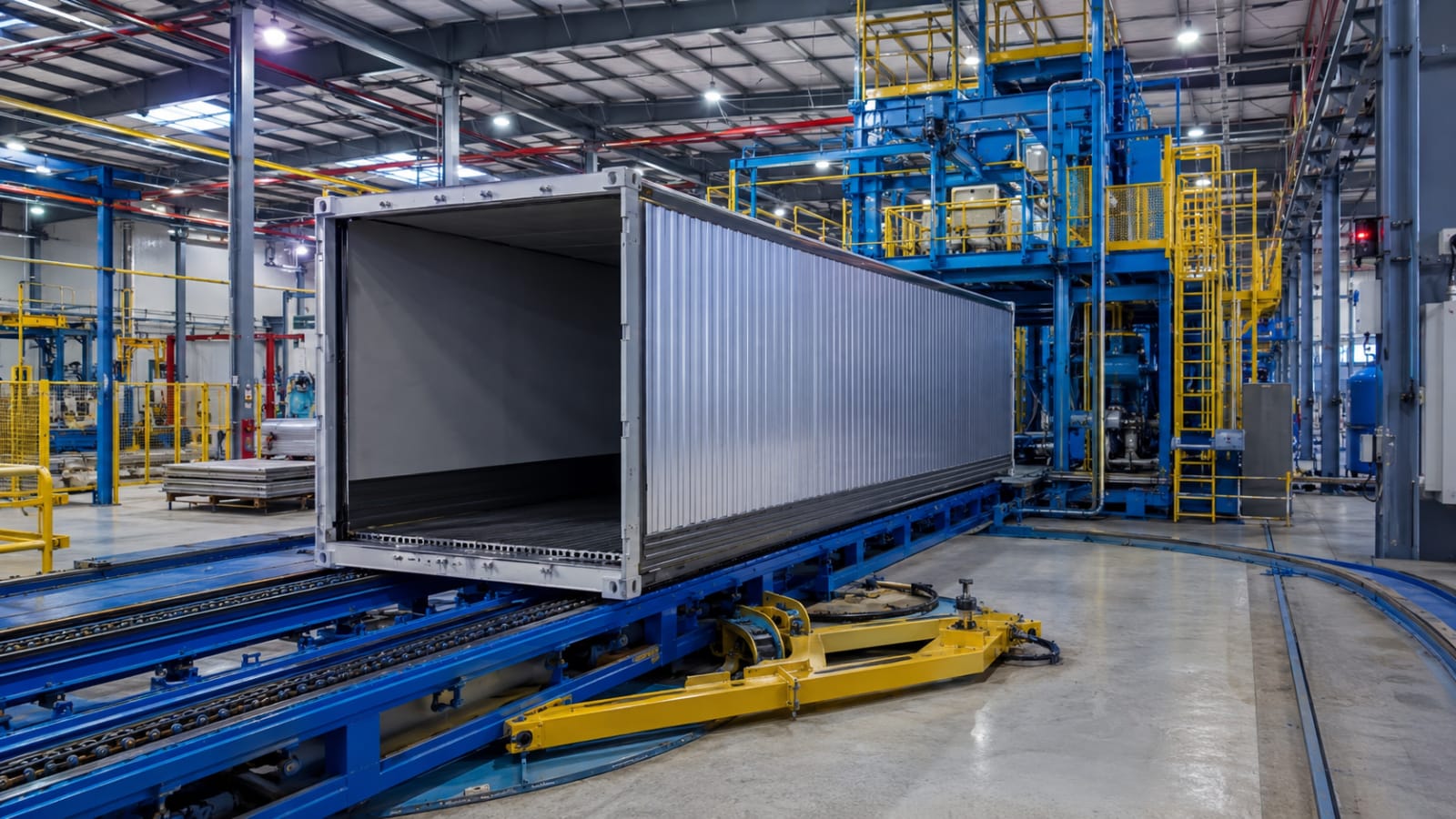
A 20ft reefer is 6,058 × 2,438 × 2,591 mm outside and about 5,460 × 2,292 × 2,310 mm inside. The 40ft high cube reefer is 12,192 × 2,438 × 2,896 mm outside, 11,580 × 2,290 × 2,400 mm inside. Internal length runs 450 to 600 mm short of a dry box because the integral unit fills the front bulkhead: a current unit measures about 2,235 × 2,025 × 415 mm. Today's 40ft reefer is the high cube reefer, ISO type 1AAA. The 2,591 mm 40ft is a legacy form. ISO 668:2020 fixes the envelope, so the reefer container sizes below differ inside, not outside.

The 20 ft high cube reefer container dimensions lift the ceiling to about 2,540 mm and the 40 high cube reefer container dimensions give 2,400 mm inside. Refrigerated container dimensions from any builder follow that pattern. Pallet-wide storage units, 2,500 mm wide for two Australian pallets at 35,000 kg gross, carry refrigerated shipping container dimensions of their own class.

Internal length runs 450 to 600 mm short of a dry box because the integral unit fills the front bulkhead.

Reefer container dimensions by size (mm, external and internal)
SizeExternal (mm)Internal (mm)m³Pallets
10ft2,991 × 2,438 × 2,5912,300 × 2,290 × 2,31012.24 CHEP
20ft reefer6,058 × 2,438 × 2,5915,460 × 2,292 × 2,31028.3–28.910 CHEP
20ft high cube6,058 × 2,438 × 2,8965,280–5,380 × 2,280–2,294 × 2,540n/an/a
40ft high cube reefer12,192 × 2,438 × 2,89611,580 × 2,290 × 2,40067.3–68.522 CHEP
20ft pallet-wide HC6,058 × 2,500 × 2,8965,468 × 2,375 × 2,58033.52 AU abreast
40ft pallet-wide HC12,192 × 2,500 × 2,89611,594 × 2,375 × 2,59171.32 AU abreast
02

Weight

Reefer Container Weight: Tare, Payload and Max Gross

A 20ft reefer weighs about 2,770 to 3,290 kg empty and a 40ft high cube 4,360 to 4,650 kg. Three maximum gross figures circulate. ISO 668:2020, as amended in 2022, rates the 1CC and 1AAA sizes at 36,000 kg. Fleet tables still print the older 30,480 kg. New-build plates on the AU market sit at 22,000 to 24,000 kg, set by the builder's CSC test. Reefer container weight for permits and pad design is the number on the CSC plate.

Reefer container weight by size (kg)
SizeTare (kg)Payload (kg)Max gross (kg)
20ft2,770–3,29021,230 at 24,000 plated, 27,400 at 30,48036,000 ISO, 30,480 legacy, 22,111–24,000 AU plates
40ft standard height4,80027,70032,500
40ft high cube4,360–4,65029,520 at 34,00036,000 ISO, 34,000 fleet tables, 26,120 on one AU new-build plate
03

Temperature

Reefer Container Temperature Range and Control

A standard integral reefer holds any set point from −30°C to +30°C in ambient temperatures from −30°C to +50°C. Humidity holds at 60 to 85% RH, or about 50% with dehumidification on newer units. ISO 1496-2:2018 sets the thermal tests: the sixth edition reinstated the −18°C / +38°C cooling-capacity test and added a 50°C ambient functionality test. The reefer container temperature range serves thresholds the food business owns, not the container. FSANZ Standard 3.2.2 keeps potentially hazardous food at 5°C or colder. A temperature controlled shipping container logs the evidence. The operator's HACCP plan carries the obligation.

Controlled atmosphere, super-freezer and blast options

Beyond the integral reefer specification, SCS builds:

  • controlled-atmosphere units with managed O₂ and CO₂ for respiring produce
  • super-freezer sets holding −60°C to −70°C
  • a freezer shipping container with blast pull-down capacity
  • twin-unit redundancy with a genset for high-value cargo
  • remote monitoring

Blast-freezer depth sits on the reefer vs cold room comparison.

04

Power

Power Supply and Reefer Container Power Consumption

A reefer runs on 3-phase 380–460 V, 32 A, 50/60 Hz through a 5-pin reefer socket. It draws roughly 3 to 7 kWh per hour depending on size, set point and ambient. Your electrician installs the outlet to AS/NZS 3000:2018, and a genset carries the load in transit (how SCS ships containers to site). Reefer container power consumption moves with:

  • ambient temperature and humidity
  • insulation condition and unit age
  • loading practice and door openings
  • defrost cycles and pre-cooling

The unit draw and cooling figures in the table describe a current OEM unit (OEM datasheet); we fit whichever unit the buyer specifies.

Reefer power supply and consumption reference
ParameterValue
Unit draw and cooling13.5 kW maximum, 10,000 W at +2°C, 5,900 W at −18°C, +38°C ambient (OEM datasheet)
Running consumption3–7 kWh per hour, about 70–170 kWh per day
20ft at +4°Cabout 70–100 kWh per day
40ft at −18°Cabout 140–170 kWh per day, plus 25–40% in hot-climate summers
Genset15–25 kVA prime per reefer
Holdover unplugged, loadedchilled 2–4 h, frozen 4–8 h, super-freezer 8–12 h
05

How It Works

How Do Refrigerated Shipping Containers Work?

A refrigerated shipping container works by blowing chilled supply air from the front-bulkhead unit under the cargo through an aluminium T-floor and drawing it back over the load. Air passes through the cargo continuously. A variable-speed reciprocating compressor, a condenser and an evaporator run the cycle. Fresh-air exchange runs from zero to 15–250 m³/h for respiring produce, against the ATP benchmark of 50 hourly air changes (RVTC Guide to ATP). A microprocessor controller logs supply and return air, defrost, set-point and power events. A current unit carries about 4.5 kg of R134a and runs R134a, R513A or R1234yf under ISO 20854:2019. We fit whichever reefer container refrigeration system the buyer specifies.

06

Construction

Insulation and Construction

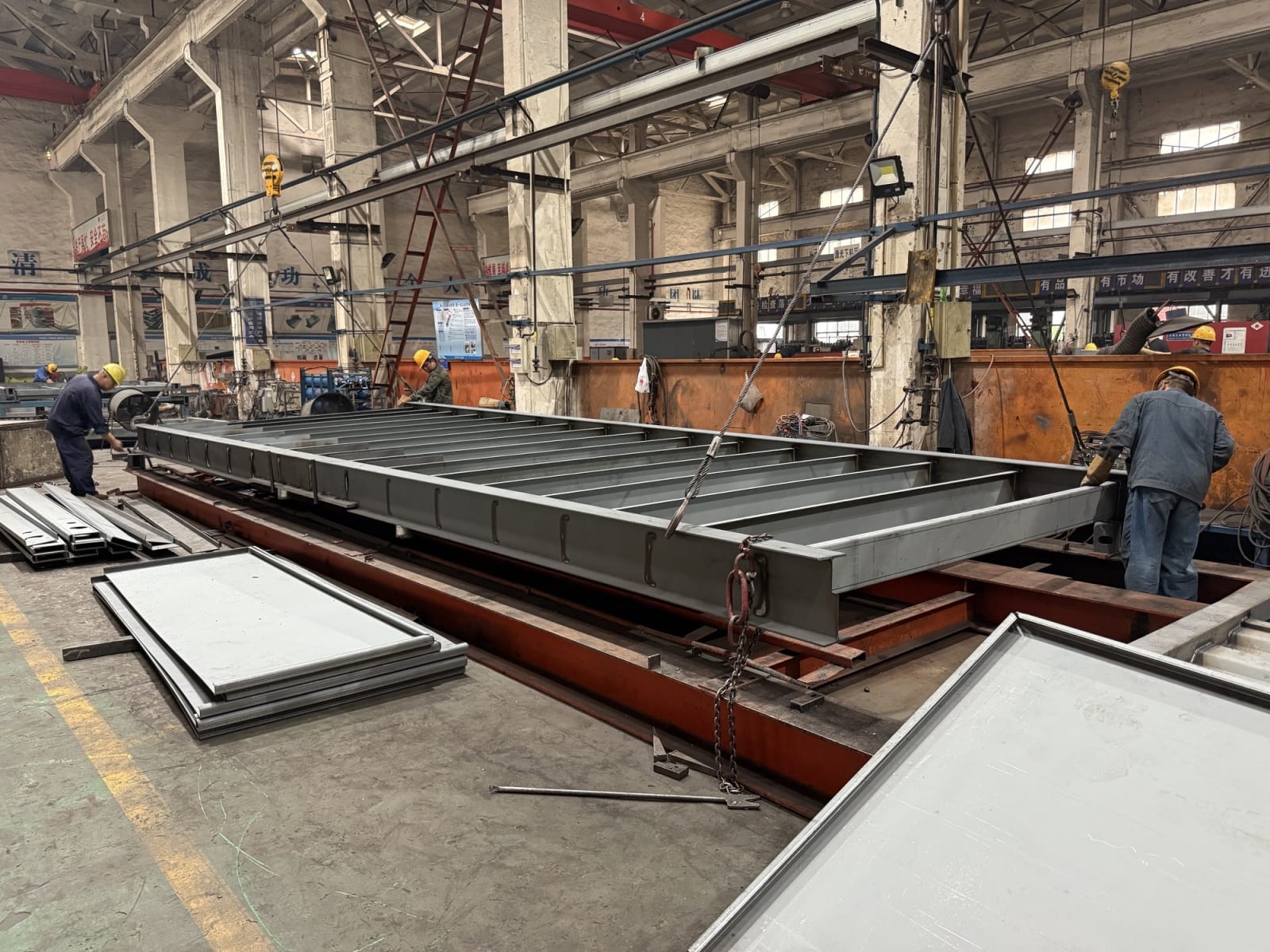
Reefer walls, roof and floor are foam-cored polyurethane sandwich panels with a stainless-steel interior and an aluminium T-section floor, built to minimise thermal bridging under the ISO 1496-2 heat-leakage test. ATP's heavily insulated class, K below 0.4 W/m²K, is the export benchmark only: Australia isn't an ATP party. Refrigerated container specifications for the shell follow the dry-box pattern: Corten end frames and rails with zinc metallisation, per Corten steel and container construction. Insulated double rear doors carry rivet-free gaskets and an internal emergency release on storage builds (OEM construction reference).

07

Standards

Which Standard Governs Each Reefer Specification?

ISO 668 fixes the envelope and gross rating, ISO 1496-2 the thermal performance, the CSC plate the transport approval, and AS/NZS 3000 the site outlet. Compliance attaches to the body, the machinery, the site installation and the food business separately, so a reefer is never "HACCP certified" in itself. Every figure in these reefer container specifications traces to a document below, and CSC and ISO container standards carries the body depth. Stationary installations in Australia and New Zealand sit under AS/NZS 5149.3.

The Ozone Protection and Synthetic Greenhouse Gas Management Act 1989 requires an ARCtick Refrigerant Handling Licence to charge, service or decommission a unit, and an Equipment Licence to import an HFC-charged reefer. Australia's HFC import quota steps down from 8 Mt CO2-e in 2018 to an 85% cut by end-2035 (DCCEEW). Our factory-direct manufacturing covers the body build, and SCS project deployments show that discipline on delivered units.

Reefer specification axes and the governing document
Specification axisGoverning document
Envelope, max gross, corner fittingsISO 668, ISO 1161, CSC plate
Thermal specification and testingISO 1496-2:2018
Flammable-refrigerant safetyISO 20854:2019
Machinery type approvalClassification society
Insulation class (export only)ATP K-values, FRC/FNA classes
Site power (AU)AS/NZS 3000
Stationary plant (AU/NZ)AS/NZS 5149.3, 5149.4
Refrigerant handling, import (AU)Ozone Protection Act 1989 (Cth), Regulations 1995
Food temperatures (operator)FSANZ Standard 3.2.2
08

FAQ

Frequently Asked Questions

What is a reefer container?

A reefer container is an ISO thermal container built to ISO 1496-2 with an integral refrigeration unit in the front bulkhead, holding a set point from −30°C to +30°C for transport or static storage. Standard sizes are 10ft, 20ft and 40ft high cube.

How are reefer containers powered?

Reefer containers run on shore power through a 32 A, 3-phase 380–460 V, 5-pin reefer socket. Single-phase 240 V units suit sites without 3-phase. Off-grid or in transit, a clip-on or underslung diesel genset at 15 to 25 kVA prime carries one unit.

How long does a reefer hold temperature when unplugged?

A loaded reefer holds chilled cargo for 2 to 4 hours before it passes 5°C, frozen cargo at −18°C for 4 to 8 hours and super-freezer cargo for 8 to 12 hours. Plan for no more than two hours off power. Beyond that, a genset.

Standards & references

Standards and references cited in this guide

Every figure on this page traces to one of the documents below. Follow any link through to the source authority for the current revision.

ISO 668:2020 Series 1 freight containers: classification, dimensions and ratings. Fixes the envelope and the 36,000 kg gross rating. International Organization for Standardization
ISO 1496-2:2018 Thermal containers: specification and testing. Cooling-capacity, heat-leakage and 50°C ambient functionality tests. International Organization for Standardization
ISO 20854:2019 Thermal containers: safety standard for refrigerating systems using flammable refrigerants. International Organization for Standardization
FSANZ Standard 3.2.2 Food Safety Practices and General Requirements: potentially hazardous food held at 5°C or colder. Food Standards Australia New Zealand
AS/NZS 3000:2018 Wiring Rules: the reefer outlet the site electrician installs. Standards Australia
AS/NZS 5149.3:2016 Refrigerating systems and heat pumps, Part 3: installation site. Governs a reefer used as stationary plant. Standards Australia
Ozone Protection and SGG Management Act 1989 Commonwealth Act governing refrigerant handling licences and HFC-charged equipment import. Federal Register of Legislation
ARCtick Refrigerant Handling Licence scheme: charging, servicing and decommissioning units in Australia. Australian Refrigeration Council
HFC phase-down Australia's HFC import quota: 8 Mt CO2-e in 2018 stepping down to an 85% cut by end-2035. DCCEEW
Guide to ATP UNECE ATP agreement guide: insulation classes and the 50 air-changes-per-hour benchmark. Export context only, Australia is not a party. Cambridge Refrigeration Technology (RVTC)
OEM unit datasheet Reference integral unit: draw, cooling capacity and refrigerant charge cited in the power table. Daikin
OEM construction reference Integrated reefer construction reference: doors, gaskets and emergency release. MCI

Expert perspective

On weights: the plate, not the rating

“Specify the plated MGW, not the ISO ceiling. A 36,000 kg rating on paper doesn't move a 24,000 kg plate.”

Director of Engineering Adam Baker

Next step

Talk to an Engineer About Your Reefer Spec

Send your reefer specifications: size, set point and site supply. An SCS engineer returns a factory-direct proposal with size, unit and supply itemised.